
https://www.flickr.com/people/8771526@N03 Teddy Llovet / CC BY 2.0, via Wikimedia Commons
Paeonia californica: complete guide
Paeonia californica
Want to see Paeonia californica: complete guide in your garden?
1 minute, no credit card
Overview
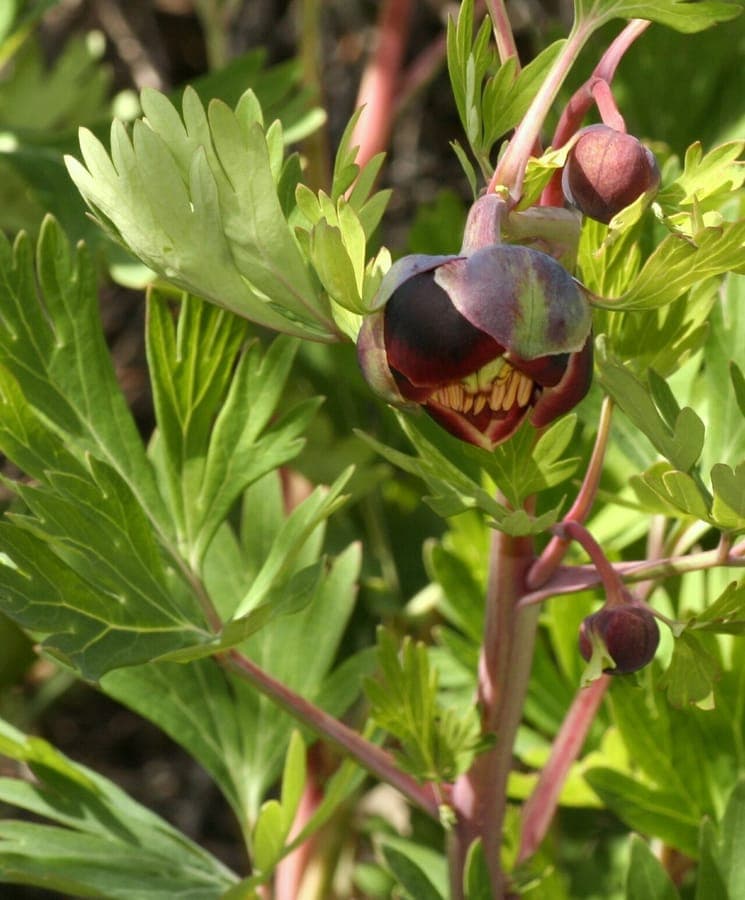
Paeonia californica, the California peony, is a stunning perennial from the Paeoniaceae family, native to Southern California and northern Mexico. This exceptional peony distinguishes itself through its unique growth pattern and breathtaking flowers in deep red to purple hues. Unlike many closed peonies, Paeonia californica blooms in late spring with large, compound flowers that are rare among wild peonies.
The plant develops into a compact shrub reaching 40-60 centimeters with finely divided deep foliage that turns brilliant red in autumn. The flowering period spans April through May, when the plant displays dozens of blooms simultaneously. This makes California peony an absolute sensation in any front garden.
Appearance & Bloom
The flowers of Paeonia californica are truly spectacular. They reach diameters of 7-10 centimeters with deep red to purple coloration. The blooms consist of numerous petals arranged in layers, creating a rose-like appearance. Golden stamens within the flower provide striking contrast against the deep red outer petals.
The foliage is equally impressive as the flower. The leaves are finely dissected and deeply lobed, giving the plant an elegant and refined appearance. In autumn, the foliage transforms to stunning red and purple tones. The plant is botanically distinct from other peonies and truly deserves attention in any garden display.
Ideal Location
Paeonia californica thrives best in partial shade to full sun. The plant prefers protection from harsh midday sun in warm regions, though it tolerates more sun in cooler climates. Ideal conditions include 3-4 hours of direct morning sun with afternoon shade protection.
Plant in locations sheltered from strong winds, especially when the plant is in full bloom. The peony can remain in the same location for years without transplanting, so choose your planting site carefully. Avoid low-lying areas where water accumulates after heavy rain.
Soil
Paeonia californica requires well-draining, nutrient-rich soil. The ideal is heavy clay improved with organic matter. The plant prefers a pH of 6.0-7.0. Good drainage is essential, as wet roots lead to rotting and disease.
When planting, incorporate abundant aged compost or leaf mold into the soil. This increases water and nutrient retention. During the growing season, add organic material to maintain soil fertility.
Free design
Want to see Paeonia californica: complete guide in your garden? Make a free design now.
Watering
Paeonia californica requires significant water, especially during growth and flowering. Water deeply and regularly, ensuring the soil does not dry out. In summer, daily watering may be necessary under dry conditions. Insufficient watering results in stressed plants with fewer blooms.
Ensure the soil does not become waterlogged. The plant prefers moderately moist soil. In winter, when the plant rests, reduce watering significantly. Regularly check whether the soil contains adequate moisture.
Pruning
Paeonia californica is famously known to require minimal pruning. Remove spent blooms immediately after they wilt. This encourages continued blooming and prevents seed development. In autumn, as foliage dies, cut the plant down to 5-10 centimeters above ground.
Avoid excessive pruning of young plants. They need several years to establish fully. Only remove wilted portions and diseased stems in the first years.
Maintenance Calendar
March: Clear dead foliage from previous season. Begin guided watering as growth starts. Add compost around plant base.
April-May: Flowering period. Apply bloom-promoting fertilizer. Provide hourly watering daily or on dry weather days.
June-July: Summer growth. Ensure regular watering. Remove spent blooms. Monitor for diseases.
August-September: Plant begins preparing for dormancy. Gradually reduce watering frequency. Add organic material around root zone.
October-November: Foliage colors and dies. Remove dead foliage. Cut plant back.
December-February: Winter dormancy. No watering needed. Protect against severe frost.
Winter Hardiness
Paeonia californica is reasonably winter hardy in temperate climates, down to approximately -15 degrees Celsius. In milder winter areas, the plant can remain outdoors without protection. In severe winters, mulch protection helps.
In very cold regions, the plant can overwinter in a cool greenhouse or against a south-facing wall. Ensure soil drains well to survive frost cycles.
Companion Plants
Paeonia californica combines beautifully with other spring bloomers. Pair with white daffodils or tulips for classic spring contrast. Low foliage like hellebores or heuchera provides nice contrast with large peony blooms.
Underplant with spring bulbs and summer-blooming ground covers. In borders, combines well with other peony varieties and rose gardens.
Conclusion
Paeonia californica is an absolute must for gardeners wanting something special. With well-prepared soil, regular watering and appropriate feeding, this plant grows fantastically. The red blooms of this plant are truly spectacular and will astonish everyone. Available at local garden centers and online retailers. Visit gardenworld.app for garden design inspiration.
Want to see Paeonia californica: complete guide in your garden? Make a free design now.
Upload a photo, pick a style, and get a photorealistic design with plant list in under a minute.
No credit card required


Similar plants
Tree peony (Paeonia x suffruticosa): complete guide
Paeonia x suffruticosa
Discover tree peonies: cultivation, care essentials, and garden placement. Magnificent flowers and long-lived shrub plants.
Paeonia cambessedesii: complete guide
Paeonia cambessedesii
Discover the rare Balearic peony, an exclusive and botanically unique plant. Growing guide with care tips for this Mediterranean treasure.
Paeonia brownii: complete guide
Paeonia brownii
Brown's peony is a hardy perennial from western North America. Learn how to grow this exceptional wildflower species in your garden with practical care and planting advice.