
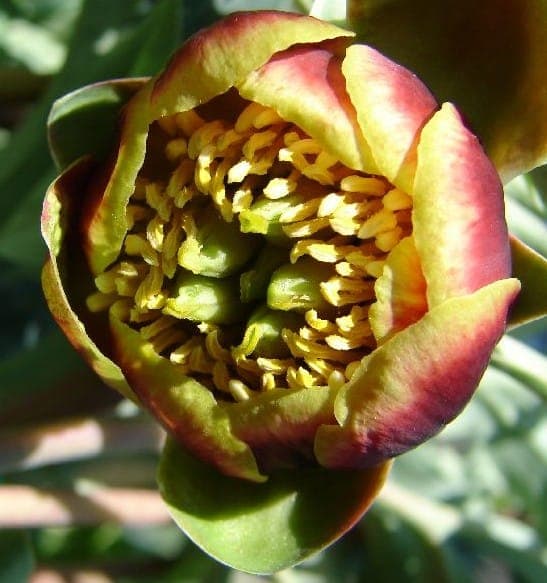
Cassondra Skinner / Public domain, via Wikimedia Commons
Paeonia brownii: complete guide
Paeonia brownii
Want to see Paeonia brownii: complete guide in your garden?
1 minute, no credit card
Overview
Brown's peony (Paeonia brownii) is a rare and fascinating peony species native to the western regions of North America. This plant is celebrated for its distinctive red flowers and remarkable frost tolerance. Unlike many cultivated peonies, Brown's peony is a true wildflower species, making it an intriguing choice for gardeners seeking something special.
The plant is named after David Douglas, the renowned plant collector who brought many western North American wildflowers to Europe. Paeonia brownii naturally grows in mountainous regions in states such as California, Oregon, Montana, and Washington, where it thrives despite harsh climate conditions.
Appearance and Bloom
Brown's peony is a compact plant that typically grows 30 to 60 centimeters tall. The flowers are small to medium-sized, with a distinctive red to dark red color. The petals are regularly arranged, giving the bloom an elegant shape.
The blooming period occurs in late spring, typically in May and June, when the plant reaches full beauty. The leaves are deeply lobed and greenish, creating a nice contrast with the red flowers. After blooming, seed pods form and become conspicuous.
The foliage disappears in summer naturally without leaving bare spots. This is typical behavior for many temperate zone peonies with warm summers.
Ideal Location
Brown's peony grows best in a sunny to partially shaded spot in your garden. The plant ideally needs 4-6 hours of direct sunlight daily. This promotes lush growth and abundant flowering.
Ensure the location has good drainage. Despite being highly frost-hardy, waterlogging in winter can lead to root rot. A raised planting bed or a naturally well-drained location is therefore essential.
For those in southern regions with very hot summers, providing some afternoon shade, especially in July and August, can help. This will assist the plant during extended dry periods.
Soil
Paeonia brownii is very tolerant regarding soil type, but performs best in well-draining, slightly acidic to neutral soil. The pH can range between 6 and 8.
Improve your soil before planting with plenty of organic material such as compost or aged leaf mold. This not only improves drainage but also provides the plant with essential nutrients in the early years.
The plant is very frugal and needs minimal feeding once established. Add a layer of compost around the plant each spring to encourage slow nutrient availability.
Free design
Want to see Paeonia brownii: complete guide in your garden? Make a free design now.
Watering
Once established, Brown's peony is very drought-tolerant. However, young plants during their first year after planting should be watered well, especially during dry spells.
Water deeply and thoroughly, but allow the soil to dry out between waterings. Excessive watering is a common problem and should be avoided.
During the blooming period and spring growth phase, regular watering can improve flowering. Once the plant dormant in summer, you can significantly reduce watering frequency.
Pruning
Brown's peony requires little pruning. Remove spent flowers after they fade to prevent seed formation and keep the plant tidy.
In autumn, after all foliage has disappeared, you can carefully cut back all dead stems to ground level. This prevents disease and gives the plant a clean start in the next season.
Avoid aggressive pruning, as the plant can grow and bloom for many years with minimal intervention.
Maintenance Calendar
Spring (March-April): Plant new peonies, add compost around existing plants, check for pests and diseases. Summer (May-June): Water thoroughly during dry periods, remove spent flowers, prevent diseases. Fall (September-October): Remove dead foliage, add mulch for winter protection. Winter (November-February): No maintenance needed; the plant is dormant.
Winter Hardiness
One of Brown's peony's greatest strengths is its excellent winter hardiness. The plant is highly suitable for harsh climates and can survive temperatures well below zero.
Even in very cold regions, winter protection is usually unnecessary. Additionally, a layer of mulch (organic material) of 5-10 centimeters around the plant in autumn can provide extra protection, especially in regions with extremely cold winters.
Give the plant time to establish deeper roots after its first winters, making it even more frost-hardy.
Companion Plants
Brown's peony looks beautiful planted alongside other spring bloomers that flower at approximately the same time:
- Tulips (especially red and orange varieties)
- Allium (ornamental onion)
- Siberian iris
- Primula (primrose)
- Helleborus (Christmas rose)
These combinations create a stylized appearance in your spring garden.
Final Words
Brown's peony offers gardeners a chance to grow a true wildflower in their garden. With minimal care, excellent winter hardiness, and beautiful red flowers, this plant is a fantastic addition to any garden scheme.
Find Brown's peony or related peony species at specialized nurseries. Visit gardenworld.app for more guides on peonies and other perennial plants.
Want to learn more about growing peonies? Visit gardenworld.app for detailed plant guides and garden design tips.
Want to see Paeonia brownii: complete guide in your garden? Make a free design now.
Upload a photo, pick a style, and get a photorealistic design with plant list in under a minute.
No credit card required


Similar plants
Tree peony (Paeonia x suffruticosa): complete guide
Paeonia x suffruticosa
Discover tree peonies: cultivation, care essentials, and garden placement. Magnificent flowers and long-lived shrub plants.
Paeonia californica: complete guide
Paeonia californica
Discover California peony, a spectacular flowering plant with deep red blooms. Complete growing guide with design tips and care instructions.
Paeonia cambessedesii: complete guide
Paeonia cambessedesii
Discover the rare Balearic peony, an exclusive and botanically unique plant. Growing guide with care tips for this Mediterranean treasure.