
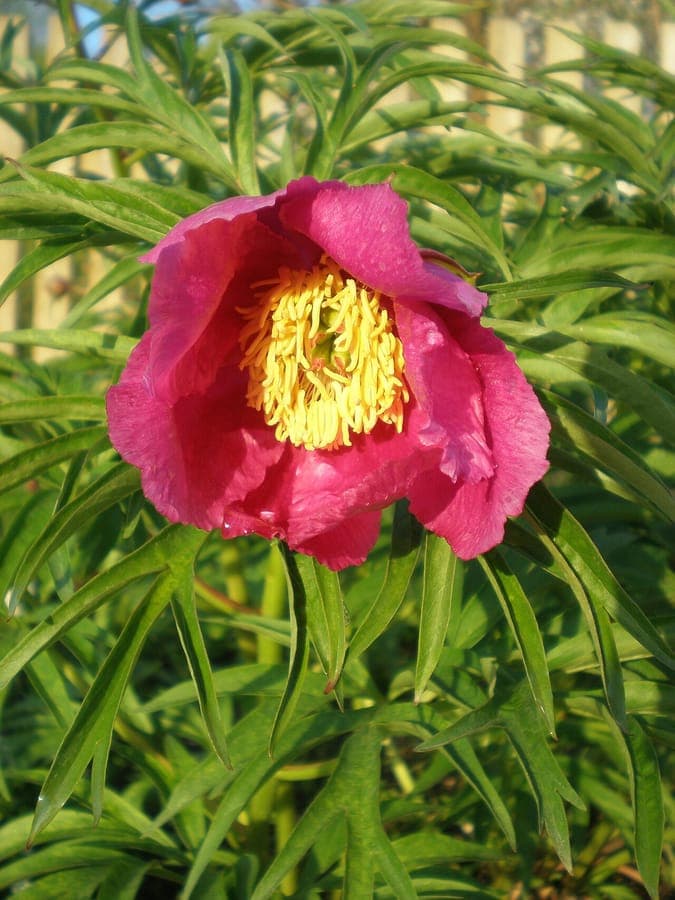
Eglekuc / CC BY 3.0, via Wikimedia Commons
Siberian Peony: The Complete Growing Guide
Paeonia anomala
Want to see Siberian Peony: The Complete Growing Guide in your garden?
1 minute, no credit card
Overview
The Siberian peony (Paeonia anomala) is a hardy perennial featuring deep crimson-red flowers originating from the cold Siberian and Asian mountain landscape. This species is renowned for its exceptional winter hardiness and resilience across diverse growing conditions. With its elegant, finely-divided foliage and full rose-colored blooms, the Siberian peony makes an impressive addition to temperate gardens.
Appearance and Bloom
The Siberian peony forms a bushy plant reaching 60-100 cm in height. The finely dissected leaves are green and develop attractive reddish-brown tones in autumn. The plant flowers in May through June with full, double blooms in bright red to rosy tones. Each flower can reach 10-15 cm in diameter and emits a subtle fragrance. After flowering, distinctive seed pods form bearing glossy black seeds.
Ideal Location
Siberian peony thrives in sunny to partially shaded spots. At least 4-6 hours of direct sunlight daily favors flowering. In very hot climates, some morning sun is preferable. Choose wind-protected locations to shield the large flowers. Avoid planting too close to other plants due to mature size.
Soil
Siberian peony prefers well-draining, fertile soil with neutral to slightly acidic pH (6.0-7.0). A mixture of garden soil, compost, and sand works well. This plant tolerates poor soil but grows better with well-prepared beds. Add plenty of organic material. Ensure good drainage to prevent root rot.
Free design
Want to see Siberian Peony: The Complete Growing Guide in your garden? Make a free design now.
Watering
Watering should be regular in the first growing year. Thereafter, established plants are drought-tolerant. Water when soil feels dry. Excessive moisture is harmful. During rainy periods, ensure extra drainage. Avoid wetting the foliage.
Pruning
Minimal pruning is needed. In spring, remove dead branches. After blooming, remove faded flowers for neat appearance, though seed pods are decorative. After frost, cut back and prune to ground level in autumn.
Maintenance Calendar
- Spring: Add mulch, apply fertilizer, remove weeds
- Summer: Regular watering, deadhead spent flowers
- Autumn: Cut back to ground level, add compost
- Winter: Minimal maintenance, protect in extreme cold
Winter Hardiness
Siberian peony is extremely winter-hardy (zone 3) and tolerates temperatures to -40 degrees Celsius. This makes it ideal for cold regions. Actually, it grows better in cooler climates than in very warm ones.
Companion Plants
Pair Siberian peony with other perennials such as delphiniums, lupines, and lavender. This combination creates a classic flower garden full of color and texture. Perfect alongside early spring bulbs.
Closing Thoughts
The Siberian peony is a reliable, long-lived plant producing beautiful flowers year after year. Its resilience and beauty make it valuable for structure in temperate gardens. With minimal care, your peony will thrive for decades. Ideal for gardenworld.app users seeking long-lived perennials for sustainable garden designs.
Once planted, your Siberian peony will endure for generations as a treasured heirloom.
Want to see Siberian Peony: The Complete Growing Guide in your garden? Make a free design now.
Upload a photo, pick a style, and get a photorealistic design with plant list in under a minute.
No credit card required


Similar plants
Tree peony (Paeonia x suffruticosa): complete guide
Paeonia x suffruticosa
Discover tree peonies: cultivation, care essentials, and garden placement. Magnificent flowers and long-lived shrub plants.
Paeonia californica: complete guide
Paeonia californica
Discover California peony, a spectacular flowering plant with deep red blooms. Complete growing guide with design tips and care instructions.
Paeonia cambessedesii: complete guide
Paeonia cambessedesii
Discover the rare Balearic peony, an exclusive and botanically unique plant. Growing guide with care tips for this Mediterranean treasure.