
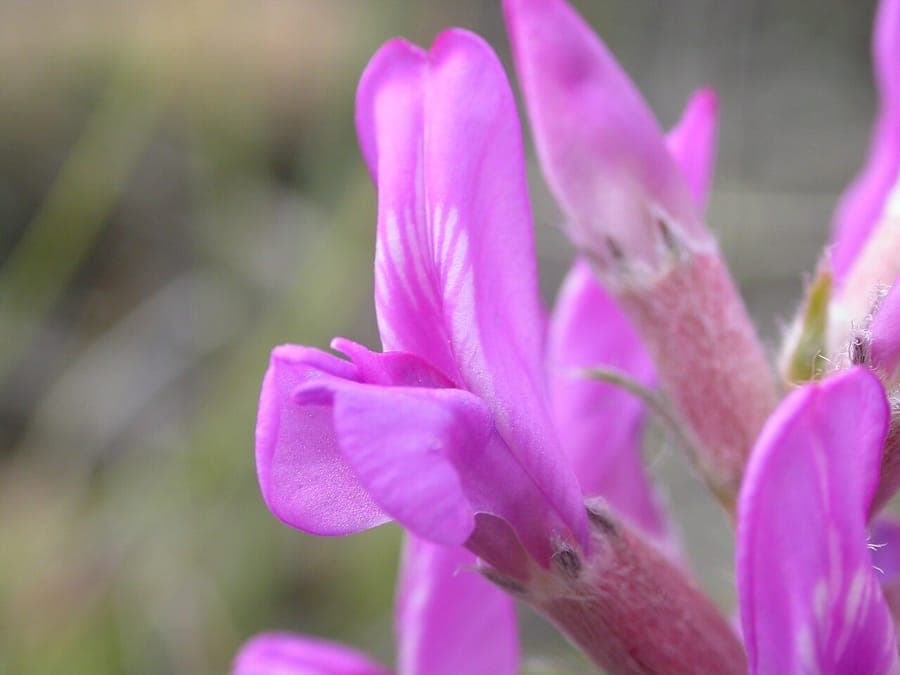
Matt Lavin / CC BY-SA 2.0, via Wikimedia Commons
Purple locoweed: complete guide
Oxytropis lambertii
Want to see Purple locoweed: complete guide in your garden?
1 minute, no credit card
Overview
Oxytropis lambertii, widely known as purple locoweed or Lambert's crazyweed, is a striking, stemless perennial in the family Fabaceae. Named after the British botanist Aylmer Bourke Lambert and formally described by Frederick Pursh in 1813, this plant holds a prominent place in the flora of the North American interior. The species is known under older synonyms including Spiesia lambertii and Aragallus lambertii, but Oxytropis lambertii is now the accepted name.
The natural range is impressively broad, spanning the prairies and plains of western and central North America from the Canadian provinces of Manitoba, Saskatchewan, and British Columbia south through seventeen US states: Arizona, Colorado, Iowa, Kansas, Minnesota, Missouri, Montana, Nebraska, New Mexico, North Dakota, Oklahoma, South Dakota, Texas, Utah, and Wyoming. This vast distribution reflects the species' remarkable adaptability to dry, open habitats across a range of elevations and climate zones.
Oxytropis lambertii is acaulescent - a botanical term for stemless - meaning its leaves and flower scapes arise directly from a central rootstock without visible above-ground stems. This gives the plant its characteristic compact, cushion-forming rosette habit on the prairie. The vivid purple to red-violet flowers are borne in dense, erect racemes above the silky-hairy pinnate foliage, making Oxytropis lambertii one of the most visually striking early bloomers of the American plains.
An important note for gardeners: the plant is toxic to livestock, particularly horses, cattle, and sheep, which is the basis of its common name 'locoweed'. In an ornamental garden without grazing animals this is not a practical concern, but awareness of this property is advisable. Explore drought-tolerant prairie planting designs and find the best companion plants at gardenworld.app.
Appearance & bloom cycle
Oxytropis lambertii is a rosette-forming, stemless perennial with a deep, fleshy taproot that anchors it firmly in the dry soils of its native habitat. The pinnately compound leaves consist of 7 to 19 lanceolate to oblong leaflets that are densely covered in silky, silvery hairs. This pubescence gives the foliage a soft, shimmering texture that catches the light beautifully and remains ornamental throughout the growing season even when the plant is not in bloom.
The leaf rosettes typically spread 15 to 30 cm across and reach 10 to 20 cm in height. From late April through June and sometimes into July - timing depends on elevation and local climate - the plant sends up slender flower scapes that rise 20 to 40 cm above the foliage. Each scape carries a dense raceme of 5 to 20 flowers.
Each individual flower is 1.5 to 2.5 cm long and displays the classic pea-flower structure of the Fabaceae family: a broad upper standard petal, two lateral wing petals, and two lower keel petals fused at the tip. The colour ranges from rich royal purple to red-violet, occasionally with paler or nearly rose-pink forms. The overall effect of a flowering clump is vivid and eye-catching, particularly against the dry tawny grasses and stony ground of a prairie planting.
After pollination, the plant produces small, leathery seed pods approximately 1.5 to 2 cm long that turn brown at maturity. The growth rate is moderate: plants started from seed generally establish in the first or second year and bloom reliably each year thereafter. For a strong visual effect, plant in groups of 5 to 10 at 25 to 30 cm spacing.
Ideal location
Oxytropis lambertii is a full-sun plant. In its natural habitat it grows in open, exposed prairie with no tree or shrub cover, enduring full sun for the entire day. In the garden choose a site receiving at least 8 hours of direct sunlight daily - ideally a south- or south-west-facing aspect with no shading from nearby structures or vegetation.
Partial shade is not recommended: shaded conditions produce weak, spindly growth, reduced flowering, and increased susceptibility to fungal diseases. Open, south-facing positions, dry stone walls, raised beds, and sunny rock gardens are all ideal. The plant also benefits from the additional warmth reflected by surrounding stone, gravel, or light-coloured walls.
Avoid positions where water pools after rain. Excellent drainage is non-negotiable. In the plant's native range it grows on dry hillsides, sandy flats, and well-drained rocky slopes where excess moisture drains away immediately. In northern European gardens - where rainfall is higher than on the American plains - this emphasis on drainage becomes even more critical.
In a prairie or rock garden border alongside Penstemon, Gaillardia, Echinacea, and ornamental grasses, Oxytropis lambertii finds its natural companions. It also works beautifully in a gravel garden or xeriscaped planting where minimal irrigation is a design goal.
Soil requirements
Oxytropis lambertii tolerates a wide range of soil conditions, with a pH range of 6.4 to 9 - from mildly acidic to strongly alkaline. On calcareous or neutral to mildly basic soils it thrives particularly well. Strongly acidic soils below pH 6 are less suitable.
As a legume, Oxytropis lambertii forms root nodules with nitrogen-fixing bacteria. This means the plant is largely self-sufficient in terms of nitrogen and actually grows better on lean, infertile soils where competition from rank vegetation is reduced. Never add nitrogen-rich fertilisers; this promotes excessive leafy growth at the expense of flowers.
The ideal soil texture is light to moderately heavy: sandy loam, gravelly loam, or dry stony substrates are excellent. Heavy clay soils that retain moisture are unsuitable and lead to root rot. If your soil is clay-heavy, improve drainage by incorporating 30 to 40 percent coarse grit or gravel into the top 30 cm of soil. A 3 to 5 cm surface layer of fine gravel or grit as a mulch around the plants improves drainage further and reflects heat back to the plant, encouraging richer flowering.
Avoid organic mulches such as leaf mould or wood chips, which retain moisture and can lower soil pH - both undesirable for this alkaline-tolerant, drought-adapted species.
Free design
Want to see Purple locoweed: complete guide in your garden? Make a free design now.
Watering
Oxytropis lambertii is strongly drought-tolerant, reflecting its origins on the dry Great Plains where weeks or months may pass without significant rainfall. In the garden, water sparingly.
During the establishment phase in the first growing season after planting or sowing, water moderately every 10 to 14 days to encourage rooting. Once established - usually after the first summer - watering can be almost entirely discontinued in normal temperate rainfall climates. The deep taproot enables the plant to draw moisture from well below the surface during extended dry spells.
In exceptionally dry summers with more than three consecutive weeks without rain at high temperatures, a single thorough watering will keep the plant in good health. Overwatering is by far the greater danger: waterlogged roots rot rapidly. Never water when soil is still moist. Drip irrigation or a targeted watering at the base of the plant is preferable to overhead sprinklers, which wet the foliage unnecessarily.
In winter, no watering whatsoever is needed. The dormant rootstock has minimal water requirements and is vulnerable to rot in persistently wet conditions.
Pruning
Oxytropis lambertii requires almost no pruning. The plant grows as a compact rosette with a naturally tidy habit that largely maintains itself. The main pruning task is removing the dried flower scapes after blooming in June and July, which keeps the planting looking neat throughout the rest of the season.
If you wish to encourage self-seeding, leave some seed pods on the plant until they fully ripen and split. Oxytropis lambertii can self-seed in dry, sandy garden conditions, though not aggressively. In gravel gardens and dry borders, self-seeded seedlings provide charming, naturalistic colonies over time.
Foliage dies back in late autumn or early winter and can be cleared away once fully brown. In mild winters, some foliage may remain partially evergreen. In spring, as the new leaf rosette emerges, remove any remaining dead leaf remnants and check that drainage around the rootstock is unobstructed.
Never cut into or damage the taproot; dividing or transplanting established plants is not recommended, as the deep root system does not tolerate disturbance well. Start new plants from seed rather than attempting division.
Maintenance calendar
January to February: Full winter dormancy. No care needed. Check that drainage around the rootstock is adequate; standing water in winter is the main threat.
March: New leaf rosettes begin to emerge as temperatures rise. Remove any dead leaf remnants from the previous season.
April: Growth accelerates. Blooming may begin in the second half of April on warmer, lower-elevation sites. Ensure the soil surface is free of compaction.
May to June: Main flowering period. The vivid purple racemes are at their peak. No watering needed in normal rainfall years. Deadhead spent scapes if a tidy appearance is desired.
June to July: Pod formation after flowering. Leave some pods to ripen for self-seeding or seed collection.
August: Rest period in summer heat. Water only if drought exceeds three weeks without rain.
September to October: Foliage begins to discolour and die back. Dead leaves can be removed once fully brown.
November to December: Winter dormancy. Ensure drainage. No active care required.
Winter hardiness
Oxytropis lambertii is exceptionally cold-hardy. In its native range across the North American plains, temperatures regularly drop to -30 degrees Celsius or below in areas such as Montana, Wyoming, and North Dakota. The plant survives this without any protection thanks to its deep, insulating taproot and its acaulescent habit, which means no vulnerable above-ground stems are exposed to winter cold.
In northern European climates, including the Netherlands, Belgium, northern France, and Germany, the species is entirely reliable in winter without any protective measures. Even in exceptionally severe European winters with temperatures reaching -20 degrees Celsius, the plant suffers no cold damage provided the soil is well-drained. The species is rated for USDA hardiness zones 3 to 9 - one of the broadest cold-hardiness ranges in the ornamental perennial world.
The principal winter risk in a European garden is not cold but moisture: wet winter soils cause root rot and are the main reason established plants fail to return in spring. Excellent drainage throughout winter is the single most important care factor for this species.
For complete garden design advice including how to plan a drought-tolerant, winter-hardy prairie border, visit gardenworld.app and discover the full range of planting options available.
Companion plants
Oxytropis lambertii is ideally planted with other drought-tolerant, sun-loving prairie and rock garden plants. Excellent companions include:
- Penstemon strictus (Rocky Mountain penstemon): a slender prairie perennial with blue-violet flower tubes blooming at the same time as Oxytropis, sharing identical preferences for dry, sandy, well-drained soil. Height 40 to 60 cm, spacing 30 cm.
- Gaillardia aristata (blanket flower): a vivid perennial with yellow and red-brown flowers that follow the Oxytropis blooming peak and extend the warm colour palette of the prairie border through summer. Height 40 to 70 cm.
- Echinacea purpurea (purple coneflower): a robust, drought-tolerant perennial with purple daisy-like flowers in midsummer that reinforces the prairie theme and attracts butterflies and bees.
- Festuca glauca (blue fescue): a compact, blue-grey ornamental grass forming dense tufts 20 to 30 cm high that provides excellent year-round contrast with the rosette habit of Oxytropis.
- Antennaria dioica (cat's ear): a low, native mat-forming plant with woolly white foliage that thrives in the same dry, sunny, poor-soil conditions and forms a charming ground-covering companion.
- Artemisia schmidtiana (silver mound): an elegant, silver-hairy wormwood with finely divided aromatic foliage that contrasts beautifully with the purple Oxytropis flowers and favours the same dry, warm position.
Avoid combining with moisture-demanding or shade-loving plants. A dry, sunny border on well-drained, low-fertility soil provides the optimal environment for Oxytropis lambertii and its natural prairie companions.
Conclusion
Oxytropis lambertii is a visually striking, drought-tolerant, and exceptionally winter-hardy perennial that deserves a place in every sunny, dry garden. Its vivid purple flower racemes, ornamental silvery rosette foliage, and near-zero maintenance requirements make it an outstanding choice for prairie borders, rock gardens, gravel plantings, and xeriscaped designs. Once established on the right dry, sunny, well-drained site, this plant asks for almost nothing and delivers season after season.
Plan your prairie border or rock garden using the design tools at gardenworld.app and discover how Oxytropis lambertii combines with companion plants for a beautiful, wildlife-friendly, and truly low-maintenance garden.
Want to see Purple locoweed: complete guide in your garden? Make a free design now.
Upload a photo, pick a style, and get a photorealistic design with plant list in under a minute.
10,000+ gardens designed already
No credit card required


Similar plants
Tall Silky Lupine: complete guide
Lupinus elatus
Tall silky lupine is a fast-growing Californian perennial with silvery foliage and blue-purple flower spikes, ideal for a prairie-style garden.
Garfield Lupine: complete guide
Lupinus garfieldensis
The Garfield lupine is a rare, fast-growing American perennial for alkaline, dry grassland gardens, with striking blue flower spikes.
Lupinus elegans: complete guide
Lupinus elegans
Lupinus elegans, the elegant lupine, is a spectacular blooming plant from Mexico with blue flower spikes. Care, cultivation and garden use.