
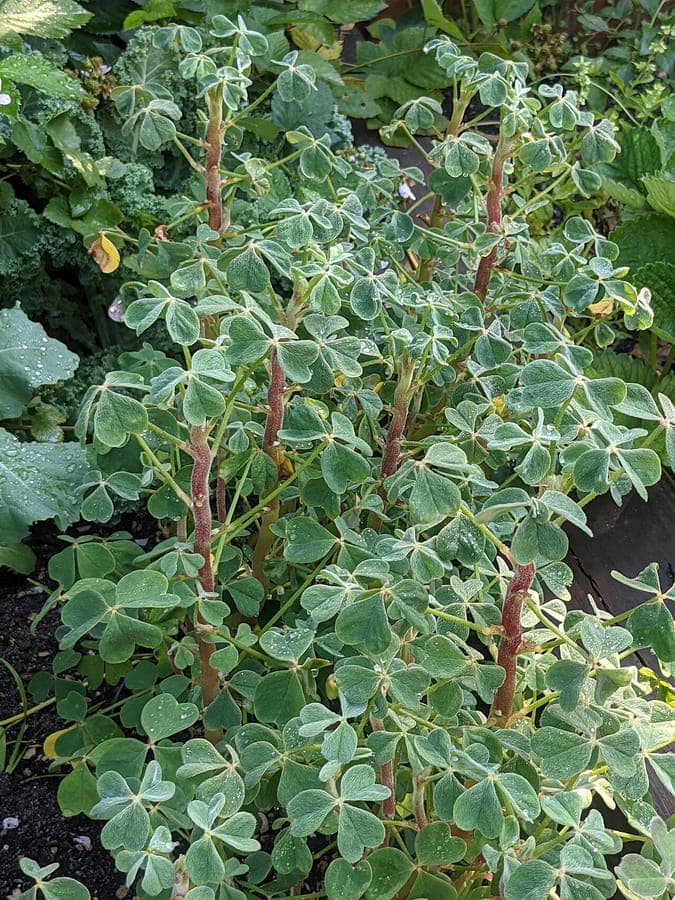
Izawa Ryu / CC BY-SA 4.0, via Wikimedia Commons
Oca: The Complete Growing Guide
Oxalis tuberosa
Want to see Oca: The Complete Growing Guide in your garden?
1 minute, no credit card
Overview
Oca (Oxalis tuberosa), also known as truffette acide, is a traditional Andean tuber crop that dates back to pre-Columbian times. This nutrient-dense vegetable has been cultivated in Peru, Bolivia, and Ecuador for millennia. In Europe and North America, oca is gaining recognition for its nutritional value and interesting flavor profile.
Appearance and Bloom
Oca forms a low-growing plant with characteristic three-lobed leaves, resembling clover. The plant reaches 20-40 cm in height with a compact growth habit. During the growing season, small yellow flowers appear in delicate clusters. However, the plant typically does not flower in temperate climates outside the tropics due to day-length requirements. The valuable parts are the underground tubers, which come in striking colors: yellow, red, purple, or striped.
Ideal Location
Oca thrives in sunny to partially shaded locations. At least 4-5 hours of sunlight daily is needed for good tuber development. In very hot summers, afternoon shade can be beneficial. Plant oca in soils rich with organic matter. The plant is not very wind-sensitive but requires consistent moisture.
Soil
Oca needs loose, well-draining soil with abundant organic material. A mixture of compost, garden soil, and sawdust works well. Acidic soils (pH 5.5-6.5) are preferred. Add ample compost for moisture retention and nutrients. The plant is not demanding but grows better in rich soil.
Free design
Want to see Oca: The Complete Growing Guide in your garden? Make a free design now.
Watering
Oca requires regular watering, especially once flowering begins. The soil should not dry out completely. Water when the top 2-3 cm feels dry. Ensure good drainage to prevent root rot. During dry periods, more frequent watering may be necessary.
Pruning
Minimal pruning is needed. Remove only diseased or damaged leaves. Under normal growth, the plant remains compact. Do not remove the growing tip, as this disrupts tuber production.
Maintenance Calendar
- Spring: Prepare planting area, add organic matter
- Summer: Regular watering, weed removal
- Autumn: Apply fertilizer, prepare for harvest
- Winter: Store tubers in cool, dark location
Winter Hardiness
Oca is frost-sensitive and cannot tolerate temperatures below 0 degrees Celsius. After the first frost, foliage dies. Harvest tubers before the first frost arrives. In temperate climates, oca is best treated as an annual crop.
Companion Plants
Pair oca with other food crops such as potatoes, onions, and carrots. Oca fits nicely into an organic vegetable garden. Plant herbs alongside such as parsley and dill to promote biodiversity.
Closing Thoughts
Growing oca is simple and rewarding, especially for those who appreciate heirloom vegetables. The tubers are nutritious, full of unique flavors, and can be prepared in numerous ways. With minimal care, you will enjoy a bountiful harvest. Perfect for gardenworld.app users who want to grow nutritious vegetables in their garden with intelligent garden designs.
Oca truly adds something special to your vegetable garden and reminds us of ancient traditions from the Andes.
Want to see Oca: The Complete Growing Guide in your garden? Make a free design now.
Upload a photo, pick a style, and get a photorealistic design with plant list in under a minute.
No credit card required


Similar plants
Oxalis incarnata: complete guide
Oxalis incarnata
Discover the charming lilac oxalis for your front garden. Full growing guide, care tips and design ideas for this delicate summer bloomer.
Oxalis valdiviensis: complete guide
Oxalis valdiviensis
Learn how to grow Chilean yellow-sorrel with location, soil, watering and care tips. An elegant yellow-flowering ornamental.
Lifeplant: complete guide
Biophytum sensitivum
Lifeplant is a fascinating houseplant with sensitive leaves that fold when touched. Discover how to grow this tropical wonder and where to find it.