
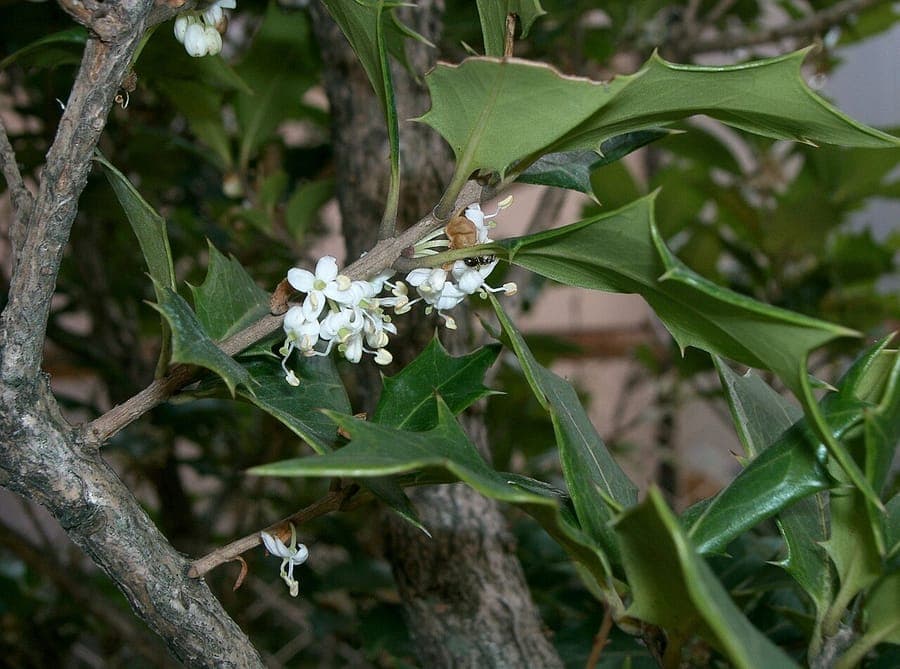
KENPEI / CC BY-SA 3.0, via Wikimedia Commons
Osmanthus heterophyllus: complete guide
Osmanthus heterophyllus
Want to see Osmanthus heterophyllus: complete guide in your garden?
1 minute, no credit card
Overview
Osmanthus heterophyllus, known as Chinese holly or holly-olive, is a beautiful hardy shrub from Japan and Taiwan. This plant is highly valued for its fragrant, white flowers that appear in spring and autumn, and its lovely, spiny leaves that remain green year-round.
The plant grows slowly to a neat, striking shrub and is excellent for both formal and informal gardens. The fragrance of the flowers is irresistible and attracts many bees.
Appearance and bloom
Osmanthus heterophyllus has small, dark-green leaves with sharp teeth along the edges, making it resemble common holly, although it actually belongs to the olive family. The leaves are glossy and remain green year-round.
The flowers are small, white tubes that appear in dense clusters, usually in March-April and again in September-October. They have a sweet fragrance similar to jasmine. The fruits are small, bluish-black, and not particularly conspicuous.
Ideal location
Osmanthus heterophyllus grows best in a sunny to semi-shady location. The plant tolerates shade but will develop better and produce more flowers with full sun. At least four hours of direct sun per day is ideal.
The plant makes no special demands on wind resistance, but strong winds can damage the flowers. Protect against very strong wind.
Soil
Osmanthus heterophyllus grows well on most soils but prefers well-draining, moderately nutrient-rich soil. The plant can adapt to both slightly acidic and neutral soils, with a pH range of approximately 5.0 to 6.5.
Ensure the soil is not permanently wet. Add organic material when planting to improve soil structure and drainage.
Watering
Osmanthus heterophyllus requires regular water supply in the first growing season. Once well established, the plant is fairly drought-tolerant. Water when the top two centimeters of soil feel dry.
During very dry periods, you can provide supplemental water. In winter, less water is needed, but do not let the soil dry out completely.
Free design
Want to see Osmanthus heterophyllus: complete guide in your garden? Make a free design now.
Pruning
Osmanthus heterophyllus responds well to gentle pruning to maintain shape and compactness. After spring flowering, you can cut the plant back to the desired size. This also helps stimulate the next flowering.
Avoid severe pruning of very old wood. Regular, moderate pruning keeps the plant in better shape.
Maintenance calendar
Spring: water regularly as temperatures rise. Moderate pruning after flowering. Add organic material. Summer: water during dry periods. Check growth. Autumn: enjoy second flowering period. Moderate pruning after September-October bloom. Winter: minimal maintenance. Water only during severe drought.
Winter hardiness
Osmanthus heterophyllus is quite hardy in temperate gardens, generally hardy to approximately -12 to -15 degrees Celsius as a mature plant. Young plants may need protection in their first winters.
In temperate regions, the plant overwinters without problems. In very severe weather, leaf damage can occur, but the plant recovers well.
Companion plants
Osmanthus heterophyllus combines well with other shade-tolerant hardy shrubs such as Ilex, Euonymus, Buxus, and Prunus laurocerasus. This combination creates an interesting mix of textures and seasonal growth.
Closing
The Chinese holly is an excellent choice for those who want a long-term interesting, fragrant front garden. With minimal care, you'll enjoy the fragrant flowers and attractive foliage for many years.
Looking for a hardy, fragrant shrub? Osmanthus heterophyllus certainly deserves a place in your garden. Available from garden centers and nurseries.
More inspiration can be found on gardenworld.app.
Want to see Osmanthus heterophyllus: complete guide in your garden? Make a free design now.
Upload a photo, pick a style, and get a photorealistic design with plant list in under a minute.
No credit card required


Similar plants
Rough menodora: complete guide
Menodora scabra
Full guide to Menodora scabra: a drought-tolerant desert subshrub with bright yellow flowers, ideal for rock gardens and xeriscapes.
Fraxinus dipetala: complete guide
Fraxinus dipetala
California ash or two-petal ash from southwestern USA. Beautiful spring flowers, drought-tolerant. Experimental choice for warm Mediterranean front gardens.
Syringa komarowii: complete guide
Syringa komarowii
Syringa komarowii is a striking lilac from central China with elegant flower spikes and lovely foliage. Discover the complete care guide here.