
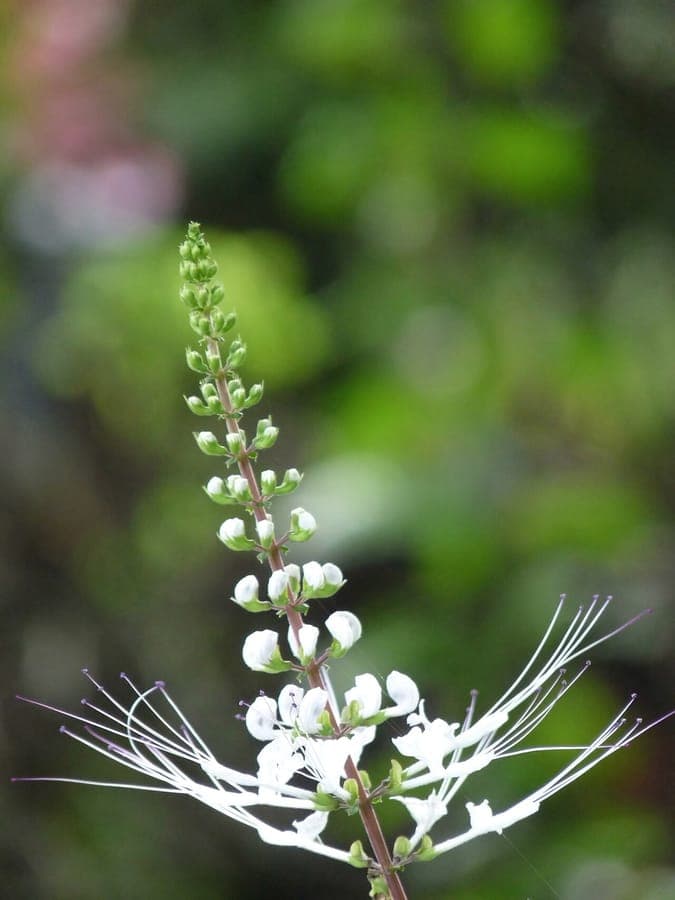
Jeevan Jose, Kerala, India / CC BY-SA 4.0, via Wikimedia Commons
Orthosiphon aristatus: complete guide
Orthosiphon aristatus
Want to see Orthosiphon aristatus: complete guide in your garden?
1 minute, no credit card
Overview
Orthosiphon aristatus, commonly known as Whiskerplant or Java tea, is a fascinating herbaceous plant from the mint family (Lamiaceae). Native to tropical and subtropical Asia through to northern Australia, this plant is cherished for its unique flowers featuring long, delicate stamens that resemble cat whiskers - hence the English common name.
The plant is relatively easy to cultivate and offers a beautiful combination of decorative appeal and traditional medicinal use. In many Asian cultures, it is brewed as tea for its purported health benefits.
Appearance and bloom
The Whiskerplant grows as an herbaceous plant with upright stems reaching 30-60 cm in height. The leaves are elongated, finely toothed, and greyish-green in color, with a subtle texture that feels soft to touch.
The flowers are the highlight of this plant. They appear in graceful spikes at the branch tips and have a very distinctive form. Flowers are usually white to pale pink with purple details. The long stamens extend far beyond the flower corolla, indeed resembling cat whiskers. Blooming typically occurs from mid to late summer, depending on light levels.
Ideal location
Orthosiphon aristatus thrives in locations with abundant light. Ideally, place it where it receives 4-6 hours of direct sunlight daily. The plant can tolerate partial shade, though it will flower less abundantly.
Indoors, place the plant on a sunny windowsill, preferably facing south or west. Ensure the plant is not scorched by intense afternoon sun directly through glass in very hot climates.
Temperature-wise, this tropical plant prefers warm conditions between 18-28 degrees Celsius. Avoid cold drafts and temperatures below 10 degrees.
Soil
Whiskerplant requires well-draining soil. Use a freely draining soil mix based on universal potting soil mixed with perlite or coarse sand in a 3:1 ratio. This helps prevent water from pooling around the roots.
A pH between 6.0 and 7.0 is ideal. You can make the soil lightly nutrient-rich, though the plant is not particularly fussy. Soil preferences: moderately fertile, well-draining.
Free design
Want to see Orthosiphon aristatus: complete guide in your garden? Make a free design now.
Watering
Water the plant regularly, but allow the soil to dry out about 2-3 cm between waterings. The Whiskerplant likes to be somewhat moist, but not waterlogged.
During the growing season (spring and summer), maintain moisture better than in autumn and winter. In winter, watering can be significantly reduced to about half the summer volume.
Ensure you prevent leaf diseases by watering at the base rather than overhead. This also helps prevent fungal infections in tropical, humid climates.
Pruning
Pruning encourages branching and creates a more compact, fuller plant. Pinch the main stem halfway through the growing season when the plant is about 15-20 cm tall. This stimulates lateral stem growth.
Regularly remove faded flowers to promote more blooms. This process, called deadheading, significantly extends the flowering period. In spring, remove older, straggly stems.
Maintenance calendar
January-February: Minimal feeding, careful watering. March-April: Begin more frequent watering, start seasonal feeding every two weeks. May-July: Peak growth period. Water regularly, weekly feeding. Prune for shape. August-September: Peak blooming period. Continue regular care. October-November: Gradually reduce feeding. December: Minimal feeding, adjust to low watering needs.
Winter hardiness
Orthosiphon aristatus is not winter hardy. In climates where temperatures regularly drop below 10 degrees Celsius, this plant must be protected. In Northern Europe, the plant can only be outdoors during summer.
For winter overwintering, the plant is best kept indoors in a warm, well-lit location. A minimum temperature of 12-15 degrees is necessary.
Companion plants
Whiskerplant combines well with other tropical herbs and plants. Consider these combinations:
- Basil - similar watering needs and warmth preference
- Lemon balm - equal growing conditions
- Calendula - can serve as companion for insect attraction
- Lavender - textural and color contrast provider
Closing
Orthosiphon aristatus is a versatile plant combining decorative beauty with practical applications. With its unique flowers and easy care requirements, it's an excellent choice for gardeners wanting to try something different. Provide plenty of warmth, light, and well-draining soil, and you'll enjoy this beautiful Whiskerplant throughout the season.
You can find many plants at local garden centers, where you can get advice on the best varieties for your garden. Discover more plant guides on gardenworld.app and plan your perfect garden today!
Want to see Orthosiphon aristatus: complete guide in your garden? Make a free design now.
Upload a photo, pick a style, and get a photorealistic design with plant list in under a minute.
No credit card required


Similar plants
Apple mint (Mentha x villosa): complete guide
Mentha x villosa
Meet apple mint (Mentha x villosa): a fruity-scented kitchen herb with woolly leaves, perfect for tea and mojitos.
Salvia peyronii: complete guide
Salvia peyronii
Discover Salvia peyronii, a rare Lebanese mountain sage. Growing tips, hardiness, and companion planting for a Mediterranean gravel garden.
Bigleaf mint (Mentha x rotundifolia): complete guide
Mentha x rotundifolia
Discover bigleaf mint: cultivation, care tips, and garden uses. Learn how to grow this aromatic herb with soft, hairy leaves.