
Ivar Leidus / CC BY-SA 3.0, via Wikimedia Commons
Wild marjoram: complete guide
Origanum vulgare
Want to see Wild marjoram: complete guide in your garden?
1 minute, no credit card
Overview
Wild marjoram (Origanum vulgare) is a resilient, aromatic herb that brings both beauty and utility to the garden. A member of the Lamiaceae family, it's native to parts of Europe, North Africa, and Central Asia, and grows naturally on rocky slopes, dry meadows, and roadside banks. In the home garden, it's a low-maintenance perennial that reaches 30–60 cm in height and spreads up to 40 cm wide. Its pungent, oregano-like scent makes it a favourite in the kitchen, while its long bloom period supports pollinators.
On gardenworld.app, you can design a garden layout that highlights wild marjoram's strengths - whether in a rock garden, herb spiral, or sunny border.
Appearance & bloom cycle
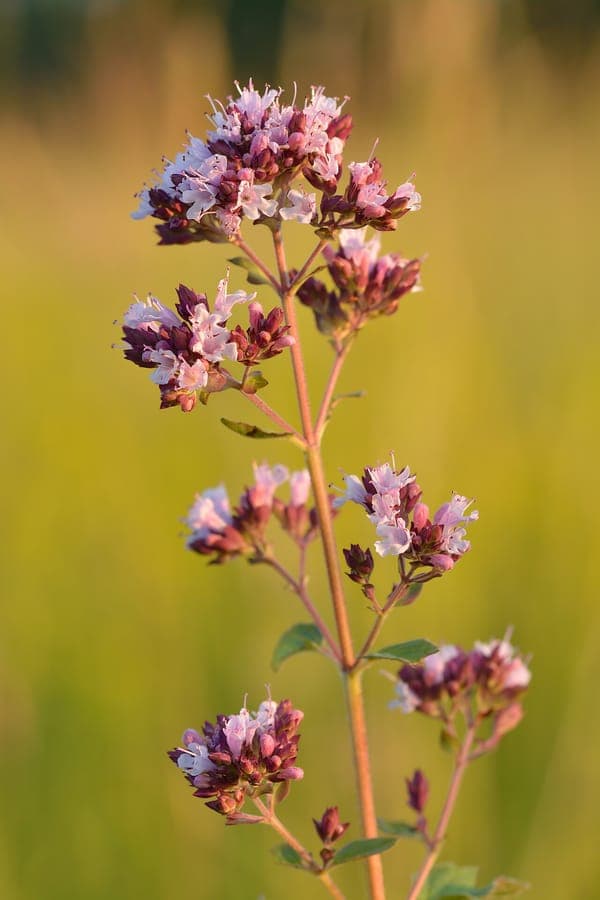
Wild marjoram produces dense clusters of small purple flowers from July to September. The blooms sit in terminal spikes, often with pinkish bracts that add visual interest. Leaves are oval, 2–3 cm long, dark green, and slightly hairy, growing opposite on square stems. In spring, new growth emerges from woody bases, forming bushy, upright clumps.
The plant's fragrance intensifies when leaves are brushed or crushed, releasing a warm, spicy aroma. This trait makes it ideal for planting along pathways or near seating areas. Bees, hoverflies, and butterflies frequent the flowers, making it a key plant for supporting garden biodiversity.
Ideal location
Wild marjoram needs at least 6 hours of direct sun daily - full sun is best. Choose a warm, sheltered spot with good air circulation to prevent fungal issues. It thrives in rock gardens, herb beds, or containers on sunny patios. South- or southwest-facing walls provide ideal microclimates, radiating heat and reducing moisture buildup.
Avoid shaded or damp areas: the plant will become leggy and fail to bloom. On gardenworld.app, you can map sunlight patterns in your garden to find the perfect spot for drought-loving herbs like wild marjoram.
Soil requirements
This plant prefers well-drained, sandy or gravelly soil with a pH between 7.0 and 7.5. It tolerates poor, low-fertility soils and even chalky conditions - in fact, richer soils can reduce flavour intensity. Avoid heavy clay or water-retentive mixtures. Improve drainage by adding horticultural grit or coarse sand when planting in borders.
In containers, use a mix of 70% potting soil and 30% perlite or lava grit. Never use water-retaining gels or add compost - these encourage root rot and weak growth.
Free design
Want to see Wild marjoram: complete guide in your garden? Make a free design now.
Watering
Once established, wild marjoram is highly drought-tolerant. Water only during prolonged dry spells, especially in the first growing season. Check soil moisture at 5 cm depth; if dry, water deeply but infrequently. Always water at the base to keep foliage dry.
Container plants dry out faster: water when the top 3–5 cm of soil feels dry. Reduce watering in autumn and stop entirely during winter, unless pots are under cover.
Pruning
After flowering, cut stems back to 5–10 cm above ground level. This prevents woody growth and encourages compact, bushy regrowth. A light trim in early spring removes winter damage and stimulates fresh shoots. Never prune into old, bare wood - new growth won't emerge.
Use pruned stems fresh or dried for cooking. Hang small bundles upside down in a dark, airy space for 1–2 weeks. Store dried leaves in airtight jars away from light.
Maintenance calendar
- Jan: inspect for winter damage, protect containers from frost heave
- Feb: check potted plants for root rot
- Mar: remove dead foliage, lightly loosen soil
- Apr: prune lightly if needed, watch for new growth
- May: monitor for slugs on young shoots
- Jun: avoid watering unless extremely dry
- Jul: enjoy peak bloom, observe pollinator activity
- Aug: trim lightly to extend flowering
- Sep: leave late flowers for seed-eating birds
- Oct: stop watering, move pots to shelter if needed
- Nov: leave stems intact for winter structure
- Dec: no maintenance required
Winter hardiness
Wild marjoram is hardy to USDA zone 5 (-15°C). It survives most UK and northern European winters without protection when planted in the ground. Potted plants are more vulnerable: elevate containers on feet and wrap with hessian or bubble wrap during extended freezes. Avoid wet, compacted soil in winter - that's the real threat.
Companion plants
Pair wild marjoram with sun-loving, drought-tolerant species: lavender, thyme, sage, sedum, or yarrow. In herb gardens, it complements rosemary and lemon balm. In borders, combine with rudbeckia, echinacea, or artemisia for contrast in texture and colour.
Avoid moisture-loving plants like ferns or astilbe - their needs clash. Use the companion planner on gardenworld.app to build a harmonious planting scheme.
Closing
Wild marjoram is a quiet achiever: tough, useful, and beautiful. It asks for little but gives back in flavour, flowers, and ecological value. Whether grown in a pot on a balcony or as part of a wildflower meadow, it's a reliable performer. Buy healthy plants from local garden centres or trusted retailers, where you'll often find robust specimens. And remember: a little planning goes a long way. With gardenworld.app, you can create a garden that works with your conditions - not against them.
Want to see Wild marjoram: complete guide in your garden? Make a free design now.
Upload a photo, pick a style, and get a photorealistic design with plant list in under a minute.
No credit card required


Similar plants
Apple mint (Mentha x villosa): complete guide
Mentha x villosa
Meet apple mint (Mentha x villosa): a fruity-scented kitchen herb with woolly leaves, perfect for tea and mojitos.
Salvia peyronii: complete guide
Salvia peyronii
Discover Salvia peyronii, a rare Lebanese mountain sage. Growing tips, hardiness, and companion planting for a Mediterranean gravel garden.
Bigleaf mint (Mentha x rotundifolia): complete guide
Mentha x rotundifolia
Discover bigleaf mint: cultivation, care tips, and garden uses. Learn how to grow this aromatic herb with soft, hairy leaves.