
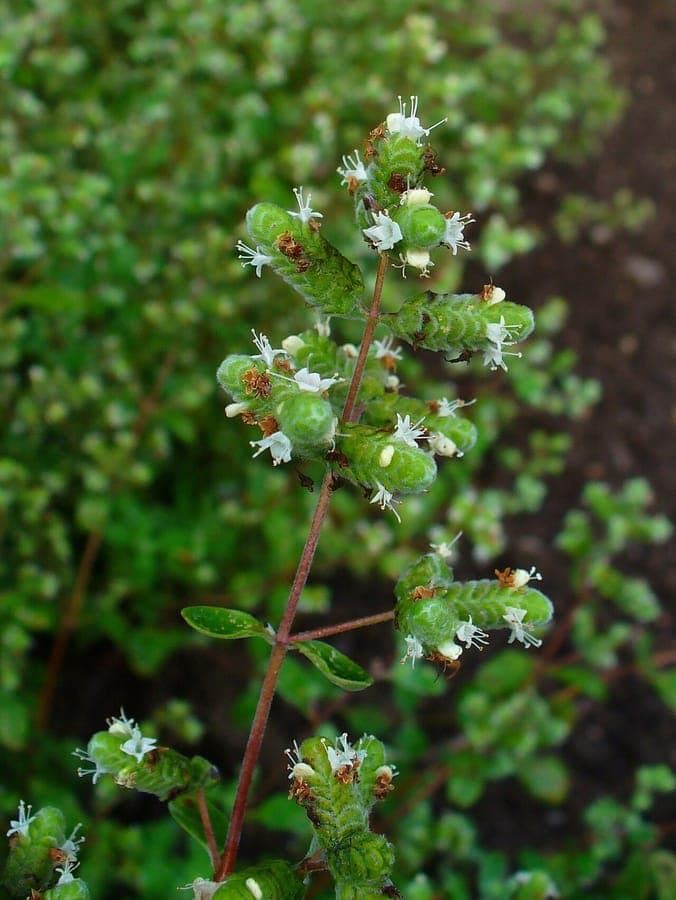
H. Zell / CC BY-SA 3.0, via Wikimedia Commons
Pot marjoram: complete guide
Origanum majorana
Want to see Pot marjoram: complete guide in your garden?
1 minute, no credit card
Overview
Pot marjoram (Origanum majorana) is a fragrant herb from the Lamiaceae family, native to Cyprus and parts of Turkey. Unlike common oregano, it has a sweeter, milder flavour and is often used in delicate dishes. As a semi-evergreen subshrub or herbaceous plant, it grows 30–50 cm tall and thrives in sunny, well-drained spots. In temperate climates like the UK and northern Europe, it's usually grown as an annual, though it can survive mild winters in USDA zones 8–10. Marjoram is perfect for kitchen gardens and borders, adding both scent and visual softness.
On gardenworld.app, you can design a garden layout that highlights marjoram's growing needs and pairs it with complementary plants.
Appearance & bloom cycle
Pot marjoram forms a compact, bushy mound with soft, grey-green, oval leaves covered in fine hairs. From July to September, it produces small, pale purple flowers in dense clusters at the stem tips. These blooms attract bees, hoverflies, and other pollinators. The plant's aroma is warm and slightly citrusy, most intense when leaves are crushed. Unlike Origanum vulgare, marjoram remains tender and less woody, making it more suitable for culinary use.
Ideal location
Marjoram needs full sun-rate 7/10 or higher-meaning at least 6–8 hours of direct sunlight daily. A south-facing herb bed, rock garden, or container on a sunny patio works best. It appreciates shelter from strong winds, especially in coastal areas. In gardens, place it near the edge of borders or in raised beds where drainage is optimal. For balcony growers, use pots at least 25 cm in diameter. Pair it with other Mediterranean herbs for a cohesive look and shared care routine.
Soil requirements
This herb prefers light, sandy, or gravelly soils with excellent drainage and a pH of 7.5–8.0. Avoid heavy clay unless amended with grit or perlite. A mix of loam, sharp sand, and a small amount of compost is ideal. In containers, use a cactus or Mediterranean herb mix. Poor drainage leads to root rot, so raised beds or sloped areas are advantageous. Test your soil pH easily through a custom report on gardenworld.app.
Watering
Marjoram is drought tolerant once established. Water deeply but infrequently-about once a week during dry spells in summer. Let the top 2–3 cm of soil dry out between waterings. Potted plants may need watering twice weekly in hot weather. Always water at the base to prevent fungal diseases. Use rainwater when possible, as marjoram dislikes high levels of chlorine and lime in tap water.
Free design
Want to see Pot marjoram: complete guide in your garden? Make a free design now.
Pruning
Pinch back the tips regularly from spring to mid-summer to encourage bushiness and delay flowering. If you're growing for culinary use, remove flower buds as they form-this keeps the leaves flavourful. In early spring, cut back old stems to 10 cm above the crown to promote fresh growth. Never prune into old wood, as it may not regenerate. Use cuttings for drying or to propagate new plants.
Maintenance calendar
- January: Dormant; keep dry if overwintering indoors
- February: Check for pests on indoor plants
- March: Inspect root health; repot if rootbound
- April: Prune back; start light feeding
- May: Harden off and plant outdoors after last frost
- June: Begin harvesting leaves; monitor moisture
- July: Flowers appear; reduce watering if rainy
- August: Harvest for drying; watch for aphids
- September: Allow some flowers to set seed for pollinators
- October: Bring pots indoors before first frost
- November: Stop fertilising; keep soil dry
- December: Keep in cool, bright spot (5–10°C)
Winter hardiness
Marjoram is not reliably hardy in USDA zones below 8. In cooler regions, it's best grown as an annual or overwintered in pots indoors. Keep container plants in a cool, bright room or unheated greenhouse at 5–10°C. Water only when soil is dry. In mild climates (zone 8+), mulch the base with gravel or straw to protect roots from freeze-thaw cycles.
Companion plants
Marjoram grows well with thyme, sage, rosemary, and lavender-all sharing similar sun and soil needs. These pairings reduce pest pressure and boost garden resilience. It also complements low-growing perennials like sedum or yarrow. Avoid planting near moisture-loving species such as ferns or astilbe. In the vegetable garden, marjoram can be grown near tomatoes or cabbage, where its scent may deter aphids.
Closing
Pot marjoram is a rewarding herb that bridges beauty and utility. Its soft foliage and pollinator-friendly blooms enhance any garden, while its leaves season soups, stews, and roasted vegetables with subtle warmth. With proper sun, sharp drainage, and minimal watering, it thrives in beds, walls, or containers. Buy young plants in spring from garden centres or grow from seed indoors 8–10 weeks before the last frost. Remember: marjoram hates wet feet. And when planning your herb layout, visit gardenworld.app to create a custom design that maximises sun exposure and companion planting.
Want to see Pot marjoram: complete guide in your garden? Make a free design now.
Upload a photo, pick a style, and get a photorealistic design with plant list in under a minute.
No credit card required


Similar plants
Apple mint (Mentha x villosa): complete guide
Mentha x villosa
Meet apple mint (Mentha x villosa): a fruity-scented kitchen herb with woolly leaves, perfect for tea and mojitos.
Salvia peyronii: complete guide
Salvia peyronii
Discover Salvia peyronii, a rare Lebanese mountain sage. Growing tips, hardiness, and companion planting for a Mediterranean gravel garden.
Bigleaf mint (Mentha x rotundifolia): complete guide
Mentha x rotundifolia
Discover bigleaf mint: cultivation, care tips, and garden uses. Learn how to grow this aromatic herb with soft, hairy leaves.