
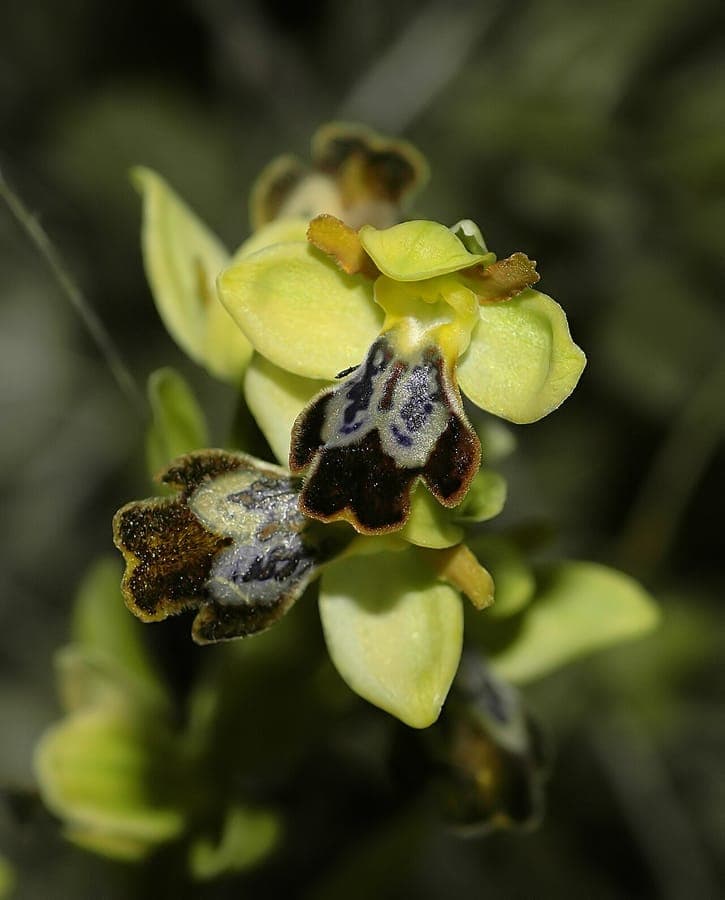
Hans Hillewaert / CC BY-SA 4.0, via Wikimedia Commons
Dark bee orchid: complete guide
Ophrys fusca
Want to see Dark bee orchid: complete guide in your garden?
1 minute, no credit card
The Dark bee orchid (Ophrys fusca), also called Sombre Bee-orchid or Brownish Ophrys, is a fascinating wild orchid from throughout the Mediterranean Sea region. This unique orchid is known for its exceptional flower structure that mimics insects to achieve pollination. The plant blooms from March to May and provides a visual highlight in Mediterranean alpine meadows.
Appearance and Bloom
The Dark bee orchid is a small orchid that reaches 15 to 40 centimeters in height. The plant forms a rosette of grayish-green leaves close to the ground. The flower stem carries 3 to 8 flowers with a striking brown to grayish-brown color. Each flower consists of 2 upper sepals, 2 side petals and a lower lip (labellum). The lower lip is very characteristic: it follows the shape of a female bee's body very precisely, including hairs and shine. The flower thus imitates a female bee to attract male bees for 'pseudocopulation' which achieves pollination.
Ideal Location
The Dark bee orchid thrives best in full sun to light shade, on open alpine meadows and limestone slopes. The plant prefers dry Mediterranean alpine environments. Place the plant in a location with at least 5 to 6 hours of direct sunlight. In warm regions, light afternoon shade can be beneficial. The plant loves growing on south to west-facing slopes where the sun is intense.
Soil
The Dark bee orchid prefers alkaline, calcareous soil. Plant in very well-draining, stony or gravelly soil. The plant is heavily dependent on mycorrhizal fungi in the soil that are connected to the roots. This makes cultivation in ordinary potting soil very difficult. Try planting the orchid in a mixture of gravel, sand, fine gravel and chalk that mimics the natural environment.
Free design
Want to see Dark bee orchid: complete guide in your garden? Make a free design now.
Watering and Moisture Management
The Dark bee orchid prefers very dry conditions. Once established, the plant needs virtually no extra water. Water only carefully in very dry periods. The plant enters a resting state in the summer season and forms underground tubers. Do not water during this rest period.
Pruning and Maintenance
This orchid does not need pruning. Let the plant follow its natural cycle: growth in autumn-winter-spring, blooming in March-May, rest in summer. Remove faded flowers if you want to prevent seed production. The plant propagates via seeds or underground tubers.
Maintenance Calendar
September to October: New growth begins. Water carefully. November to February: Leaf growth. Little water needed. March to May: Blooming! Minimal care, do not give extra water. June to August: Rest period. Plant disappears above ground. No water!
Winter Hardiness
The Dark bee orchid is hardy to about -5 to -10 degrees Celsius (USDA zone 7-9). In colder regions, the plant must be protected or grown indoors. The plant forms underground tubers that can survive frost if well-drained. In temperate regions, plant the orchid in rock gardens or on dry, warm mountain slopes.
Companion Plants
The Dark bee orchid thrives in the company of other Mediterranean alpine plants such as lavender, mountain thyme, small sedums and dolomite rock-breakers. These combinations create an authentic Mediterranean alpine environment. The plant is small and subtle, so it does not obstruct larger plants.
Closing Thoughts
The Dark bee orchid is a fascinating addition for orchid enthusiasts and nature lovers. The unique pollination mechanism is a marvel of nature. This plant is difficult to cultivate outside Mediterranean climate zones. Look for this plant in Mediterranean gardens, rock gardens or from specialized orchid growers who specialize in wild species.
Want to see Dark bee orchid: complete guide in your garden? Make a free design now.
Upload a photo, pick a style, and get a photorealistic design with plant list in under a minute.
No credit card required


Similar plants
Ram's-head lady's slipper: complete guide
Cypripedium arietinum
Everything you need to know about growing Cypripedium arietinum, a rare woodland orchid for cool, moist garden settings. Soil, care and planting tips.
Sparrow's-egg lady's slipper: complete guide
Cypripedium passerinum
Everything about growing Cypripedium passerinum, a cold-hardy subarctic orchid suited to cool, moist, shaded garden spots. Soil, care and companion plants.
Algerian Butterfly-orchid: complete guide
Platanthera algeriensis
Everything about Platanthera algeriensis, the rare Mediterranean orchid with greenish flowers native to Algeria, Morocco, Corsica and Spain.