
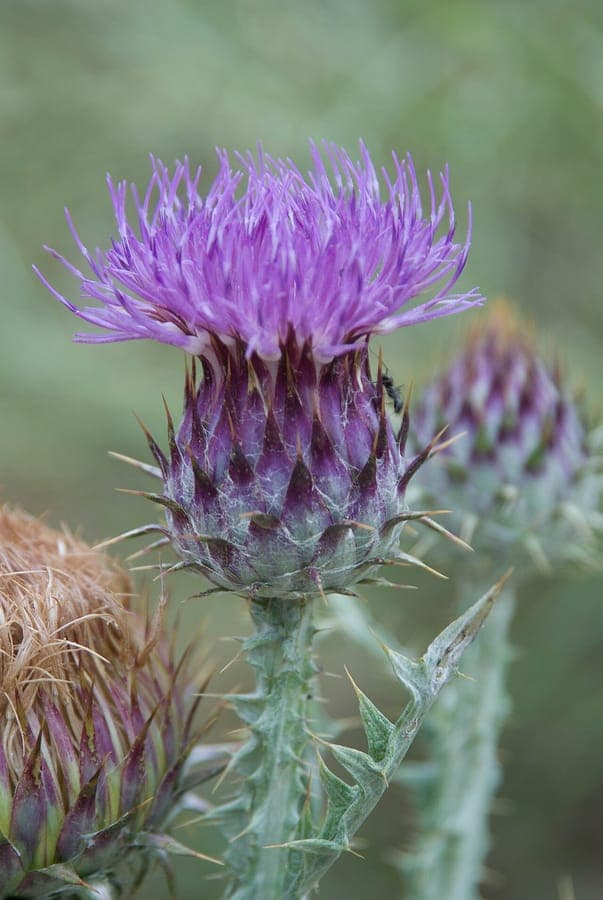
Ranko / CC BY 3.0, via Wikimedia Commons
Moor's Cotton Thistle: complete guide
Onopordum nervosum
Want to see Moor's Cotton Thistle: complete guide in your garden?
1 minute, no credit card
Moor's Cotton Thistle (Onopordum nervosum), also called Reticulate Thistle or Onopordon, is a spectacular thistle from central and southern Portugal and Spain. This robust biennial thistle is known for its dramatic appearance and exceptional adaptation to dry Mediterranean conditions. The plant is a wonderful accent for drought-tolerant gardens.
Appearance and Bloom
Moor's Cotton Thistle normally reaches 50 to 80 centimeters in height with an enormous flower crown at the top. The leaves are exceptionally wide, grayish-green and have a distinctive nerve structure - these are 'nervous' leaves as the botanical name refers to. The plant is densely covered with strong thorns. The flowers are soft purple to deep purple and appear from June to August. The flower heads are enormous, up to 4 centimeters in diameter, and very attractive to butterflies and bees.
Ideal Location
Moor's Cotton Thistle requires full sun and grows optimally in very warm, dry places. This is not a plant for temperate, moist climates. Place this thistle in the warmest, sunniest corners of your garden where it receives at least 8 hours of direct sunlight. The plant is exceptionally drought-tolerant thanks to its thick, fleshy stem and sideways-growing leaves.
Soil
Moor's Cotton Thistle grows optimally in lean, well-draining, alkaline soils. A pH between 7.5 and 8.5 is ideal. Plant in very well-draining, sandy or rocky soil. Avoid garden soil with lots of humus - this plant feels at home in poor, rocky soil. Add gravel and sand to heavy clay soils for better drainage.
Watering and Moisture Management
Once established, Moor's Cotton Thistle needs virtually no water. As a young plant (first season) water carefully, but then give as little water as possible. The plant is adapted to extreme drought and water quality is much worse than water shortage. Regular watering can kill the plant. This is a plant for very warm, dry regions.
Free design
Want to see Moor's Cotton Thistle: complete guide in your garden? Make a free design now.
Pruning and Maintenance
This biennial plant does not need pruning. In the second season, the plant forms a huge flower stem. If you want to prevent seed spread, remove the flowers before they form seeds. Otherwise, let the plant follow its natural cycle. The plant will die after seed production.
Maintenance Calendar
Year 1, Spring: Sow seeds or plant young plants. Water carefully until root formation. Year 1, Summer-Fall: Plant grows leaves. Minimal care. Year 2, Spring-Summer: Plant forms flowers. Blooms June-August. Harvest seeds in September. Year 2, Fall: Plant gradually dies off after seed production.
Winter Hardiness
Moor's Cotton Thistle is moderately winter-hardy. In USDA zones 8-10, the plant can overwinter outdoors. In colder regions, one sows in spring for summer bloom, but the plant dies at frost. In Great Britain (where the plant is introduced) overwinters as a frost-sensitive biennial. Protect against extreme frost in temperate regions.
Companion Plants
Moor's Cotton Thistle is a statement plant and doesn't need many associations. Plant together with other drought-tolerant Mediterranean plants such as marjoram, oregano, rock rose and gray-green herb plants. The enormous flower contrasts well with low-growing silver-gray plants.
Closing Thoughts
Moor's Cotton Thistle is a dramatic choice for very warm, dry Mediterranean gardens. The spectacular blooms are a highlight of the summer season. This plant is not suitable for temperate, moist climates. Look for seeds and young plants at specialized Mediterranean garden centres and seed merchants.
Want to see Moor's Cotton Thistle: complete guide in your garden? Make a free design now.
Upload a photo, pick a style, and get a photorealistic design with plant list in under a minute.
No credit card required


Similar plants
Calendula stellata: complete guide
Calendula stellata
Complete guide to Calendula stellata, the star-flowered marigold from Sicily: location, soil, watering and companion planting tips.
Korean chrysanthemum: complete guide
Chrysanthemum x rubellum
Chrysanthemum x rubellum is a hardy autumn perennial with single pink to copper flowers from August to November. Care and combinations.
Helianthus divaricatus: complete guide
Helianthus divaricatus
Helianthus divaricatus is a North American woodland sunflower with yellow summer blooms, ideal for naturalistic borders and shady edges.