
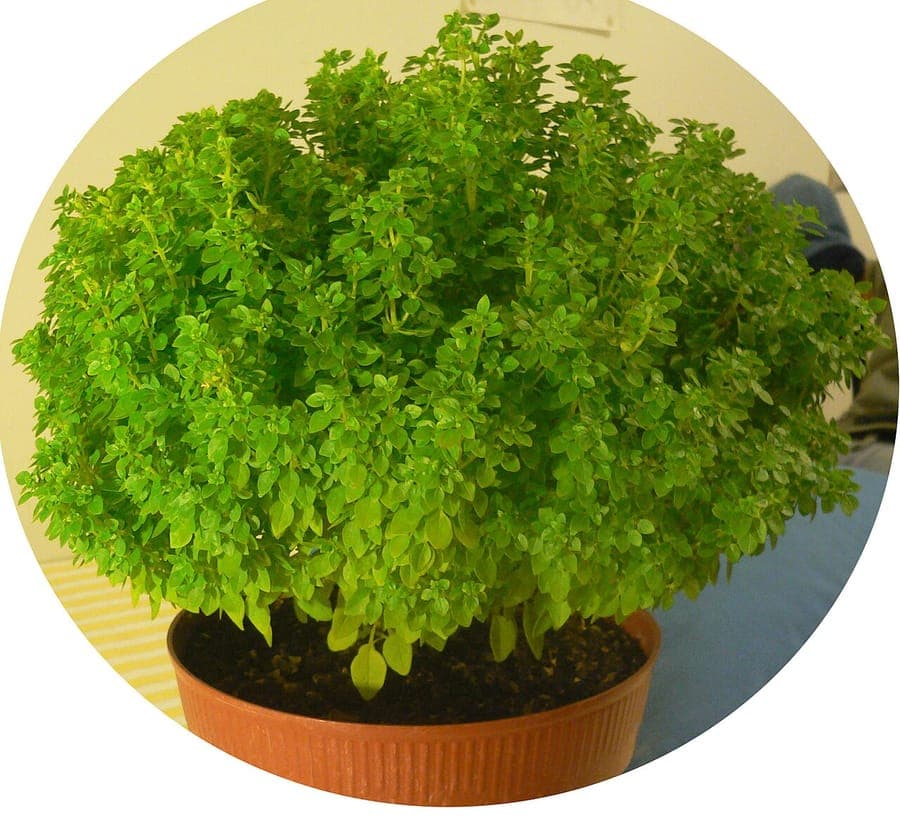
Dan Alex / CC BY-SA 3.0, via Wikimedia Commons
Bush basil: complete guide
Ocimum minimum
Want to see Bush basil: complete guide in your garden?
1 minute, no credit card
Overview
Bush basil, or Ocimum minimum, is a compact, bushy herb that brings both flavour and structure to gardens across temperate climates. Unlike its taller cousin Ocimum basilicum, this species stays low, rarely exceeding 30 cm in height, making it ideal for containers, herb spirals, or as an edging plant in mixed beds. A member of the Lamiaceae family, it shares aromatic traits with mint, thyme, and oregano, but its scent is sharper - peppery with a sweet anise undertone. As an annual, it completes its life cycle in one growing season, so plan to sow or buy it fresh each year.
On gardenworld.app, you can design a kitchen garden layout that features bush basil as a focal point or companion. Its neat growth habit and culinary value make it a favourite among home growers, while its flowers attract pollinators like bees and hoverflies when left to bloom.
Appearance & bloom cycle
Bush basil forms a tight, rounded mound of small, oval, dark green leaves. The foliage is slightly hairy and highly aromatic when brushed or crushed. From June through September, it produces whorls of tiny white to pale lilac flowers at the stem tips. These blooms are subtle but effective at drawing in beneficial insects.
While the flowers are attractive, most gardeners pinch them off as soon as they appear. This prevents the plant from going to seed too early and redirects energy into leaf production, maintaining flavour and tenderness. If you let a few flower spikes develop, you'll notice increased insect activity - a sign of a thriving ecosystem.
Ideal location
Sunlight is non-negotiable: bush basil needs at least 6–8 hours of direct sun daily. South- or southwest-facing spots work best. On a windowsill, a bright kitchen window catches enough light for indoor growing. Outdoors, choose a sheltered area - strong winds can damage the delicate stems and reduce growth.
Avoid planting outside before mid-May, when night temperatures consistently stay above 10°C. Frost kills the plant instantly. In colder regions, consider growing in containers that can be moved indoors during cold snaps. On gardenworld.app, use the garden planner to map sun exposure and find the perfect microclimate for your basil.
Soil requirements
Well-draining soil is essential. Basil hates soggy roots. A mix of loam, sand, and compost works well, with a pH between 6.0 and 7.0. In pots, use a high-quality potting mix with added perlite or grit for drainage. Avoid heavy clay soils that retain water.
If planting in garden beds, amend the soil with organic matter to improve structure. A light mulch of straw or coconut coir helps retain moisture without suffocating the roots. Raised beds are ideal in damp areas.
Free design
Want to see Bush basil: complete guide in your garden? Make a free design now.
Watering
Water deeply but infrequently. Let the top 2–3 cm of soil dry out between watering sessions. In summer, potted plants may need water every 2–3 days, especially in hot weather. Always water at the base - wet foliage encourages fungal diseases like powdery mildew.
During prolonged rain, reduce watering and ensure pots have drainage holes. Underwatering causes drooping leaves and rapid loss of fragrance. Overwatering leads to yellowing and root rot.
Pruning
Start pinching back the tips once the plant reaches 15 cm. Cut just above a leaf node to encourage branching. Regular harvesting does the same - pick leaves from the top down, never removing more than a third of the plant at once.
Always remove flower buds as they form unless you're saving seed (not typically necessary, as it's an annual). The more you prune, the bushier and more productive the plant becomes. Use the trimmed leaves fresh in sauces, salads, or infused oils.
Maintenance calendar
- March–April: Sow seeds indoors at 20–25°C. Keep soil moist but not wet.
- May: Harden off seedlings and transplant outdoors after last frost.
- June–July: Water regularly, harvest weekly, and monitor for pests.
- August: Peak harvest time. Watch for aphids and slugs.
- September: Flowers may appear. Remove them or let pollinators enjoy them. Plant will begin to decline.
Winter hardiness
Bush basil is not frost-tolerant. It thrives in USDA zones 10–11 but cannot survive winter in temperate climates. Temperatures below 5°C cause rapid decline. Some attempt to overwinter indoors, but without strong light and humidity, success is rare. The most reliable method is to start fresh each year.
Companion plants
Plant bush basil near tomatoes, peppers, and eggplants. It deters thrips and improves tomato flavour. It also grows well with oregano, chives, and chilli peppers. Avoid planting near sage or cucumber - they compete for space and nutrients.
In containers, pair it with dwarf marigolds or nasturtiums to add colour and pest resistance. The combination is both functional and ornamental.
Closing
Bush basil is a low-maintenance, high-reward herb. With the right sun, soil, and regular trimming, it delivers abundant harvests and garden charm. Whether grown in a pot on a balcony or tucked into a herb bed, it earns its place in any edible garden.
You can find bush basil at local garden centres or reputable online nurseries. Look for healthy, compact plants with vibrant green leaves and no signs of mildew. On gardenworld.app, you can save your favourite plant combinations and share them with fellow gardeners. Start small, harvest often, and enjoy the taste of homegrown basil all season.
Want to see Bush basil: complete guide in your garden? Make a free design now.
Upload a photo, pick a style, and get a photorealistic design with plant list in under a minute.
No credit card required


Similar plants
Apple mint (Mentha x villosa): complete guide
Mentha x villosa
Meet apple mint (Mentha x villosa): a fruity-scented kitchen herb with woolly leaves, perfect for tea and mojitos.
Salvia peyronii: complete guide
Salvia peyronii
Discover Salvia peyronii, a rare Lebanese mountain sage. Growing tips, hardiness, and companion planting for a Mediterranean gravel garden.
Bigleaf mint (Mentha x rotundifolia): complete guide
Mentha x rotundifolia
Discover bigleaf mint: cultivation, care tips, and garden uses. Learn how to grow this aromatic herb with soft, hairy leaves.