
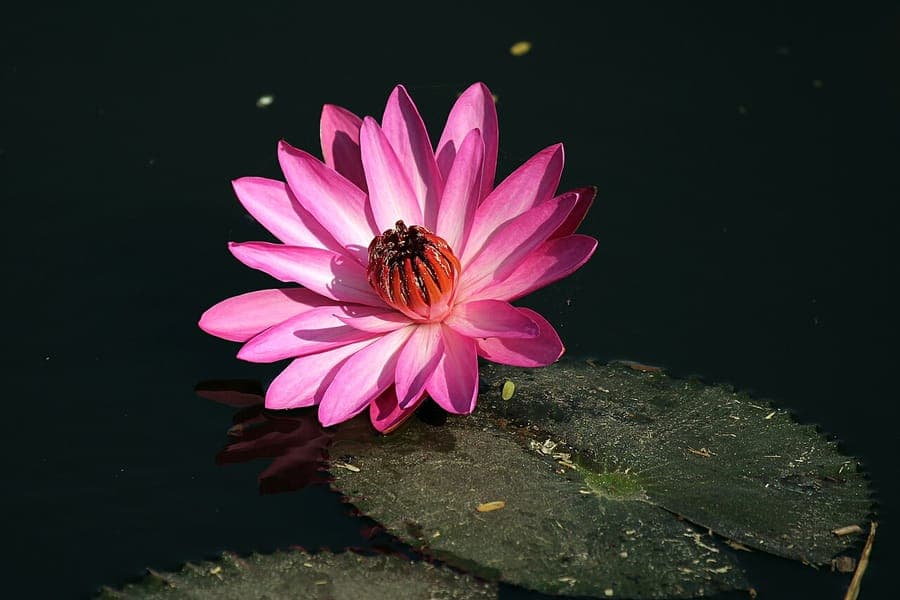
PJeganathan / CC BY-SA 4.0, via Wikimedia Commons
White egyptian lotus: complete guide
Nymphaea rubra
Want to see White egyptian lotus: complete guide in your garden?
1 minute, no credit card
Overview
Nymphaea rubra, commonly known as White Egyptian Lotus, is a standout water lily that commands attention in any serious pond setup. Despite the misleading common name, this plant produces deep red to maroon flowers that open fully during the day, floating above the water's surface. Native to tropical regions from India to the Philippines, it thrives in warm, still, and clear water. In temperate climates, it's best suited for medium to large ponds, especially where gardeners want a bold splash of colour and vertical interest.
While not a beginner's plant, Nymphaea rubra is manageable with the right know-how. It performs best when planted in early spring and given consistent care. On gardenworld.app, you can design a pond layout that perfectly suits this dramatic aquatic beauty, factoring in depth, sun exposure, and companion plants.
Appearance & bloom cycle
The foliage of Nymphaea rubra consists of round, glossy green leaves, typically 25–35 cm in diameter, which float on the water surface. These form a lush backdrop for the striking flowers. The blooms themselves are large-10 to 15 cm across-and start as deep crimson, gradually lightening to rose-pink as they age. Some cultivars show a subtle purple sheen, especially in morning light.
Flowering occurs from June to mid-October. Each bloom opens around 9–10 a.m. and stays open until dusk, lasting three to four days. After wilting, the flower stalk curls underwater, where seed capsules develop. To encourage continuous blooming, remove spent flowers regularly by cutting the stem below the waterline.
Ideal location
Plant Nymphaea rubra in full sun-minimum 6 hours of direct sunlight daily. A south- or southeast-facing pond is ideal. The planting depth should be at least 40 cm, with 50–70 cm optimal for steady water temperature and strong growth. Avoid shady spots, windy areas, or ponds with heavy water movement, as these reduce flowering and can damage leaves.
Make sure the plant isn't shaded by overhanging trees or taller marginal plants. On gardenworld.app, you can simulate your garden's sun path to determine if your pond gets enough light for Nymphaea rubra to thrive.
Soil requirements
Use heavy, loamy clay soil with minimal organic content. Avoid peat-based or light potting mixes, which float and promote algae. Plant the tuber in a 30x30 cm aquatic basket, pressing it gently into the soil with the growing tip facing upward. Cover the surface with 1–2 cm of coarse sand or small gravel to prevent soil dispersion.
Do not over-fertilise. In the first year, no feeding is needed. From the second year, use slow-release aquatic plant tablets, pushing one or two into the soil near the edges of the basket every six weeks from April to August.
Free design
Want to see White egyptian lotus: complete guide in your garden? Make a free design now.
Watering
As a pond plant, it's less about watering and more about water stability. Keep the tuber submerged at all times-minimum 20 cm of water above the basket. Use rainwater or dechlorinated tap water. Sudden water changes during summer can shock the plant and halt blooming.
Maintain a consistent water level, especially during dry spells. Fluctuations can stress the plant. A float valve can help automate this, preventing evaporation from lowering the depth too much.
Pruning
Remove dead flowers and damaged leaves with sharp pond scissors, cutting stems underwater to avoid rot. Never remove more than a third of the foliage at once. In autumn, trim back dying leaves as they turn yellow or brown.
This lotus spreads via rhizomes, so check the basket annually in spring. If roots are circling or bursting out, divide the rhizome with a clean knife, replant the healthiest sections, and discard the old central part.
Maintenance calendar
- February–March: Inspect tuber for rot. Store in cool, dark water (4–8°C).
- April: Plant in pond at 30 cm depth. Begin fertilising.
- May: Lower to 50–60 cm. Monitor for algae.
- June–September: Deadhead weekly. Watch for aphids or spider mites.
- October: Stop feeding. Trim dead foliage.
- November–January: Dormant period. Protect from freezing.
Winter hardiness
Nymphaea rubra is not fully hardy in USDA zones below 10. In the UK and northern Europe, it won't survive freezing pond conditions. If your pond is less than 60 cm deep, lift the tuber in October and store it in a bucket of water in a frost-free shed or garage.
For deeper ponds (70+ cm), the plant can overwinter if the basket stays below the frost line. Check monthly for rot. In colder zones (below 7), treat it as a tender perennial and bring it indoors.
Companion plants
Pair Nymphaea rubra with plants that share its needs: full sun and still water. Good companions include Pontederia cordata, which adds vertical purple spikes at 40–60 cm height, and Hydrocharis morsus-ranae (frogbit), a small floating plant that provides shade and reduces algae.
Avoid invasive floaters like water hyacinth, which block light. Marginal plants like Iris laevigata or Carex elata 'Aurea' can frame the pond without competing for space.
Closing
Nymphaea rubra rewards patience and care with months of rich, velvety blooms. It's not the easiest water lily, but the visual payoff is worth it. Buy tubers in spring from trusted suppliers at garden centres or online. Reputable UK retailers include those listed on gardenworld.app, where you can compare stock and delivery options. Avoid tropical Nelumbo species sold as 'lotus'-they're not the same. With proper depth, feeding, and winter care, your Nymphaea rubra can thrive for years. Use gardenworld.app to plan your ideal pond, from depth zones to planting schedules.
Want to see White egyptian lotus: complete guide in your garden? Make a free design now.
Upload a photo, pick a style, and get a photorealistic design with plant list in under a minute.
No credit card required


Similar plants
Rocky Mountain pond-lily: complete guide
Nuphar polysepala
Everything about Rocky Mountain pond-lily (Nuphar polysepala): pond placement, soil, water care, pruning and winter hardiness tips.
Dotleaf Waterlily: complete guide
Nymphaea ampla
Nymphaea ampla, known as Dotleaf Waterlily, is a tropical aquatic plant from the Americas. Learn how to cultivate and maintain this beautiful water lily in your pond.
Roundleaf Waterlily: complete guide
Nymphaea conardii
Nymphaea conardii is a unique tropical waterlily with distinctive round leaves from Central and South America. Discover care tips for this specialized aquatic plant.