
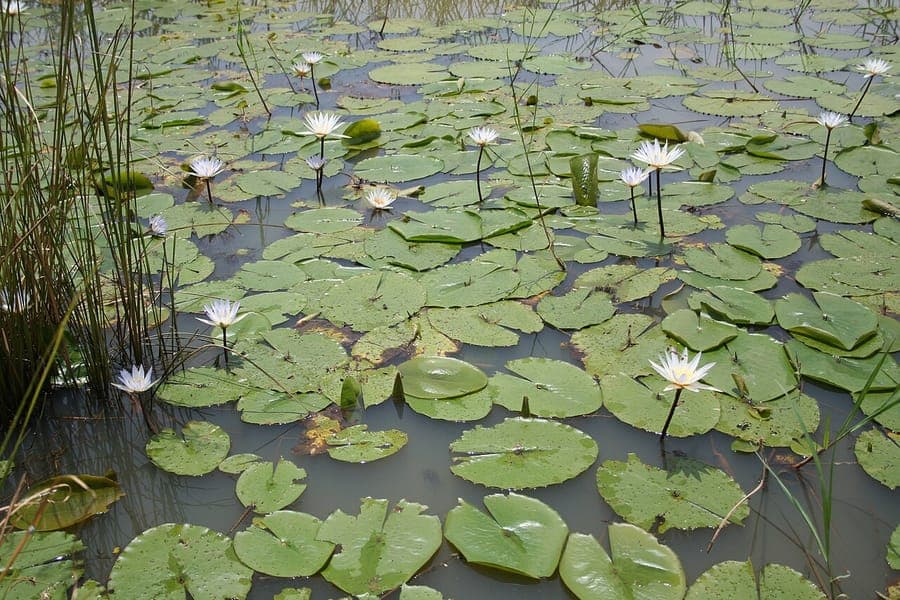
Marco Schmidt / CC BY-SA 3.0, via Wikimedia Commons
Blue Egyptian Lotus: complete guide
Nymphaea micrantha
Want to see Blue Egyptian Lotus: complete guide in your garden?
1 minute, no credit card
The Blue Egyptian Lotus (Nymphaea micrantha) is a remarkable aquatic plant native to West Africa. This elegant lotus is known for its delicate blue flowers that open early in the morning and gradually expand throughout the day. The plant grows naturally in waters stretching from Senegal to Chad and has become naturalized in Egypt.
Appearance and Bloom
The Blue Egyptian Lotus reaches modest dimensions compared to other water lilies. Its leaves float on the water surface with a diameter of approximately 10 to 15 centimeters. They are recognizable by their round shape and characteristic dark coloring. The flowers appear during the summer months and display a striking blue hue with yellow stamens. Each flower opens around 8 to 9 in the morning and closes around 3 to 4 in the afternoon. The blooming period typically lasts from May to October, depending on water temperature and light conditions.
Ideal Location
This aquatic plant thrives best in full sun, requiring a minimum of 5 to 6 hours of direct sunlight daily. Place your pond where no trees cast shadows and where the plant is protected from strong winds. In warm regions, light afternoon shade can be beneficial. Ensure the water remains warm enough - the Blue Egyptian Lotus prefers temperatures between 20 and 30 degrees Celsius.
Soil
Use a nutrient-rich pond substrate or garden soil mixed with sand. The aquatic plant has no major soil pH demands but grows optimally in slightly acidic to neutral water (pH 6.5-7.5). Ensure sufficient soil coverage with at least 30 centimeters of dark substrate where the rhizomes can develop.
Watering and Moisture Management
As an aquatic plant, this lotus naturally requires abundant water. Keep the water level stable at 30 to 60 centimeters depth. Water should not become stagnant - ensure gentle water circulation with a small pump or fountain. However, avoid strong currents that could damage the flowers. During very hot periods, add extra water to compensate for evaporation.
Pruning and Maintenance
Regularly remove dead leaves and faded flowers to keep the plant healthy. This promotes new growth and prevents rot. The plant can be propagated from seed, though this requires some patience. Begin in early spring with cleaning and removing winter damage. If necessary, divide the plant every two to three years to maintain its vigor.
Maintenance Calendar
March: Remove winter leaf debris and check for diseases. Add ripe compost to the substrate. May to August: This is the growth and blooming period. Remove dead leaves weekly and add nutrients as needed. September to October: Gradually reduce fertilization as blooming declines. November to February: The plant rests. Reduce feeding and regularly check water levels.
Free design
Want to see Blue Egyptian Lotus: complete guide in your garden? Make a free design now.
Winter Hardiness
The Blue Egyptian Lotus is not winter-hardy in temperate climates. In areas with frost, the plant must be brought indoors or overwintered in a heated pond. Store the rhizomes in a cool, moist location with temperatures around 5 to 10 degrees Celsius. In warmer regions (USDA zones 9-11), the plant can stay outdoors overnight if protected from extreme cold.
Companion Plants
Combine the Blue Egyptian Lotus with other aquatic plants like papyrus, water plants, and marsh species. These combinations create a harmonious water ecosystem. Also add some fish and aquatic insects for natural pest control and biological balance.
Diseases and Problems
The Blue Egyptian Lotus can suffer from water aphids and spider mites in warm conditions. Regularly inspect the underside of leaves and treat with insecticide if infestation signs appear. Fungal diseases develop quickly in stagnant water - always ensure good circulation. Yellowing leaves indicate nutrient deficiency or insufficient sunlight. Add more compost and move the plant to a sunnier location. Proper water management and regular monitoring prevent most problems.
Propagation and Seeds
After pollination, the plant produces seeds in seed pods underwater. Harvest seeds in August through September when ripe. Seeds remain viable for two to three years. Sow in March in warm water (22-25 degrees Celsius) in a mixture of garden soil and sand. Keep consistently moist but not waterlogged. Germination occurs within two to four weeks. Once true leaves appear, pot seedlings individually until large enough for the pond. This method produces genetically diverse plants with potential new flowering variations.
Container Growing and Climate Adaptation
In temperate climates you can cultivate the Blue Egyptian Lotus in large containers. Use large pots (minimum 50 liters) filled with pond substrate. Container-grown plants remain more compact, reaching about 60 centimeters maximum height. Position containers at the shallows of your pond so flowers protrude above water. Containers simplify overwintering - move them in autumn to a protected, cool location. This method also allows gardeners in cooler zones to enjoy tropical aquatic plants.
Closing Thoughts
The Blue Egyptian Lotus is an excellent and rewarding choice for those wanting to enliven their pond with exotic beauty. With proper care and the right location, these elegant flowers will bloom for years. Visit local garden centres or online plant nurseries specializing in aquatic plants. Services from major garden retailers offer excellent care guides and plant information. This plant requires relatively little effort after initial establishment.
Want to see Blue Egyptian Lotus: complete guide in your garden? Make a free design now.
Upload a photo, pick a style, and get a photorealistic design with plant list in under a minute.
No credit card required


Similar plants
Rocky Mountain pond-lily: complete guide
Nuphar polysepala
Everything about Rocky Mountain pond-lily (Nuphar polysepala): pond placement, soil, water care, pruning and winter hardiness tips.
Dotleaf Waterlily: complete guide
Nymphaea ampla
Nymphaea ampla, known as Dotleaf Waterlily, is a tropical aquatic plant from the Americas. Learn how to cultivate and maintain this beautiful water lily in your pond.
Roundleaf Waterlily: complete guide
Nymphaea conardii
Nymphaea conardii is a unique tropical waterlily with distinctive round leaves from Central and South America. Discover care tips for this specialized aquatic plant.