
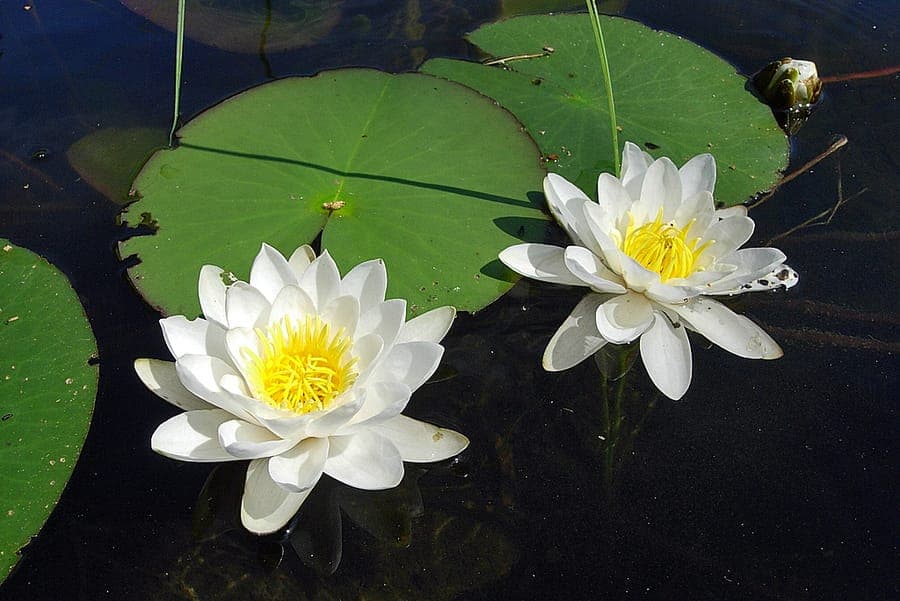
Finner / Public domain, via Wikimedia Commons
Atlantic waterlily: complete guide
Nymphaea candida
Want to see Atlantic waterlily: complete guide in your garden?
1 minute, no credit card
Overview
The Atlantic waterlily (Nymphaea candida) is a refined, cold-tolerant aquatic that belongs in any well-balanced garden pond across temperate Europe. Native to regions from the Baltics to central France, this species thrives in clear, cool waters and adapts beautifully to backyard ponds. It's not the flashiest waterlily, but its clean white blooms and modest size make it a standout for smaller water features or naturalistic designs. Hardy to USDA zone 5, it handles UK and northern European winters well when planted at proper depth.
On gardenworld.app, you can design a custom pond layout that accounts for ideal planting depth, spacing, and companion plants for Atlantic waterlilies.
Appearance & bloom cycle
Nymphaea candida produces round, glossy leaves up to 15 cm across that float on the water's surface. The foliage forms a dense mat, shading the pond and reducing algae growth. Flowers are pure white with a soft yellow center and open only in full sun-typically between 10 a.m. and 4 p.m. Each bloom lasts three to four days before sinking beneath the surface to develop seeds.
Flowering runs from June through late September, peaking in high summer. This is a slow starter; don't expect full coverage in the first year. But with patience, you'll get a consistent spread without aggressive takeover. Compared to larger hybrids, it's more restrained, making it perfect for ponds under 2 meters in diameter.
Ideal location
Give this plant 6 to 8 hours of direct sunlight daily. It scores an 8 on the light scale, meaning it needs strong sun to bloom reliably. Plant rhizomes in containers at a depth of 30 to 60 cm. Shallower than 30 cm risks water temperature swings, which stress the plant. Avoid windy spots or areas with strong water flow-ripples can damage open flowers and hinder pollination.
If you're unsure about sun exposure, use the sunlight mapping tool on gardenworld.app to plan your pond's position and maximize bloom potential.
Soil requirements
Use heavy loam or aquatic soil-never potting mix or compost, which will float and cloud the water. Plant in a basket with mesh or planting cloth to contain roots, and top-dress with 2–3 cm of gravel or sand to prevent erosion. The soil should hold nutrients but remain stable.
Maintain a pH between 6.5 and 7.0. Test your substrate annually, especially if you notice yellowing leaves or poor growth. Alkaline water above pH 7.2 can cause iron deficiency, showing as interveinal chlorosis on new leaves.
Free design
Want to see Atlantic waterlily: complete guide in your garden? Make a free design now.
Watering
As a fully submerged plant, Nymphaea candida doesn't need traditional watering. But water quality matters. Avoid chlorinated tap water straight from the hose-let it sit for 24 hours to off-gas chlorine. Rainwater is ideal, unless it's collected from pine roofs, which can acidify the pond.
Top up the pond regularly in summer to offset evaporation. Sudden water level drops expose rhizomes and shock the plant.
Pruning
Remove dead or decaying leaves and spent blooms with sharp shears. Do this monthly during the growing season to prevent sludge buildup. If foliage covers more than 70% of the pond surface, thin it out to maintain oxygen levels and light penetration.
In autumn, leave foliage in place until it detaches naturally. Only remove baskets if you're overwintering in frost-prone zones below 5 or cleaning the pond completely.
Maintenance calendar
- Jan: Check stored rhizomes (if brought in)
- Feb: Prepare soil and baskets for spring
- Mar: Inspect for new growth; divide if needed
- Apr: Replant when water temps exceed 10°C
- May: Test pH; remove old leaves; watch for aphids
- Jun: Blooms begin; monitor for snails
- Jul: Deadhead weekly; thin dense mats
- Aug: Add slow-release aquatic fertilizer (low nitrogen)
- Sep: Allow final blooms to sink for seed set
- Oct: Stop feeding; let leaves decompose
- Nov: Trim back only if necessary
- Dec: Dormant; minimal care needed
Winter hardiness
Nymphaea candida is hardy in USDA zones 5–9. In zone 7 and above, leave it in the pond at 60 cm depth or more. In shallower ponds that may freeze solid, lift the basket and store it in a bucket of water at 2–5°C, like in a garage or shed.
It spreads by rhizomes and occasionally by seed, but in colder climates, vegetative growth dominates. Divide every 3–4 years to maintain vigor.
Companion plants
Pair Atlantic waterlily with Iris laevigata, Pontederia cordata, or Acorus calamus for contrasting foliage. Submerged plants like Ceratophyllum demersum help oxygenate the water. Marginal picks: Carex riparia or Lythrum salicaria for vertical interest.
Avoid invasive species like water hyacinth, which outcompete native aquatics. On gardenworld.app, explore plant pairing suggestions to create a balanced, low-maintenance pond ecosystem.
Closing
The Atlantic waterlily won't shout for attention, but it earns quiet admiration season after season. It's unfussy, long-blooming, and supports pond health. Give it sun, depth, and a little seasonal care, and you'll enjoy its serene beauty for years.
Find Nymphaea candida at local garden centres in spring. Trusted UK retailers often stock it alongside other hardy lilies-just make sure it's nursery-grown, not wild-collected, to protect natural populations.
Want to see Atlantic waterlily: complete guide in your garden? Make a free design now.
Upload a photo, pick a style, and get a photorealistic design with plant list in under a minute.
No credit card required


Similar plants
Rocky Mountain pond-lily: complete guide
Nuphar polysepala
Everything about Rocky Mountain pond-lily (Nuphar polysepala): pond placement, soil, water care, pruning and winter hardiness tips.
Dotleaf Waterlily: complete guide
Nymphaea ampla
Nymphaea ampla, known as Dotleaf Waterlily, is a tropical aquatic plant from the Americas. Learn how to cultivate and maintain this beautiful water lily in your pond.
Roundleaf Waterlily: complete guide
Nymphaea conardii
Nymphaea conardii is a unique tropical waterlily with distinctive round leaves from Central and South America. Discover care tips for this specialized aquatic plant.