
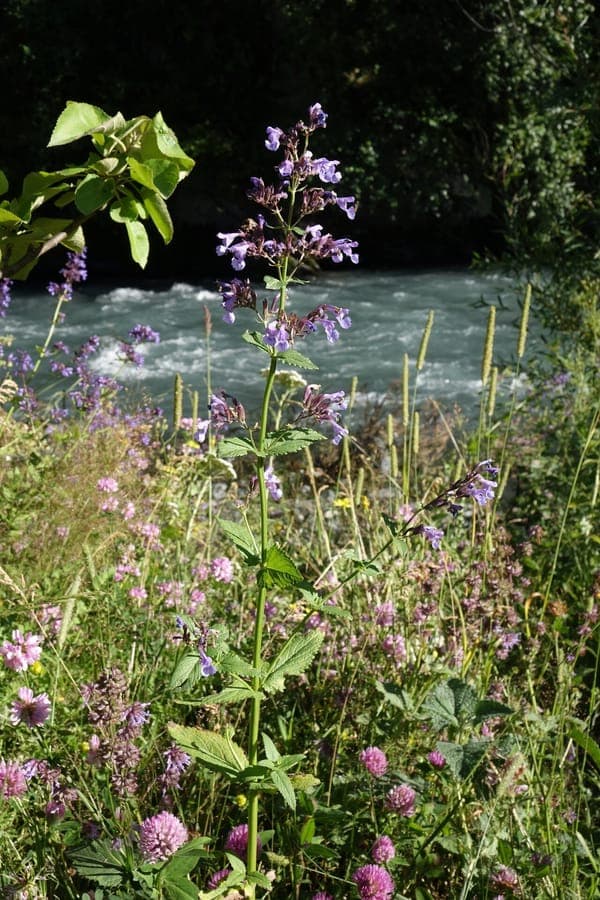
Oleg Kosterin https://www.inaturalist.org/people/oleg_kosterin / CC BY 4.0, via Wikimedia Commons
Caucasus catmint: complete guide
Nepeta grandiflora
Want to see Caucasus catmint: complete guide in your garden?
1 minute, no credit card
Overview
Nepeta grandiflora, commonly known as Caucasus catmint, is a rugged, long-flowering perennial that thrives in UK and North American gardens alike. Native to the North Caucasus, Ukraine, and parts of Central Russia, it's adapted to continental climates with hot summers and cold winters-making it ideal for USDA hardiness zones 5 to 8. Growing 40 to 60 cm tall and spreading up to 60 cm wide via creeping rhizomes, this member of the Lamiaceae family brings elegance and wildlife value to any sunny border.
It's not just the looks-this plant earns its place with resilience. Once established, it shrugs off drought, resists deer, and refuses to be bothered by slugs. If you want a garden that works with you, not against you, this is a top contender. On gardenworld.app, you can visualise how this plant fits into your garden layout, especially in designs focused on pollinators or dry borders.
Appearance & bloom cycle
Caucasus catmint forms a bushy, sprawling mound of softly hairy, grey-green foliage. The leaves are ovate, coarsely toothed, and emit a mild minty scent when brushed. From June through September, it produces dense terminal spikes of rich violet-blue flowers, each about 5 to 8 cm long. The blooms are tubular, typical of the mint family, and attract a steady stream of bees, hoverflies, and even butterflies.
The peak bloom is in midsummer (July to early August), but a good trim right after encourages a fresh flush of flowers in late summer. The plant's natural habit is loose and informal-perfect for cottage gardens or relaxed modern plantings.
Ideal location
Full sun is best-this plant needs at least six hours of direct sunlight to bloom well. A south- or west-facing border suits it perfectly. It tolerates light shade but will stretch and bloom less if not given enough light. Use it in rock gardens, gravel beds, or as a soft edging plant along pathways.
If you're unsure about spacing or positioning, try the garden planner on gardenworld.app. You can drag and drop Nepeta grandiflora into your virtual garden to test combinations and sunlight exposure.
Soil requirements
Well-drained soil is non-negotiable. This plant hates sitting in wet feet, especially over winter. Sandy or loamy soils with a pH between 6.0 and 7.5 are ideal. If you're dealing with heavy clay, amend it with coarse grit or horticultural sand to improve drainage. A little lime isn't a problem-this species actually thrives on slightly alkaline ground.
Avoid overly rich or heavily composted soils, which encourage soft growth and reduce flowering.
Free design
Want to see Caucasus catmint: complete guide in your garden? Make a free design now.
Watering
Once established, Caucasus catmint is extremely drought-tolerant. Water young plants deeply once a week during their first growing season, especially in dry spells. After that, rely on rainfall unless you're in an extended drought.
When you do water, soak the base in the early morning to reduce evaporation and prevent fungal issues. Never let the plant sit in standing water-this is the fastest route to root rot.
Pruning
Deadheading isn't required, but cutting back by one-third right after the first bloom (late July to early August) will trigger a second flowering in September. Use sharp, clean shears and cut just above a set of healthy leaves.
In late winter or early spring, cut the old stems down to about 10 cm above ground level. Leaving the stems through winter provides shelter for beneficial insects.
Maintenance calendar
- January: No action needed
- February: Begin checking for new growth; remove any damaged stems
- March: Cut back old growth; lightly fork soil to aerate
- April: Watch for new shoots; water only if dry
- May: Growth picks up; check for pests
- June: First blooms appear; monitor for drooping
- July: Peak flowering; deadhead or cut back after bloom
- August: Second flush possible; avoid overwatering
- September: Final blooms fade; stop feeding
- October: Leave plant standing for insects; clear heavy leaf litter
- November: Watch for wet soil conditions
- December: Dormant; no care required
Winter hardiness
Hardy in USDA zones 5 to 8, this plant survives temperatures down to -20°C. In colder zones, mulch lightly with straw or pine needles to protect the crown, but avoid smothering the plant. Good drainage is more important than insulation-wet soil in freeze-thaw cycles is the real danger.
In exposed gardens, consider planting near a wall or shrub for wind protection.
Companion plants
Pair Nepeta grandiflora with other sun-loving, drought-tolerant perennials like Salvia nemorosa, Echinacea purpurean, or ornamental grasses like Festuca ovina. It also looks striking alongside lavender (Lavandula angustifolia) for a Mediterranean effect.
Avoid aggressive spreaders like mint or ground ivy. This catmint needs space to spread gently without competition.
Closing
Caucasus catmint is a no-fuss, high-reward plant that brings colour, texture, and life to the garden for months. It's the kind of perennial that makes gardening feel easy.
Find it at garden centres across the UK and North America, or order online from reputable growers. And don't forget to use gardenworld.app to explore planting schemes-especially if you're designing a pollinator-friendly or low-water garden.
With sun, decent drainage, and a little room to roam, Nepeta grandiflora will become a quiet hero in your garden year after year.
Want to see Caucasus catmint: complete guide in your garden? Make a free design now.
Upload a photo, pick a style, and get a photorealistic design with plant list in under a minute.
No credit card required


Similar plants
Apple mint (Mentha x villosa): complete guide
Mentha x villosa
Meet apple mint (Mentha x villosa): a fruity-scented kitchen herb with woolly leaves, perfect for tea and mojitos.
Salvia peyronii: complete guide
Salvia peyronii
Discover Salvia peyronii, a rare Lebanese mountain sage. Growing tips, hardiness, and companion planting for a Mediterranean gravel garden.
Bigleaf mint (Mentha x rotundifolia): complete guide
Mentha x rotundifolia
Discover bigleaf mint: cultivation, care tips, and garden uses. Learn how to grow this aromatic herb with soft, hairy leaves.