
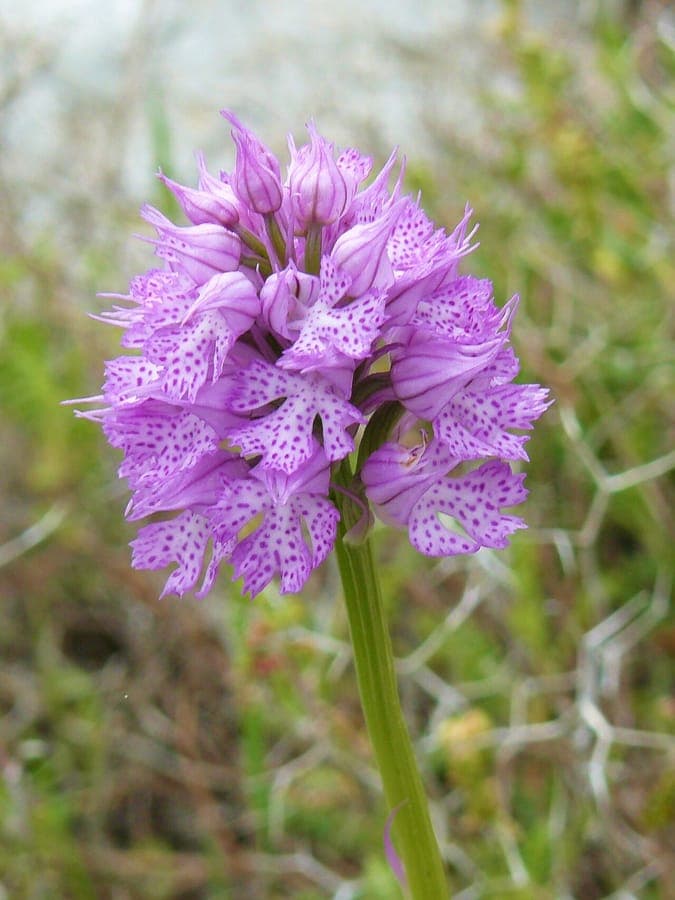
Elie plus at English Wikipedia / Public domain, via Wikimedia Commons
Three-toothed Orchid: complete guide
Neotinea tridentata
Want to see Three-toothed Orchid: complete guide in your garden?
1 minute, no credit card
Overview
Neotinea tridentata, commonly called the three-toothed orchid, is a captivating wild orchid found naturally across Central and Southern Europe, extending to the Caucasus and Jordan. This remarkable plant is cherished by alpine flora enthusiasts for its delicate purple flowers and exceptional frost-hardiness. As a specialized alpine orchid, it demands specific growing conditions but rewards attentive gardeners with stunning blooms.
Appearance and bloom
The three-toothed orchid reaches heights of 15 to 30 centimeters. The plant bears narrow, lance-shaped leaves arranged densely in a rosette pattern at ground level. Flowers emerge in May through June, forming a compact, conical spike with small purple to pink blooms. Each flower features distinctive rounded sepals that give the species its characteristic three-toothed appearance. The flowers emit a subtle fragrance and primarily attract specialized pollinators.
Ideal location
This orchid thrives in full sun to partial shade conditions. In Southern European locations, full sunlight is acceptable, while in northern climates partial shade helps prevent overheating during intense summers. Ensure excellent air circulation around the plant to prevent fungal issues.
Soil requirements
The three-toothed orchid demands excellent drainage. In garden settings, use a mixture of peat, fine bark, and sand in equal proportions. Maintain a soil pH of 8 to 9. Incorporate gravel or small stones to further enhance drainage and replicate its natural rocky habitat.
Free design
Want to see Three-toothed Orchid: complete guide in your garden? Make a free design now.
Watering
Watering needs are moderate during the growing season (March to June). Water regularly but allow the medium to dry slightly between waterings. Avoid complete desiccation and waterlogging equally. Water carefully at the base, never wetting the flowers. Reduce watering significantly after blooming (July through August).
Pruning
Pruning is unnecessary. Simply remove dead leaves and withered flower stems gently after flowering concludes. Maintain the plant's natural form for optimal health and aesthetic appeal.
Maintenance calendar
March-April: Begin preparations, start careful watering. May-June: Blooming period, regular watering. July-August: Establish dormancy, reduce water. September-October: Prepare for winter. November-February: Minimal care during cold dormancy.
Winter hardiness
Exceptionally hardy, withstanding temperatures to -15 degrees Celsius. In temperate climates, the plant survives outdoors with protection from excessive moisture. In extremely cold regions, apply a protective layer of dry leaves or mulch.
Companion planting
This orchid pairs beautifully with alpine treasures like Pulsatilla vulgaris, alpine forget-me-not, and silvery cinquefoil. These combinations create naturally integrated alpine garden scenes. Perfect for gravel gardens and alpine troughs.
Closing thoughts
The three-toothed orchid brings exotic elegance and low-maintenance beauty to specialized gardens. With proper attention, this remarkable orchid provides years of visual pleasure. Visit specialty retailers for alpine orchid potting mediums and expert care advice. Discover more unique plant combinations on gardenworld.app for customized garden designs.
Want to see Three-toothed Orchid: complete guide in your garden? Make a free design now.
Upload a photo, pick a style, and get a photorealistic design with plant list in under a minute.
No credit card required


Similar plants
Ram's-head lady's slipper: complete guide
Cypripedium arietinum
Everything you need to know about growing Cypripedium arietinum, a rare woodland orchid for cool, moist garden settings. Soil, care and planting tips.
Sparrow's-egg lady's slipper: complete guide
Cypripedium passerinum
Everything about growing Cypripedium passerinum, a cold-hardy subarctic orchid suited to cool, moist, shaded garden spots. Soil, care and companion plants.
Algerian Butterfly-orchid: complete guide
Platanthera algeriensis
Everything about Platanthera algeriensis, the rare Mediterranean orchid with greenish flowers native to Algeria, Morocco, Corsica and Spain.