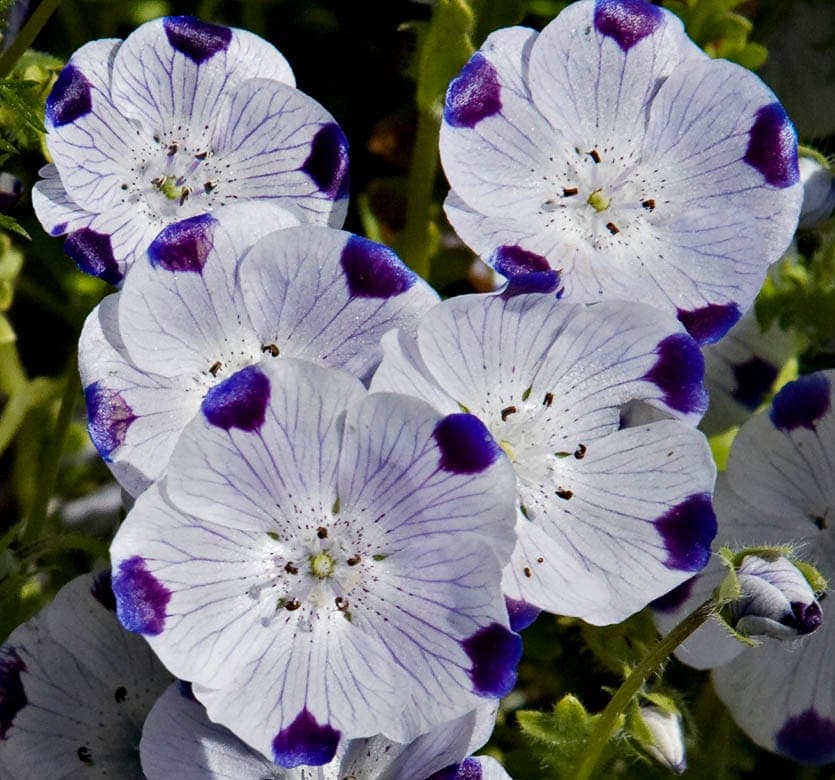
Dreammoose / CC BY-SA 3.0, via Wikimedia Commons
Nemophila maculata: complete guide
Nemophila maculata
Want to see Nemophila maculata: complete guide in your garden?
Full design in HD: €7.99
Look after your Nemophila maculata with the GardenWorld app
Identify plants with your camera and get a care calendar with reminders for this plant.


Overview
Nemophila maculata, commonly called fivespot, is a delicate annual wildflower native to California. Recognizable by its white petals adorned with five distinctive blue spots, this low-growing plant reaches only 15-30 centimetres in height and spread. Fivespot is ideal for border edges, containers and as a charming ground cover in sunny gardens.
Originally found in dry regions of California, Oregon and Utah, Nemophila maculata has become popular worldwide. Fast-growing, prolific bloomer and pollinator-friendly, this cheerful plant offers gardenworld.app users months of delicate summer colour with minimal care.
Appearance and Bloom
Fivespot is instantly recognizable by its white flowers with five blue spots. Each bloom measures 1.5 to 2 centimetres across and features five petals, each marked with an intense blue spot. Flowers appear continuously from May through autumn, creating a carpet of delicate colour.
Plants grow low and mounded, with finely divided, fern-like green foliage that contrasts beautifully with the flowers. The compact form fills space quickly without becoming invasive. Foliage is bright green and airy.
Blooming extends from May through October, depending on local temperatures. In warm, long summers, flowering may continue into November.
Ideal Location
Nemophila maculata thrives in full sun to light shade, requiring at least six hours of direct sunlight daily for optimal blooming and vigor. In hot climates, afternoon shade offers benefits, particularly in southern regions.
This plant excels as border edging, as a neat outline around larger plants, along pathways and in containers on patios. The compact, mounded form also works as trailing plant in hanging baskets.
Soil
Fivespot performs best in well-drained, lightly fertile soil. Heavy clay is less ideal and should be amended with sand and compost. The plant tolerates even moderately poor soil without complaint.
A soil pH of 6.5 to 7.9 is optimal. Work potting mix or garden compost into planting areas before sowing. Heavy, water-logged soil leads to root rot and fungal disease, so good drainage is essential.
Free preview
Want to see Nemophila maculata: complete guide in your garden? Make a free preview of your design.
Watering
Nemophila maculata requires regular watering, especially during establishment. Keep soil moist but never waterlogged. Excessive water damages roots and promotes disease.
Once established, this plant is moderately drought-tolerant, though consistent moisture ensures best blooming. Water deeply but less frequently than shallow frequent watering. In heat waves, water three times weekly.
Pruning
Fivespot requires minimal pruning. Pinch seedling tips to encourage bushier growth and more flowers. Deadhead spent blooms regularly to promote continuous flowering.
If plants become tired or leggy in August, cut back by half. This induces a new flush of growth and autumn bloom.
Maintenance Calendar
May-June: Sow seed or transplant seedlings; initial growth and early bloom. July-August: Full bloom; deadhead regularly. September-October: Continuous bloom; water during dry spells. November: Frost danger; pull out dying plants.
Winter Hardiness
Nemophila maculata is a true annual and cannot tolerate frost. Freeze kills plants immediately. Sow or transplant only after last spring frost, when soil is warm (at least 10 degrees Celsius).
In warm regions, self-seeding may occur, with previous season's seed germinating naturally in spring.
Companion Plants
Fivespot pairs beautifully with other low-growing summer bloomers. Dwarf lavender, sage and catmint add height and contrast. Low yellow flowers like nasturtium or calendula echo the fivespot's blue tones.
In containers, combine with small grasses and trailing plants. The compact form also works as edging around larger pots of tomatoes or other edibles.
Closing
Nemophila maculata is a delicate, charming choice for gardeners seeking long summer colour without fuss. Fast-growing, generous with blooms and relatively easy to care for, fivespot deserves space in any front garden. On gardenworld.app, this plant helps create pollinator-friendly summer designs.
Sow seed directly in May or use nursery transplants for faster results. Quality seed and young plants are widely available. Enjoy months of delicate colour with this California gem.
Frequently asked questions about Nemophila maculata
Is Nemophila maculata winter hardy?
Nemophila maculata is a true annual and cannot tolerate frost. Freeze kills plants immediately.
When and how do you prune Nemophila maculata?
Fivespot requires minimal pruning. Pinch seedling tips to encourage bushier growth and more flowers.
How much water does Nemophila maculata need?
Nemophila maculata requires regular watering, especially during establishment. Keep soil moist but never waterlogged.
Where does Nemophila maculata grow best?
Nemophila maculata thrives in full sun to light shade, requiring at least six hours of direct sunlight daily for optimal blooming and vigor. In hot climates, afternoon shade offers benefits, particularly in southern regions.
What soil does Nemophila maculata need?
Fivespot performs best in well-drained, lightly fertile soil. Heavy clay is less ideal and should be amended with sand and compost.

See it in your garden
See Nemophila maculata in your garden
One photo of your garden and a few questions. You see the result in about a minute.
Try it with a photoIdentify this plant in your own garden. Identify a plant
Similar plants
Cappadocian navelwort (Omphalodes cappadocica): care guide
Omphalodes cappadocica
Omphalodes cappadocica bears sky-blue spring flowers above a low, evergreen clump in shade. Tips on soil, watering, pruning, hardiness and companion plants.
Western waterleaf: complete guide
Hydrophyllum occidentale
Full growing guide for western waterleaf (Hydrophyllum occidentale): shade tolerance, soil needs, watering, winter hardiness and naturalistic garden use.
Limestone phacelia (Phacelia affinis): complete guide
Phacelia affinis
Full guide to Phacelia affinis, the limestone phacelia: sowing tips, purple-blue bee flowers, drought tolerance and uses in dry or wildlife gardens.
