
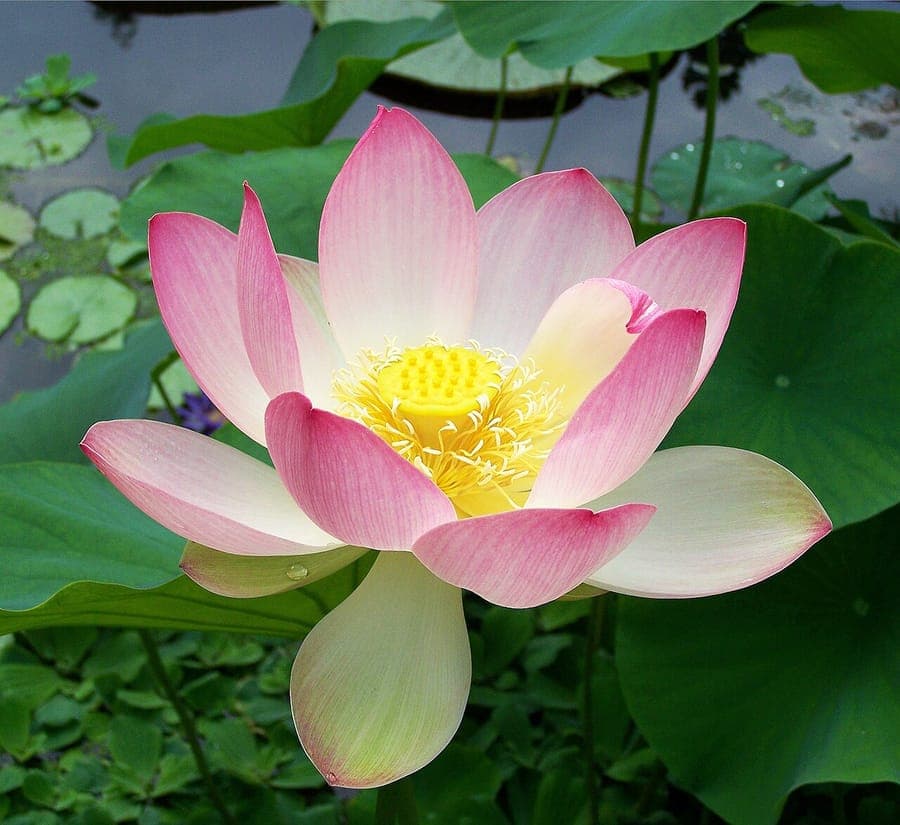
T.Voekler / CC BY-SA 3.0, via Wikimedia Commons
East indian lotus: complete guide
Nelumbo nucifera
Want to see East indian lotus: complete guide in your garden?
1 minute, no credit card
Overview
Nelumbo nucifera, commonly known as East Indian lotus, is a striking aquatic perennial that brings a tropical flair to any pond. Native to regions across Asia-from Assam and Bangladesh to China and the eastern Himalayas-this plant thrives in warm, shallow waters. In temperate gardens, it's grown as a summer feature, but with proper care, it can survive winters in zones 6 and above. It grows from thick rhizomes and produces some of the most dramatic blooms in the water gardening world. On gardenworld.app, you can design a custom pond layout that integrates the lotus with complementary plants and optimal sunlight exposure.
Appearance & bloom cycle
The East Indian lotus forms large, circular leaves up to 60 cm across, which rise 30 to 90 cm above the water on sturdy stalks. These leaves are hydrophobic, so rain beads up and rolls off like mercury. The flowers are the real showstoppers-deep purple, up to 25 cm wide, and held high above the foliage. Blooming typically runs from July through September, with each flower opening for three to five days. After pollination, the flower head matures into a cone-shaped seed pod that's often used in dried arrangements. As a forb, the plant grows vertically from a network of horizontal rhizomes spread through the pond soil.
Ideal location
This lotus demands full sun-rate it an 8 out of 10 for light needs. Aim for at least 6 to 8 hours of direct sunlight daily. Position your pond in a south- or west-facing spot, sheltered from strong winds that could damage the tall stems. The water depth should be between 15 and 45 cm; deeper water stays too cold and delays growth. Avoid placing it near fountains or waterfalls with strong currents. In cooler climates, a black pond liner helps absorb heat, speeding up spring growth. For help visualizing placement, gardenworld.app offers 3D pond planning tools tailored to sun patterns and plant height.
Soil requirements
Use heavy, loamy soil with little to no organic content. Potting mix or compost will float and pollute the water. A blend of 70% clay and 30% sand works well. Plant the rhizome in a wide, shallow container-minimum 40 cm in diameter-burying the growing tip just below the surface. Top with 2 to 3 cm of coarse sand or pea gravel to prevent disturbance. Avoid fertilizers high in phosphorus, which can trigger algae blooms.
Free design
Want to see East indian lotus: complete guide in your garden? Make a free design now.
Watering
Since it's submerged, you're not watering the plant directly. Instead, maintain a stable water level between 15 and 45 cm above the soil. Top up with rainwater or dechlorinated tap water during dry spells to avoid temperature shock. Keep the water clear by pairing with oxygenators like Anacharis or Hornwort. Avoid nutrient-rich runoff from lawns, which can lead to green water.
Pruning
Remove dead or damaged leaves and spent flower stalks by cutting them at the base. Do this regularly during the growing season to keep the pond tidy and reduce organic buildup. Don't cut back healthy foliage-each leaf supports the rhizome's energy storage. In autumn, trim all remaining growth after it dies back.
Maintenance calendar
- January: Check stored rhizomes for rot; keep moist in cool storage
- February: Divide rhizomes if needed
- March: Plant rhizomes when pond water reaches 15°C
- April: Watch for first shoots emerging
- May: Monitor for algae; maintain water level
- June: Apply slow-release aquatic fertilizer
- July: First blooms appear; remove faded flowers
- August: Thin out crowded leaves; watch for pests
- September: Reduce feeding; prepare for dormancy
- October: Cut back dead foliage
- November: Ensure pond doesn't freeze solid
- December: Minimal care; protect from ice
Winter hardiness
Hardy in USDA zones 6 to 9. In zone 6, keep rhizomes submerged below 30 cm of water to protect from freezing. If your pond is shallower, lift the containers and store them in a cool, dark place (1–4°C) in damp sand or peat. Return them to the pond in spring once temperatures consistently exceed 15°C. Avoid letting the rhizomes dry out during storage.
Companion plants
Pair the lotus with hardy water lilies (Nymphaea), pickerel weed (Pontederia cordata), or dwarf cattail (Typha minima). Keep aggressive spreaders like water hyacinth out of the mix. Marginal plants like blue flag iris (Iris versicolor) or lizard's tail (Saururus cernuus) add texture along the edges. Allow at least 60 cm between plants to prevent overcrowding.
Closing
The East Indian lotus isn't for the casual gardener, but if you're ready to commit, it rewards with unmatched beauty. Start with a healthy rhizome from reputable garden centres like those carrying aquatic stock in spring. Expect modest growth the first year-focus on root development. By year two, you'll see full bloom potential. Keep up with seasonal care, and you'll enjoy its majestic presence for years. For layout ideas and planting schedules, gardenworld.app provides tailored pond designs and plant pairing suggestions based on your garden's dimensions and sunlight exposure.
Want to see East indian lotus: complete guide in your garden? Make a free design now.
Upload a photo, pick a style, and get a photorealistic design with plant list in under a minute.
No credit card required


Similar plants
Acer pycnanthum: complete guide
Acer pycnanthum
Acer pycnanthum, the Japanese swamp maple, is a fast-growing tree with early red flowers and brilliant autumn color, ideal for damp garden settings.
Freeman maple: complete guide
Acer × freemanii
Everything about the Freeman maple (Acer x freemanii): a fast-growing shade tree with spectacular autumn colour for large gardens.
Silver vine: complete guide
Actinidia polygama
Discover silver vine (Actinidia polygama): a hardy climbing plant with silvery foliage, loved by gardeners and cats alike.