
Zachi Evenor / CC BY 2.0, via Wikimedia Commons
Bunchflower daffodil: complete guide
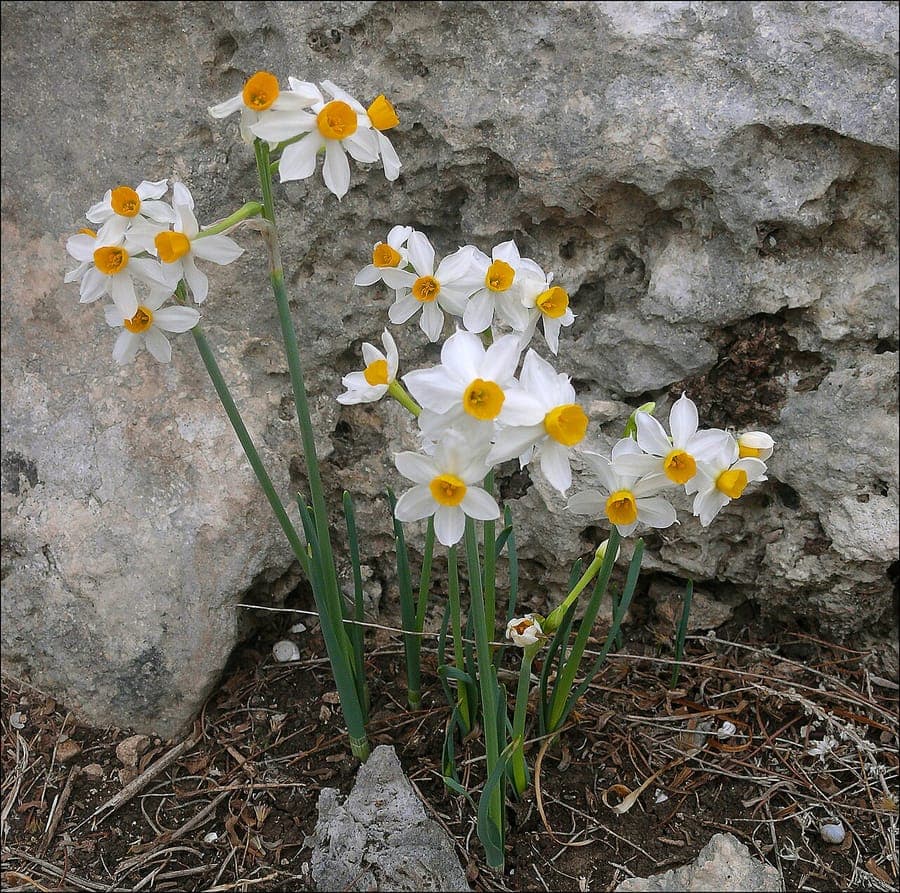
Narcissus tazetta
Want to see Bunchflower daffodil: complete guide in your garden?
1 minute, no credit card
Overview
Narcissus tazetta, commonly known as the bunchflower daffodil, stands out among spring bulbs for its clustered blooms and strong fragrance. Unlike single-flowered daffodils, this species produces multiple flowers per stem-sometimes up to eight-making it a favorite for gardeners seeking bold visual impact with minimal effort. Native to regions like the Mediterranean, North Africa, and parts of the Middle East, it thrives in USDA hardiness zones 7 to 9, which covers much of western and southern Europe, as well as coastal areas of North America.
What makes this daffodil special isn't just the volume of blooms, but their scent. The fragrance is sweet, slightly spicy, and powerful enough to carry across a garden. That's why many gardeners plant them near patios, walkways, or entryways. If you're planning a seasonal display, gardenworld.app lets you map out bulb placements based on height, bloom time, and sun exposure, so your spring garden unfolds in perfect sequence.
Appearance & bloom cycle
Bunchflower daffodils typically grow 30–40 cm tall with a spread of around 15 cm per bulb. Flowers appear from late winter to mid-spring-usually February through April, depending on climate and location. Each flowering stem carries a cluster of outward-facing blooms, with pure white petals and a small, cup-shaped corona that ranges from pale yellow to deep golden. Popular cultivars like 'Paper White' bloom entirely white, while 'Cheerfulness' offers soft yellow tones.
The foliage is narrow, strap-like, and a rich green, emerging at the same time as the flowers. After blooming, the leaves remain for at least six weeks to recharge the bulb for next season. If cutting blooms for indoor arrangements, leave as much leaf as possible on the plant in the ground to support future flowering.
Ideal location
These daffodils need plenty of light-rated 8 out of 10-meaning they require at least six hours of direct sunlight daily. Choose a spot in full sun to light shade, preferably sheltered from strong winds. They grow well in borders, rock gardens, or containers on patios and balconies.
Because of their modest height, they work well as front-of-border plants or under deciduous trees like cherries or dogwoods. To visualize spacing and sunlight patterns, gardenworld.app offers a design tool where you can overlay planting zones and track seasonal sun angles, helping you optimize placement before you even pick up a trowel.
Soil requirements
Well-drained soil is essential. Heavy clay soils should be amended with coarse sand or composted bark to improve drainage. The ideal pH range is 6.5 to 7.0-slightly acidic to neutral. Avoid overly rich or waterlogged soils, which can lead to bulb rot. In containers, use a standard potting mix with added perlite or gravel for better aeration.
While they don't need fertile soil, a light application of bone meal or compost at planting time can support root development without encouraging excessive leafy growth at the expense of flowers.
Free design
Want to see Bunchflower daffodil: complete guide in your garden? Make a free design now.
Watering
Water regularly during active growth-from shoot emergence through flowering. Keep the soil lightly moist but never soggy. Check container-grown plants more frequently, as pots dry out faster, especially in spring winds.
Once flowering ends and foliage begins to yellow, gradually reduce watering. During summer dormancy, the bulbs require little to no moisture. If left in the ground, ensure the site doesn't collect standing water.
Pruning
Pruning is minimal. Remove spent flower stems after blooming, but do not cut or tie the leaves. Allow them to die back naturally over six to eight weeks. This photosynthesis period is critical for bulb vitality. Premature leaf removal weakens the plant and reduces next year's blooms.
For potted bulbs, after foliage fades, dry them off in a shaded, airy spot and store in a cool, dark place-like a paper bag with peat or wood shavings-until replanting in autumn.
Maintenance calendar
- September–October: Plant bulbs 10–15 cm deep, spaced 10 cm apart.
- November–January: Monitor for shoot emergence; protect from waterlogging.
- February–April: Peak bloom; maintain consistent moisture.
- May: Foliage yellows; reduce watering.
- June–August: Dormant period; store or leave in situ.
Winter hardiness
Narcissus tazetta is reliably hardy in USDA zones 7–9. In colder zones (6 and below), a winter mulch of straw or leaves can help protect bulbs from freeze-thaw cycles. In areas with heavy, prolonged snow or wet winters, container growing is a safer option to prevent rot.
Companion plants
Pair bunchflower daffodils with early primroses, creeping phlox, or grape hyacinths (Muscari). Their white and yellow clusters contrast beautifully with deep purple or blue spring blooms. They also work well with hellebores or lungworts, which provide foliage interest before the daffodils peak.
An added benefit: these bulbs are toxic to rodents, making them a smart choice in gardens plagued by squirrels or voles.
Closing
The bunchflower daffodil is a resilient, fragrant herald of spring that asks little and gives much. Plant in groups of 5–10 bulbs for a naturalized look. Purchase firm, plump bulbs in autumn from reputable garden centres or online suppliers. Avoid soft or moldy ones. Whether naturalized in grass, tucked into borders, or grown in pots, they deliver reliable performance year after year. For a seamless planting plan, use gardenworld.app to simulate bulb layouts and track seasonal changes, ensuring your garden greets every spring with confidence and color.
Want to see Bunchflower daffodil: complete guide in your garden? Make a free design now.
Upload a photo, pick a style, and get a photorealistic design with plant list in under a minute.
No credit card required


Similar plants
Douglas' Onion: complete guide
Allium douglasii
Douglas' onion is a compact ornamental allium with purple flowers, perfect for rock gardens and sunny borders. Learn care, siting and hardiness.
Oblique onion: complete guide
Allium obliquum
The oblique onion is a hardy ornamental allium with chartreuse flower heads and blue-green foliage. Location, soil and care explained.
False hooded garlic: complete guide
Allium pseudocalyptratum
Discover false hooded garlic (Allium pseudocalyptratum): a rare ornamental onion from Lebanon for rock gardens and alpine troughs.