
Cillas / CC BY-SA 4.0, via Wikimedia Commons
Jonquil: complete guide
Narcissus jonquilla
Want to see Jonquil: complete guide in your garden?
1 minute, no credit card
Overview
Narcissus jonquilla, commonly known as jonquil, is a standout spring bloomer in the Amaryllidaceae family. Native to Spain and Portugal, this bulbous perennial has earned a loyal following among gardeners who value resilience, fragrance, and natural elegance. Unlike many other daffodils, jonquil features rush-like foliage and often produces multiple blooms per stem, making it a dynamic addition to early-season gardens.
What sets the jonquil apart is its sweet, honeyed scent - a rare trait among Narcissus species. Gardeners often plant it near patios, pathways, or entryways where its perfume can be enjoyed up close. On gardenworld.app, you can design a planting scheme that aligns perfectly with jonquil's growth pattern and bloom window, ensuring a seamless transition from winter dormancy to spring vibrancy.
Appearance & bloom cycle
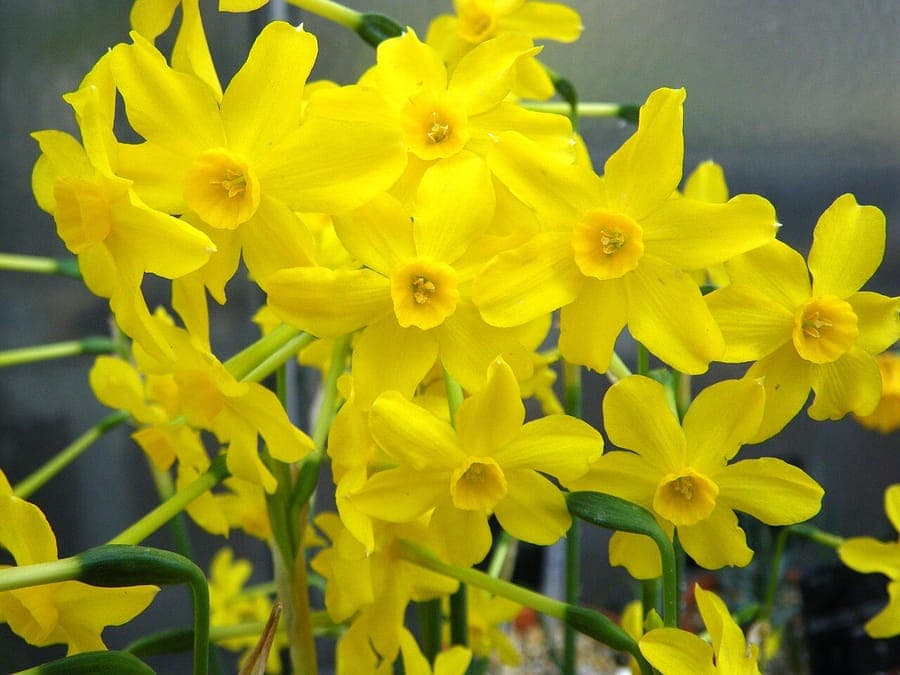
Jonquil typically reaches 8 to 12 inches (20–30 cm) in height, making it ideal for the front or middle of borders. The flowers are usually soft to golden yellow, with a smaller, cup-shaped corona that often curls slightly at the edges. Each stem commonly carries 2 to 4 blooms, giving it a fuller appearance than single-flowered daffodils.
Bloom time runs from mid-April to early May - weeks 16 to 19 in the growing calendar. The flowering period lasts roughly 10 to 14 days, depending on weather conditions. After blooming, the foliage remains green until early June, which is critical for bulb recharging. Never cut the leaves before they yellow naturally, or you risk weakening next year's display.
Ideal location
Jonquil thrives in full sun - rate it an 8 out of 10 for light needs. Choose open, sunny spots in borders, rock gardens, or meadow-style plantings. It also works well under deciduous trees, where it can bloom before the canopy fills in. Avoid deep shade, as this leads to weak stems and poor flowering.
For a naturalized look, plant jonquil in clusters of at least 10 to 15 bulbs, spaced irregularly to mimic wild growth. This method works especially well in lawns or grassy areas. Use gardenworld.app to visualize your bulb layout and see how it fits your garden's existing structure and seasonal flow.
Soil requirements
Well-drained, sandy loam to loamy soil with a pH between 7.0 and 7.5 is ideal. Heavy clay soils should be amended with grit or compost to improve drainage. While jonquil tolerates average fertility, it won't thrive in overly rich or waterlogged conditions.
Plant bulbs in fall, between September and November, at a depth of about three times their height - roughly 4 to 5 inches (10–12 cm). Space them 3 to 4 inches (8–10 cm) apart to prevent overcrowding and allow room for offsets.
Free design
Want to see Jonquil: complete guide in your garden? Make a free design now.
Watering
Once established, jonquil is fairly drought-tolerant. However, during active growth - from March to May - consistent moisture is key. Aim for about 1 inch (2.5 cm) of water per week if rainfall is insufficient. Water at soil level to avoid wetting foliage, which can encourage fungal issues.
After flowering, gradually reduce watering. The bulbs enter dormancy by late June and should remain dry through summer to prevent rot.
Pruning
Pruning is minimal. Remove spent flower heads to prevent seed formation, but leave the foliage intact. Cutting back green leaves reduces photosynthesis and weakens the bulb, leading to sparser blooms next season. Only remove foliage once it turns yellow and dies back naturally, usually by early June.
Maintenance calendar
- September: Inspect previous planting sites; prepare soil for new bulbs.
- October–November: Plant fresh bulbs at 10–12 cm depth.
- December–January: Dormant period; no action needed.
- February–March: Watch for emerging shoots; protect from foot traffic.
- April: Peak bloom. Water during dry spells and monitor for slugs.
- May: Let foliage remain green; reduce watering.
- June: Trim yellowed foliage; mark bulb locations if needed.
- July–August: Full dormancy. Avoid overwatering or disturbing soil.
Winter hardiness
Jonquil is reliably hardy in USDA zones 4 through 8. It withstands winter lows down to -15°C (5°F) without issue. In most temperate climates, including the UK and northern Europe, bulbs can stay in the ground year-round. However, in areas with persistently wet winters, consider planting in raised beds or containers to improve drainage.
In colder zones, mulch lightly with compost or leaf litter after the ground cools to protect against freeze-thaw cycles.
Companion plants
Jonquil pairs beautifully with other early spring bloomers. Combine it with Muscari, Scilla siberica, or Anemone blanda for a tapestry of color and texture. The deep blues and purples contrast sharply with jonquil's golden yellow.
Later-season companions include Pulmonaria, forget-me-nots, or early grasses like Carex elata 'Aurea'. Avoid aggressive spreaders like mint or goldenrod, which can overwhelm the bulbs. Low evergreens such as dwarf boxwood can provide structure without competition.
Closing
Jonquil is more than just a pretty face - it's a fragrant, dependable perennial that returns year after year with little fuss. Its slender form and sweet scent make it ideal for cottage gardens, naturalized lawns, or structured borders. Buy bulbs from reputable garden centres in autumn for best results. And remember, planning is everything. On gardenworld.app, you can map out your bulb plantings and ensure jonquil shines at the right moment in your garden's seasonal rhythm.
Want to see Jonquil: complete guide in your garden? Make a free design now.
Upload a photo, pick a style, and get a photorealistic design with plant list in under a minute.
No credit card required


Similar plants
Douglas' Onion: complete guide
Allium douglasii
Douglas' onion is a compact ornamental allium with purple flowers, perfect for rock gardens and sunny borders. Learn care, siting and hardiness.
Oblique onion: complete guide
Allium obliquum
The oblique onion is a hardy ornamental allium with chartreuse flower heads and blue-green foliage. Location, soil and care explained.
False hooded garlic: complete guide
Allium pseudocalyptratum
Discover false hooded garlic (Allium pseudocalyptratum): a rare ornamental onion from Lebanon for rock gardens and alpine troughs.