
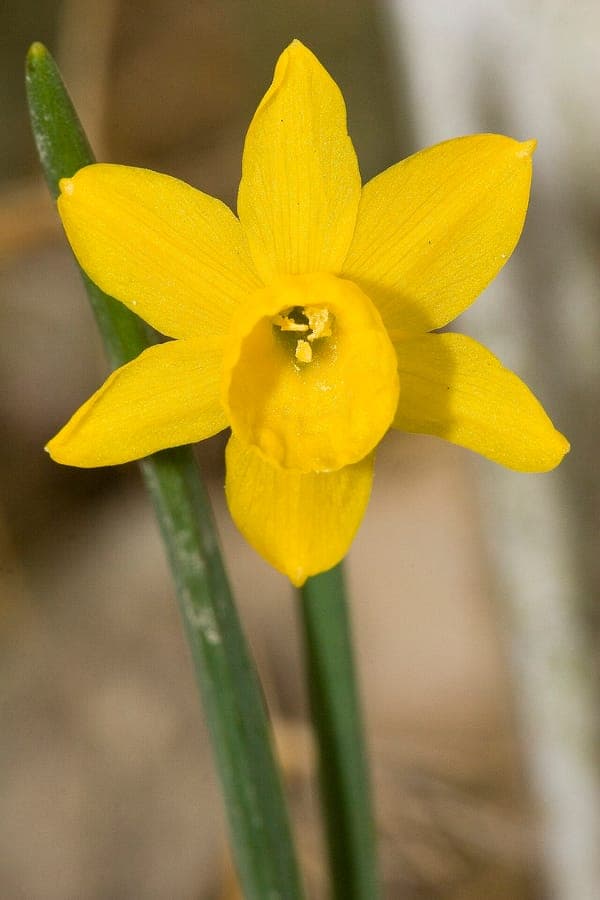
Olei / CC BY-SA 3.0, via Wikimedia Commons
Narcissus calcicola: complete guide
Narcissus calcicola
Want to see Narcissus calcicola: complete guide in your garden?
1 minute, no credit card
Overview
Narcissus calcicola is a captivating rare daffodil native to the limestone-rich regions of Portugal and Spain. This delicate bulb flower is celebrated for its refined, pale yellow blooms with an elegant trumpet at its heart. In the front yard, Narcissus calcicola brings a subtle charm and creates a wonderful collection for any gardener seeking something distinctive and uncommon.
Appearance and bloom
Narcissus calcicola reaches modest heights and produces beautiful flowers with white or pale yellow petals. The trumpet at the center is often a deeper yellow, creating a lovely contrast. Blooming occurs in early spring, typically February to April depending on your climate. Each bulb usually produces one or more flowers, strengthening the display when multiple bulbs are planted together.
Ideal location
Choose a sunny to lightly shaded spot in your front yard for this daffodil. Narcissus calcicola thrives best where it receives at least four to six hours of direct sunlight daily. It's recommended to place plants beneath deciduous trees where they receive spring sunshine before tree foliage fully emerges. Ensure the location is easily accessible so you can enjoy your blooms regularly.
Soil requirements
The soil needs for Narcissus calcicola are straightforward. The plant does well in well-draining soil with a slightly calcareous character. Avoid waterlogged or heavy clay soils, which can lead to bulb rot. Add organic material such as compost or well-rotted peat to improve soil structure. A pH between 6.0 and 7.5 is ideal for this species.
Watering
During the spring growth and blooming period, water your plants regularly, especially if rainfall is limited. Soil should not dry out, but prevent waterlogging. After blooming, reduce watering somewhat. In summer months when the plant is dormant, little water is needed. Narcissus calcicola prefers slightly moist conditions, but absolutely not soggy soil.
Free design
Want to see Narcissus calcicola: complete guide in your garden? Make a free design now.
Pruning
After blooming, remove dead flowers, but leave green stems and foliage intact. This gives the bulb a chance to store energy for next year. Only when the foliage has completely yellowed should you remove it. This entire process takes two to four weeks after blooming. This is important for flowering in subsequent years.
Maintenance calendar
Here's a practical maintenance schedule:
January-February: Check that bulbs are properly planted and well-established.
March-April: Enjoy the bloom and water regularly.
May-June: Remove dead flowers and allow foliage to naturally fade.
July-August: No maintenance needed; plant is dormant.
September-October: Clean the planting area and check drainage.
November-December: Plant new bulbs if desired.
Winter hardiness
Narcissus calcicola is winter hardy to around -15 degrees Celsius, meaning it will survive most Dutch winters well. In regions with severe winters, extra mulch around the bulbs can help. After frost, it's best to leave plants undisturbed, as interventions can cause more damage than good.
Companion plants
Narcissus calcicola combines beautifully with other early spring bloomers. Consider:
Crocosmia: Provides color contrast Scilla: Blue flowers beside white/yellow Panicum virgatum: Fine texture Helleborus: Dark foliage as backdrop
Plant these together and you'll create an enchanting spring display.
Closing
Narcissus calcicola is an exceptional choice for front yards with distinctive character. Although rare, this daffodil is not difficult to grow if you respect its basic requirements. Want to transform your front yard? Discover all possibilities on gardenworld.app where you can have a complete garden design created. Visit gardenworld.app for more inspiration and professional guidance!
Want to see Narcissus calcicola: complete guide in your garden? Make a free design now.
Upload a photo, pick a style, and get a photorealistic design with plant list in under a minute.
No credit card required


Similar plants
Douglas' Onion: complete guide
Allium douglasii
Douglas' onion is a compact ornamental allium with purple flowers, perfect for rock gardens and sunny borders. Learn care, siting and hardiness.
Oblique onion: complete guide
Allium obliquum
The oblique onion is a hardy ornamental allium with chartreuse flower heads and blue-green foliage. Location, soil and care explained.
False hooded garlic: complete guide
Allium pseudocalyptratum
Discover false hooded garlic (Allium pseudocalyptratum): a rare ornamental onion from Lebanon for rock gardens and alpine troughs.