
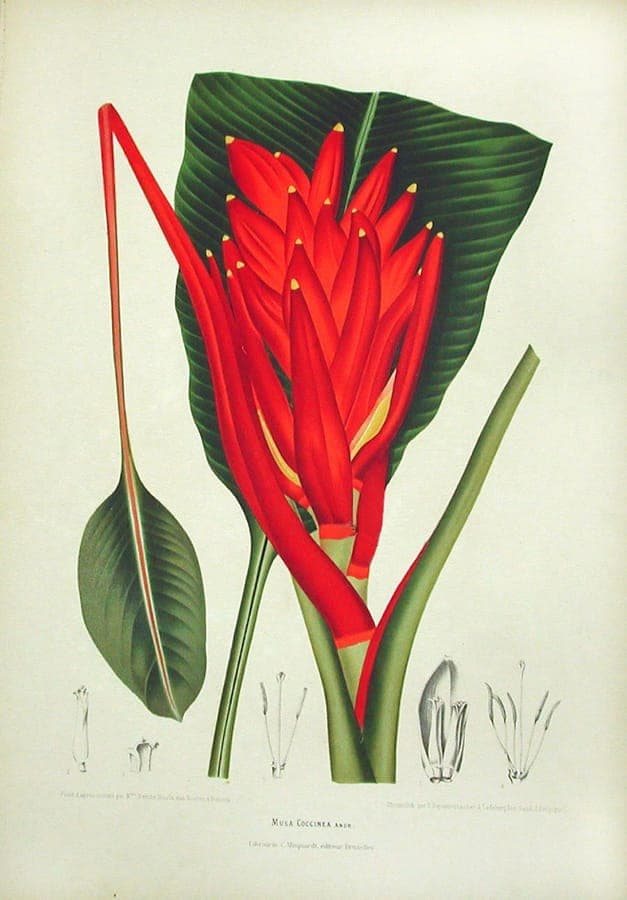
Berthe Hoola van Nooten (1817-1892), Pieter De Pannemaeker (lithographer) / Public domain, via Wikimedia Commons
Scarlet banana: complete guide
Musa coccinea
Want to see Scarlet banana: complete guide in your garden?
1 minute, no credit card
Musa coccinea, commonly called scarlet banana, red flowering banana, or red torch banana, is a spectacular tropical ornamental from the Musaceae family. Though bananas are famous for their fruit, the scarlet banana stands out for its dramatic and luminous red inflorescence - a defining characteristic that makes it instantly recognizable among tropical plants. This compact banana species reaches 1.5 to 2.5 meters in height and originates from southeastern China and Vietnam, where it thrives in warm, humid tropical environments.
The striking appearance and compact growth habit of Musa coccinea make it an excellent choice for tropical gardens, conservatories, and collectors seeking ornamental foliage and flowers. The upright red bracteal structure - resembling an ornate torch or torch flower - provides dramatic visual impact that few other tender perennials can match. Ethnobotanically, this plant is also fascinating, as indigenous peoples throughout its native range utilize various plant parts in traditional remedies and applications.
Appearance and bloom
Musa coccinea grows as a large herbaceous perennial with a pseudo-stem composed of tightly wrapped leaf sheaths. The foliage is bold and architectural: individual leaves extend to 150 centimeters or more in length, displaying deep green coloration with prominent veining. The leaves emerge directly from the pseudo-stem in an alternate arrangement.
The inflorescence is the star attraction. Red, waxy bracts emerge from the pseudo-stem apex, arranged in overlapping ranks like roof tiles. These bracts form a distinctive torch-like or club-shaped structure, deep crimson to scarlet in color. Tiny yellow to orange flowers appear within the axils of these bracts, creating a striking bicolor effect.
Blooming occurs during warm months, typically lasting four to eight weeks. Small yellowish fruit may develop following bloom, though these rarely ripen outside true tropical conditions and serve a decorative rather than edible purpose. The entire inflorescence can persist for several weeks, gradually transitioning from vibrant red to deeper burgundy as it matures.
Ideal location
Scarlet banana performs best in warm, sheltered positions with full sun exposure. This plant requires minimum 6-8 hours of direct sunlight daily for optimal growth and peak flowering. Insufficient light results in weak, leggy stems and minimal blooming.
Wind protection is essential, as large banana leaves are vulnerable to tearing and damage from strong breezes. Ideal placement is a sheltered microclimate where the plant receives bright, filtered daylight - perhaps beneath larger trees or against a south-facing wall in temperate regions.
In warm climates (USDA zones 10-11), outdoor cultivation year-round is possible. In temperate zones, winter protection is mandatory - either in a heated greenhouse or conservatory, or moved indoors to a bright, warm location.
Soil
Musa coccinea demands rich, well-draining soil generously amended with organic matter. An ideal growing medium combines one part high-quality potting soil, one part peat or coir, and one part perlite or coarse sand. This composition ensures excellent drainage while retaining adequate moisture for growth.
Soil pH should be neutral to slightly acidic (pH 6.0-7.0). Regular additions of well-rotted compost or leaf mold maintain soil fertility and structure - essential for this vigorous grower.
For container cultivation, use pots at least 30-40 liters in volume with excellent drainage holes. Since this plant is water-hungry, quality soil structure prevents waterlogging, which damages rhizomes and encourages rot.
Free design
Want to see Scarlet banana: complete guide in your garden? Make a free design now.
Watering
Musa coccinea prefers consistently moist but never waterlogged conditions. During the active growing season (spring through fall), keep soil uniformly moist. Check regularly - water when the top 2-3 centimeters feel dry to the touch.
Reduce watering during cooler months, especially if winter temperatures drop significantly. A dormant plant can tolerate considerably drier conditions.
Waterlogging is this plant's greatest enemy. Always ensure drainage holes are clear and water flows freely. In naturally rainy climates, rainwater harvesting reduces supplemental watering needs.
Mist foliage regularly - tropical plants like Musa coccinea appreciate high humidity. Daily misting with soft water supports healthy growth and discourages mite infestations.
Pruning
Musa coccinea requires minimal pruning beyond removing dead or damaged foliage. Since growth originates from rhizomes, careful removal of diseased leaves at the base can stimulate new shoots.
Post-bloom, remove spent inflorescences if desired, though this is optional. Remove yellowed or damaged leaves promptly to maintain disease-free plants and improve aesthetics.
If the plant is overwintered outdoors in cooler climates, frost-damaged portions can be carefully cut back to approximately 30 centimeters above soil level. Healthy rhizomes will regenerate in spring.
Maintenance calendar
January-February: Minimal watering; no feeding. Inspect greenhouse-grown plants for pests. Prepare for growing season.
March-April: Begin monthly feeding as new growth emerges. Increase watering as temperatures rise. Expect first blooms by late April in ideal conditions.
May-July: Apply fertilizer bi-weekly using balanced or slightly phosphorus-rich formula. Peak growth and flowering period. Maintain excellent hydration and humidity.
August-September: Continue regular care regimen. Summer heat may necessitate watering every 2-3 days. Watch for spider mites and powdery mildew.
October-November: Gradually reduce watering. Cease feeding as growth slows. Transition plant toward dormancy or preparation for winter storage.
December: Minimal watering; no fertilizer. In cooler climates or outdoors, provide frost protection or move indoors.
Winter hardiness
Musa coccinea is frost-sensitive and cold-intolerant. In regions where temperatures regularly fall below 10°C, provide protection or move plants indoors. Optimal growth occurs between 20-30°C.
Temporary exposure to 15°C is tolerable, but prolonged temperatures below 12°C inhibit growth and cause leaf drop. Temperatures below 5°C risk permanent damage to rhizomes.
For USDA zones 9 and colder, container cultivation with winter protection is recommended. In warm zones (10b-11), outdoor culture is feasible, though frost-threat protection remains prudent.
Companion plants
When grouped or massed, Musa coccinea creates stunning combinations with other tropical species:
- Heliconia species: similar architectural flowers and culture requirements
- Red anthuriums: complementary red tones and tropical aesthetic
- Philodendrons: low-growing foliage for underplanting
- Cannas: similar tropical character with staggered bloom periods
- Tropical ferns: interesting textural contrast
Pair best with plants requiring similar warmth, humidity, and feeding regimens.
Conclusion
Musa coccinea is a genuinely spectacular plant that commands attention through its dramatic red flower torches and exotic appearance. While demanding in terms of warmth, humidity, and rich soil, the rewards are magnificent when its luminous red inflorescences emerge.
Whether you live in a warm climate or maintain a tropical greenhouse, scarlet banana deserves consideration. Find inspiration and design your garden with tropical selections on gardenworld.app, where you can create complete landscape plans including exotic species. Discover more plant guides and tropical design ideas on gardenworld.app.
Want to see Scarlet banana: complete guide in your garden? Make a free design now.
Upload a photo, pick a style, and get a photorealistic design with plant list in under a minute.
No credit card required


Similar plants
Banana plant: complete guide to growing Musa x paradisiaca outdoors
Musa x paradisiaca
How to grow the banana plant outdoors in a temperate garden: best location, feeding, winter storage, and tropical companion plants.
Musa balbisiana: complete guide
Musa balbisiana
Discover the Balbis banana with large leaves and tropical character. Produces plantains. A true statement plant for your front garden or conservatory.
Abyssinian banana: complete guide
Ensete ventricosum
The Abyssinian banana is an impressive, nutritious plant native to Ethiopia. Learn about growing, care, and culinary uses of this remarkable species.