
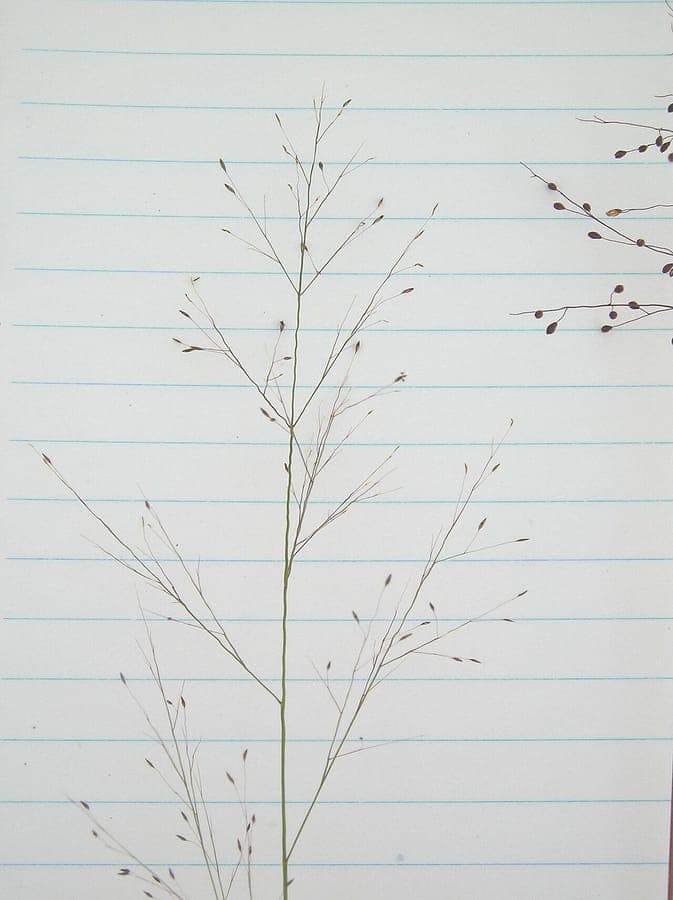
Superior National Forest / CC BY 2.0, via Wikimedia Commons
Bog Muhly (Muhlenbergia uniflora): complete guide
Muhlenbergia uniflora
Want to see Bog Muhly (Muhlenbergia uniflora): complete guide in your garden?
1 minute, no credit card
Overview
Muhlenbergia uniflora - commonly called bog muhly, fall dropseed muhly or one-flowered satingrass - is a specialist North American grass in the family Poaceae. Unlike most members of its genus, which are associated with dry to moderately moist prairies, this species is a genuine wetland plant, native to acidic bogs, wet meadows and moist openings in coniferous forests along the northeastern seaboard of North America.
Its natural range stretches from Labrador and Newfoundland south through New England and the mid-Atlantic states (Connecticut, New York, New Jersey, Pennsylvania, Maryland), with outlying populations in Wisconsin, Michigan and Minnesota to the west. The species was also introduced to Texas. In the north of its range it extends into British Columbia and Oregon in the Pacific Northwest.
The epithet 'uniflora' - meaning 'one-flowered' - refers to a botanical characteristic of the florets within the individual branches of the flower panicle. It was formally described by Fernald in 1927, based on earlier material collected by the Pennsylvania botanist Henry Muhlenberg, after whom the entire genus is named.
Unlike Muhlenbergia racemosa, which spreads via rhizomes, M. uniflora grows in a bunch form - compact, clump-forming growth that stays put without spreading aggressively. This makes it a well-behaved, easily managed plant for the right garden setting. For garden design ideas that incorporate specialty plants like this, gardenworld.app offers a wide range of inspiration and personalised planting advice.
Appearance and bloom cycle
Bog muhly forms neat, compact clumps of extremely fine, almost thread-like stems, typically reaching 20 to 40 cm in height - somewhat smaller than many other muhly species. The leaves are very narrow and mid-green, giving the plant an airy, delicate texture that catches light well.
The flowers are yellowish and appear late in the season: from August through October, sometimes persisting into November in mild autumns. The panicles are small, open and wispy - they move in the gentlest breeze and have a translucent quality in autumn sunlight. This late flowering period is one of the plant's most valuable garden characteristics, extending seasonal interest well into autumn when many other perennials have finished flowering.
After flowering, small yellowish seeds ripen. Wind dispersal is possible but self-seeding in garden conditions is generally moderate and not problematic. The dried stems remain attractive through winter, contributing a delicate, fine-textured silhouette to the garden.
Ideal location
Site selection is critical for Muhlenbergia uniflora. The plant needs consistent moisture throughout the growing season and performs best in full sun to light partial shade. Unlike drought-tolerant prairie grasses, this species cannot tolerate dry spells - if the soil dries out significantly, the plant will suffer and may die.
The best positions are: the margins of a garden pond or stream, wet meadow plantings, bog garden zones and consistently moist sections of a border or rain garden. In normal, free-draining border soil, this species is not the right choice.
If you want to incorporate this grass into a wet or bog-garden design - perhaps as part of a naturalistic pond-edge planting or a rain-fed hollow - gardenworld.app can help you visualise and plan the full planting arrangement before you commit to digging and planting.
Soil
Soil acidity is the key requirement for Muhlenbergia uniflora. The species needs a pH between 4.8 and 6.8 for good growth - distinctly acidic conditions. On neutral or calcareous soils the plant will decline. This makes it unsuitable for most standard garden borders but ideal for peat gardens, heather gardens and pond margins with acidic soil.
The soil should be moisture-retentive and low to moderately fertile. Peat, peaty loam or a mixture of lime-free potting compost and sand works well. On heavier clay soils, drainage must still be adequate to prevent the crown from rotting in winter, even though the plant needs consistent moisture.
Avoid fertilising: on rich soils, this and other bog plants tend to produce overly lush, weak growth that is more prone to disease and loses the characteristic compact form. Use ericaceous compost or acidic leaf mould (oak, beech) as a soil amendment if needed.
Free design
Want to see Bog Muhly (Muhlenbergia uniflora): complete guide in your garden? Make a free design now.
Watering
Consistent moisture is the most critical cultivation requirement for this species. In the wild it grows at bog margins and in wet grasslands where the water table is close to the surface, and it needs similar conditions in garden cultivation.
During the growing season from April to October, the soil must never dry out completely. In dry summers this may mean daily watering, especially for plants grown away from a natural water source. Near a pond or stream, supplemental irrigation is generally not needed.
In winter, the plant is less demanding about water levels. The soil should remain moist but not waterlogged; frozen soil for short periods is tolerated by the root system. Do not let the crown sit in standing water throughout winter, as this can cause rotting.
Pruning
Pruning requirements are minimal. Cut the clumps back to 5 to 8 cm above ground level in late February or early March, before new growth begins. Use clean, sharp shears. The cut material is fine enough to compost directly.
During the growing season no pruning is needed. Remove any loosely hanging dead stems by hand if they detract from the plant's appearance, but otherwise leave the plant to grow naturally. The delicate dried stems provide winter interest and are a good food source for small seed-eating birds.
Maintenance calendar
February to March: Cut clumps back to 5-8 cm; remove dead material.
April to May: New growth emerges; check soil moisture and pH.
June to August: Keep consistently moist; do not allow to dry out during warm spells.
August to October: Flowering period; leave panicles intact for structure and seed for birds.
November: Leave standing for winter structure; apply a light mulch if severe frost is expected.
December to January: Dried stems provide fine winter silhouette.
Winter hardiness
Muhlenbergia uniflora is well-suited to cold climates. Its native range includes Labrador, Newfoundland and Quebec - regions with long, cold winters and sustained frost. The species is reliably winter-hardy in USDA zones 4 to 6. For UK and northwestern European gardens (typically zones 7 to 9), it is more than adequately cold-hardy.
As a bunch-forming rather than rhizomatous grass, the clump is slightly more exposed to freezing at its centre during extended cold spells. In open, exposed positions, a light protective mulch of coarse straw or pine needles around (not over) the clump in November is a sensible precaution when temperatures are expected to fall below -15 degrees Celsius for extended periods.
Companion plants
In an acidic bog garden or wet meadow, Muhlenbergia uniflora combines beautifully with Eriophorum angustifolium (cotton grass), Drosera rotundifolia (common sundew), Carex limosa (bog sedge) and Molinia caerulea (purple moor grass). The hair-fine texture of bog muhly contrasts well with the broader leaves of moor grass and the fluffy white seed heads of cotton grass.
Along pond margins, good companions include Juncus effusus, Lobelia cardinalis and Iris versicolor - all of which share similar requirements for consistent moisture and moderate to low fertility. Avoid combining with drought-tolerant prairie perennials, which need quite different soil moisture conditions.
Closing thoughts
Muhlenbergia uniflora is not a plant for every garden, but for those with acid, moist or boggy ground it is a specialist gem. Its combination of fine texture, late season flowering, neat clump-forming habit and excellent cold hardiness makes it a worthwhile choice for pond edges, bog gardens and wet meadow plantings.
Look for it at specialist native plant and bog plant nurseries; general garden centres rarely stock it. For help designing a complete wet or acid garden planting that incorporates grasses like this alongside compatible companions, gardenworld.app offers tailored design tools to get your project off the ground.
Want to see Bog Muhly (Muhlenbergia uniflora): complete guide in your garden? Make a free design now.
Upload a photo, pick a style, and get a photorealistic design with plant list in under a minute.
10,000+ gardens designed already
No credit card required


Similar plants
Marsh Muhly (Muhlenbergia racemosa): complete guide
Muhlenbergia racemosa
Full guide to Muhlenbergia racemosa: ideal site, soil, watering, maintenance and winter hardiness for this North American prairie grass.
Wood melick: complete guide
Melica uniflora
Wood melick is a beautiful plant.
Mountain melick: complete guide
Melica nutans
Mountain melick is a beautiful plant.