
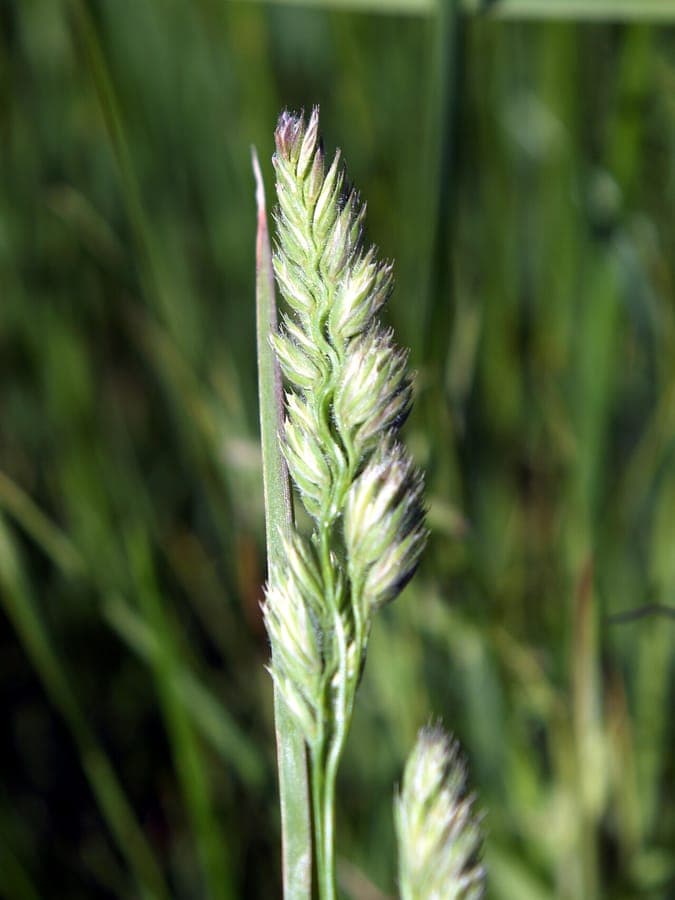
Jim Pisarowicz / Public domain, via Wikimedia Commons
Marsh Muhly (Muhlenbergia racemosa): complete guide
Muhlenbergia racemosa
Want to see Marsh Muhly (Muhlenbergia racemosa): complete guide in your garden?
1 minute, no credit card
Overview
Muhlenbergia racemosa - commonly called marsh muhly, green muhly or upland wild timothy - is a native North American grass belonging to the family Poaceae. It holds an impressive natural range stretching from southern Canada through the Great Plains and mountain states of the USA all the way to northeastern Mexico. This wide distribution tells you something important about the plant: it is adaptable, resilient, and tolerant of a broad range of conditions.
The species was formally described in 1888 by Britton, Sterns and Poggenb., based on material originally collected by the French botanist Andre Michaux during his landmark explorations of North American flora in the late eighteenth century. The epithet 'racemosa' refers to the raceme-like, narrow and dense flower panicles the plant produces each summer.
For gardeners in the UK and Europe, Muhlenbergia racemosa is still a somewhat specialist choice, but it is gaining recognition among practitioners of prairie-style and naturalistic planting. On gardenworld.app, you can find design inspiration for incorporating grasses like this into cohesive planting plans that look great across all four seasons.
The plant grows from rhizomes - underground spreading stems that allow it to slowly colonise an area over time, creating a stable, spreading clump without becoming invasive in most temperate garden situations.
Appearance and bloom cycle
Marsh muhly is a medium-sized grass, typically reaching 40 to 80 cm in height depending on site conditions. The stems are upright and wiry, the leaves narrow and mid-green with a medium texture. In conditions of partial drought, leaf tips may take on a yellowish cast, adding a warm note to the summer border.
Flowering occurs from July through September. The panicles are narrow, spike-like and green - not showy in the way of some ornamental grasses, but elegant and textural. This understated quality is actually an asset in naturalistic borders: the grass contributes movement, structure and texture without competing with the colour of surrounding flowering perennials.
As autumn progresses, the seed heads turn light brown and persist through winter, offering a subtle but worthwhile winter silhouette. The small brown seeds ripen in late autumn and provide a food source for small seed-eating birds. Seed self-dispersal is moderate; most spread in garden conditions occurs via the rhizomes.
The plant's growth habit is described as rhizomatous and graminoid - meaning it builds up a dense root network that makes it increasingly drought-tolerant once established, and also makes it easy to divide when clumps become congested after several years.
Ideal location
Marsh muhly performs best in full sun to light partial shade. A position receiving at least six hours of direct sun per day is ideal for strong growth and good flowering. Light shade, such as beneath a high tree canopy or near a fence that shades only part of the day, is tolerated but tends to produce taller, slightly laxer stems.
Despite its common name implying wet habitats, this species is remarkably adaptable. In the wild it grows along stream margins and in moist meadows, but also across drier upland prairie terrain. In garden conditions it is suited to ordinary, reasonably well-drained border soil as much as to moisture-retentive positions near a pond edge.
For front garden applications - including the kind of prairie-inspired designs featured on gardenworld.app - this grass works well as a border edging plant, a path-side filler, or as a textural contrast to larger-leaved perennials.
Soil
One of the strengths of Muhlenbergia racemosa is its tolerance for a wide pH range: it grows well in soils from pH 5.9 up to pH 8. This means both slightly acidic soils (common across much of northern Europe) and calcareous soils suit it. Heavy clay soils are less suitable because waterlogging in winter can damage the rhizomes; loamy or sandy loam soils give the best results.
On sandy soils, incorporate organic matter such as garden compost before planting to improve moisture retention. Once established, this grass rarely needs feeding - excessive nitrogen fertiliser encourages lush but weak leafy growth at the expense of flowering and can make stems more prone to flopping.
Improve drainage if necessary by raising the planting area slightly or incorporating grit into heavy clay. Good drainage in winter is more important than soil richness for long-term plant health.
Free design
Want to see Marsh Muhly (Muhlenbergia racemosa): complete guide in your garden? Make a free design now.
Watering
During the first growing season, water regularly to help the rhizomes establish. In dry weather, watering two or three times per week through June, July and August will get the plant settled in quickly.
From the second year onwards, marsh muhly is considerably more drought-tolerant. It will survive short dry spells without significant damage, though foliage may look slightly stressed. In prolonged dry periods lasting more than three weeks, a deep watering once or twice a week is beneficial.
In moisture-retentive positions or near water features, supplemental irrigation is rarely needed. The plant does not appreciate standing water around its crown in winter - ensure drainage is adequate to avoid crown rot.
Pruning
Marsh muhly requires minimal pruning. The dried stems and seed heads provide winter interest and bird food, so it is best to leave the plant standing through the winter months.
Cut the clumps back to about 10 cm in late February or early March, before new growth begins. A pair of sharp shears or loppers works well for this job. Wear gloves as the leaf blades can cause minor cuts. Compost the cut material.
During the growing season, no pruning is necessary. If any stems die back or look untidy, remove them by hand. Otherwise, leave the plant to grow naturally through the season.
Maintenance calendar
February to March: Cut clumps back to 10 cm; remove dead material.
April to May: New growth emerges; apply a light top-dressing of compost if soil is poor.
June to July: Water during dry spells, particularly for plants in their first year.
July to September: Flowering period; leave panicles intact.
October to November: Plant enters dormancy; no intervention needed.
December to January: Dried stems and seed heads provide winter structure and bird food.
Winter hardiness
Muhlenbergia racemosa is extremely cold-hardy. Its native range includes the Canadian prairies (Manitoba, Saskatchewan, Alberta) and states like Montana, North Dakota and Wisconsin - regions that experience genuinely severe winters with temperatures well below -30 degrees Celsius. The species comfortably survives USDA hardiness zones 4 to 5 and has been documented in zone 3 conditions.
For UK and northern European gardens, which typically fall within USDA zones 7 to 9, this is more than adequate. No winter protection is needed. On very free-draining sandy soils in exposed positions, a 5 cm mulch of compost or straw in November can prevent root desiccation during hard frosts, but this is precautionary rather than essential.
The rhizomatous root structure is an asset in winter: even if top growth is killed back by severe frosts, the underground rhizomes survive and re-sprout vigorously in spring.
Companion plants
In a naturalistic or prairie-style border, Muhlenbergia racemosa combines beautifully with Echinacea purpurea, Rudbeckia fulgida and Penstemon digitalis. Its narrow panicles contrast elegantly with the bold, daisy-like flowers of these prairie companions. The grass's medium texture prevents it from overwhelming smaller perennials while still providing structure.
For wetter positions, good companions include Lobelia cardinalis, Iris versicolor and native sedges such as Carex stricta. On drier soils, try it alongside Salvia nemorosa, Achillea millefolium and Agastache foeniculum for a long-flowering, low-maintenance combination.
For shaded positions where this grass is less suitable, consider Melica uniflora or Melica nutans as similar textural alternatives within the Poaceae family.
Closing thoughts
Muhlenbergia racemosa may not be the most glamorous grass on the market, but its combination of broad soil adaptability, drought resilience once established, excellent cold hardiness and naturalistic character make it a quietly reliable choice for borders, prairie plantings and pond margins alike.
Look for it at specialist native plant nurseries and perennial growers; some larger garden centres stock it in the planting season. For help designing a complete planting scheme that makes the most of grasses like this, gardenworld.app offers personalised garden design tools to get you started.
Want to see Marsh Muhly (Muhlenbergia racemosa): complete guide in your garden? Make a free design now.
Upload a photo, pick a style, and get a photorealistic design with plant list in under a minute.
10,000+ gardens designed already
No credit card required


Similar plants
Bog Muhly (Muhlenbergia uniflora): complete guide
Muhlenbergia uniflora
Complete guide to Muhlenbergia uniflora: acid soil, moist habitat, care, pruning and cold hardiness for this specialist North American bog grass.
Wood melick: complete guide
Melica uniflora
Wood melick is a beautiful plant.
Mountain melick: complete guide
Melica nutans
Mountain melick is a beautiful plant.