
Wikimedia Commons / Public domain, via Wikimedia Commons
Black mulberry: complete guide
Morus nigra
Want to see Black mulberry: complete guide in your garden?
1 minute, no credit card
Overview
The black mulberry, Morus nigra, isn't your average fruit tree. Native to Iran, it's spread across Europe and parts of North America, prized for its deeply coloured, sweet-tart berries and long lifespan. Unlike the fast-growing white mulberry, this one takes its time - slow in youth, but once established, it can live for 100 years or more. It's a tree with character, often found in cottage gardens, old estates, or tucked into heritage parks.
What sets it apart? The fruit. Deep purple to almost black when ripe, juicy and rich in flavour, perfect for pies, cordials or eating straight off the branch - if you beat the birds to it. And you will need to, because they love it. Plant it away from patios or driveways unless you want a sticky cleanup every summer.
On gardenworld.app you can map out a garden design where your mulberry fits perfectly, keeping fruit mess away from walkways and seating areas.
Appearance & bloom cycle
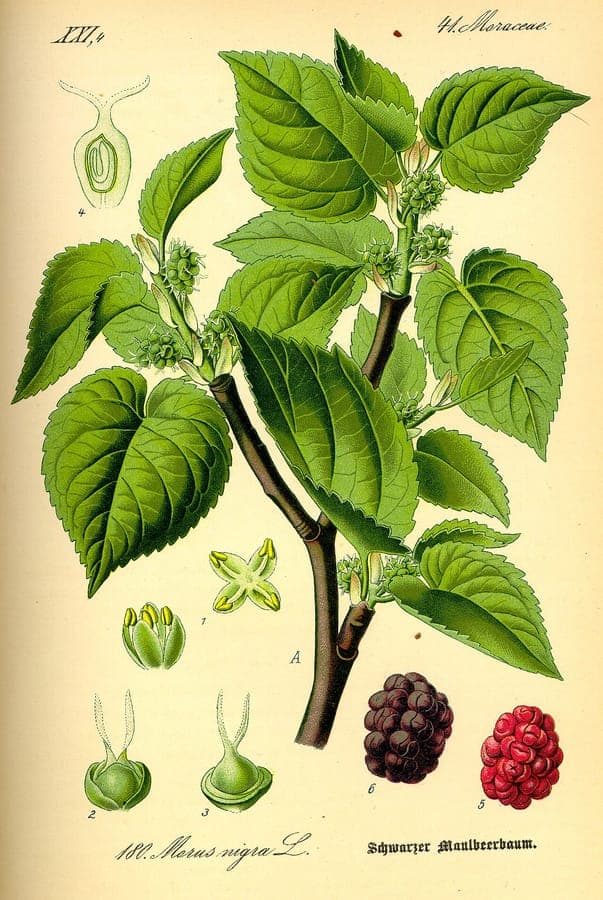
Morus nigra grows as a small to medium tree, typically reaching 6–10 meters in height with a similar spread. Its growth habit is broad and spreading, sometimes irregular, giving it a rugged, picturesque look. The bark becomes deeply fissured with age, adding visual interest in winter.
Leaves are large, up to 20 cm long, rough-textured, and dark green on top with a paler underside. They emerge in spring and turn yellow before dropping in autumn. Flowers are green, inconspicuous catkins appearing in April and May. They're wind-pollinated, so no second tree is needed for fruiting.
Fruit ripens from June to August. Start checking in early June - unripe berries are red and hard, but once they turn deep purple and feel soft, they're ready. Expect heavy crops every other year, though young trees may take 5–8 years to fruit.
Ideal location
This tree thrives in full sun - aim for an 8/10 on the light scale. South or southwest-facing spots work best. It needs at least 6 hours of direct sunlight daily for good fruit production. Partial shade leads to leggy growth and fewer berries.
Choose a site sheltered from strong winds, especially when young. Avoid planting too close to buildings or underground pipes - mature roots are vigorous and can lift paving or infiltrate drains. Keep at least 4 meters from structures.
On gardenworld.app you can simulate sun exposure and root spread to find the safest spot for your black mulberry.
Soil requirements
Black mulberry prefers slightly acidic to neutral soil, pH 5.5–6.5. It grows well in loamy or well-drained clay soils. Sandy soils are acceptable if enriched with compost to improve moisture retention.
It doesn't like waterlogged roots, so avoid low-lying spots. If your soil is heavy clay, amend it with grit and organic matter before planting. Once established, it's moderately drought-tolerant, thanks to its deep taproot.
Free design
Want to see Black mulberry: complete guide in your garden? Make a free design now.
Watering
Water deeply and regularly during the first two growing seasons - about 10 litres per week during dry spells. After that, it becomes much more self-sufficient. Still, during prolonged droughts, especially when fruiting, give it a long soak every 10–14 days.
Water at the base, not overhead, to prevent fungal issues. Mulch annually with compost or wood chips in spring to retain moisture and suppress weeds.
Pruning
Minimal pruning is best. Black mulberry doesn't respond well to heavy cuts. Only remove dead, damaged or crossing branches, preferably in late winter or early spring before sap rises.
If shaping is needed, do it gradually - never remove more than 20% of the canopy in one year. Avoid summer pruning, as it causes excessive bleeding. Use sharp, clean tools to prevent disease.
Maintenance calendar
- Jan: Inspect for winter damage, remove dead wood
- Feb: Final pruning window
- Mar: Apply compost around the base
- Apr: Watch for new growth, check for aphids
- May: Monitor developing fruit, water if dry
- Jun: Begin harvesting, protect from birds if needed
- Jul: Peak harvest, process berries quickly
- Aug: Final picking, clean fallen fruit
- Sep: Reduce watering, stop feeding
- Oct: Rake up fallen leaves and fruit
- Nov: Check root zone, apply mulch
- Dec: Observe tree, prepare for frost
Winter hardiness
Hardy in USDA zones 6–8. It survives UK winters (zone 8) easily, and handles occasional dips to -15°C. Young trees may need protection in harsh winters - wrap the trunk with hessian if extreme frost is forecast.
Mature trees are very resilient. Avoid piling snow against the trunk, as it can encourage rot. No winter feeding or cover needed for established specimens.
Companion plants
Plant low-growing, shade-tolerant species beneath it. Try comfrey, thyme, or wild strawberries. Avoid aggressive spreaders like mint. Lavender on the sunny edge attracts pollinators and complements the tree's aesthetic.
Other fruit trees like figs or peaches can grow nearby, but keep 3–4 meters distance for light and root space. Don't plant vegetables directly under it - too much shade.
Closing
The black mulberry is a long-term investment. It asks little but gives decades of fruit and beauty. Buy from reputable garden centres - look for grafted trees around 1.5 meters tall for faster fruiting. Avoid seedlings, as they take much longer to produce.
In the UK or US, check local suppliers or visit garden centres like those in your area. Be patient - the first few years are quiet, but the payoff is worth it. And remember: on gardenworld.app you can visualise how your tree will grow over time, helping you plan paths, seating, and companion planting with confidence.
Want to see Black mulberry: complete guide in your garden? Make a free design now.
Upload a photo, pick a style, and get a photorealistic design with plant list in under a minute.
No credit card required


Similar plants
Morus macroura: complete guide
Morus macroura
Himalayan mulberry with long fruits. Fast-growing, edible berries, winter hardy. Suitable for large gardens and landscapes.
Brosimum guianense: complete guide
Brosimum guianense
Guiana snakewood: exotic tree from South America with valuable timber. Cultivation and care for warm-climate gardens.
Maclura tinctoria: complete guide
Maclura tinctoria
Learn how to grow Maclura tinctoria or Cubanwood. This beautiful tree offers shade, food and dye possibilities in your garden.