
epopov / CC BY 4.0, via Wikimedia Commons
Microbiota decussata: complete guide
Microbiota decussata
Want to see Microbiota decussata: complete guide in your garden?
1 minute, no credit card
Overview
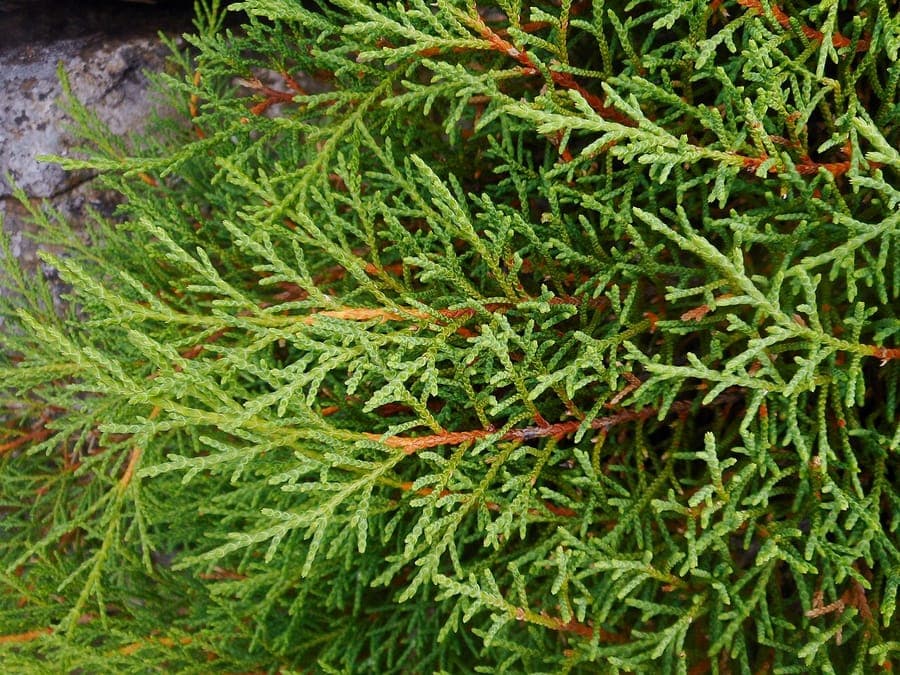
Microbiota decussata, also known as Siberian cypress or subalpine arborvitae, is a rare and fascinating conifer shrub from the Far Eastern region of Russia. This unique plant is renowned for its fine, scale-like foliage that changes color from green to brown-red in winter. With its low, spreading growth habit and unusual color transformations, microbiota decussata makes a striking addition to alpine gardens, rock gardens, and modern landscape design.
Appearance and color
Microbiota decussata is a compact, low-growing shrub that usually reaches no more than 0.5 to 1 meter in height. The branches grow horizontally and form a wide, flattened growth habit. The foliage is very fine and scale-like, with opposite arrangement (decussatum) meaning the scales cross over each other in pairs. In summer, the foliage is matte green to gray-green. In fall and winter, it transforms dramatically to brown, reddish-brown, or copper coloring - a transformation that is very attractive. It returns to green in spring.
Ideal location
Microbiota decussata thrives best in sunny to lightly shaded locations. It prefers spots receiving at least four hours of direct sunlight. Well-draining locations are essential because this plant can suffer in wet soil. A place on higher ground, in rock gardens, or on slopes is ideal. Protect from severe winter winds that can cause damage.
Soil
Microbiota decussata requires well-draining soil and is very sensitive to wet feet. Heavy clay soils are not suitable without significant improvement. Add coarse sand, gravel, or horticultural perlite for drainage. Prefers acidic to neutral soils (pH 5.5 to 7.0). This plant grows in poor, rocky soils, so rich feeding is not needed.
Free design
Want to see Microbiota decussata: complete guide in your garden? Make a free design now.
Watering
Microbiota decussata is drought tolerant once established and requires minimal watering. Too much water is a bigger problem than too little. Water during planting and in dry spells, but avoid waterlogging. In very wet winters, good drainage can literally mean the difference between life and death for this plant.
Pruning
Minimal pruning required. This plant naturally forms its compact shape and does not need pruning. Only remove dead branches or damaged foliage when visible. Aggressive pruning can cause damage that does not recover.
Maintenance calendar
FEBRUARY - APRIL: Enjoy the return to green. Plants can be planted in early spring. No significant care needed.
MAY - JULY: Summer growth. Water during extreme drought. Plant is quite maintenance-free during this time.
AUGUST - OCTOBER: Summer growth continues. Beginning of color change toward end of period. Water during drought.
NOVEMBER - JANUARY: Spectacular color change to reddish-brown. This is when the plant is most attractive. No extra care.
Winter hardiness
Microbiota decussata is extremely hardy and can tolerate temperatures down to -45°C. This makes it extremely suitable for very cold climates. It is actually more concerned about high temperatures and humidity than cold. In very warm or humid climates, it may suffer.
Companion plants
Microbiota decussata looks beautiful next to:
- Other low-growing conifers
- Alpine stonecrop
- Dwarf grasses
- Heather and heather-like plants
- Forsythia
- Potentilla
It also works well as a specimen planting on a stone wall.
Conclusion
Microbiota decussata is for garden lovers seeking something unique. With its unusual growth habit, dramatic winter coloring, and extreme winter hardiness, it adds character and interest to alpine and modern gardens. Provide good drainage and this is a low-maintenance plant that gives years of enjoyment. Available at specialized nurseries.
Want to see Microbiota decussata: complete guide in your garden? Make a free design now.
Upload a photo, pick a style, and get a photorealistic design with plant list in under a minute.
No credit card required


Similar plants
Cupressus macnabiana: complete guide
Cupressus macnabiana
The Fragrant Cypress offers elegant growth with fine, aromatic foliage. Perfect for temperate climates and as specimen trees in contemporary gardens.
Cupressus guadalupensis: complete guide
Cupressus guadalupensis
The Guadalupe cypress: an elegant conifer for gardens. Complete cultivation guide for this Mexican cypress. Information about care, location, form and maintenance.
Austrocedrus chilensis: complete guide
Austrocedrus chilensis
Discover Austrocedrus chilensis, the Chilean Cedar ornamental conifer. Elegant specimen with fine foliage and columnar form for permanent structure.