
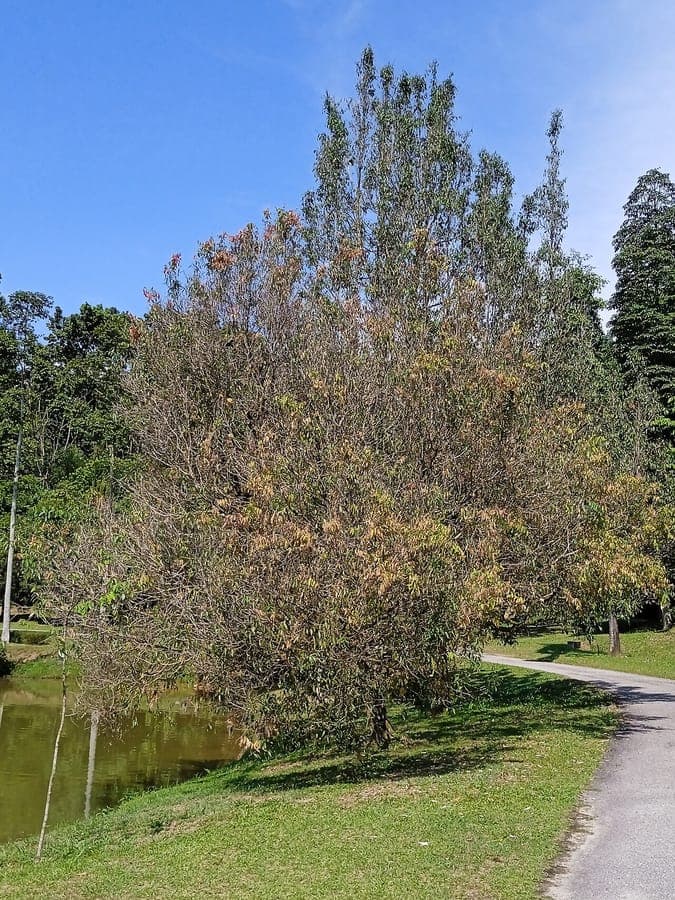
Wiki Farazi / CC0, via Wikimedia Commons
Mesua ferrea: complete guide
Mesua ferrea
Want to see Mesua ferrea: complete guide in your garden?
1 minute, no credit card
Overview
Mesua ferrea, commonly known as the Indian Ironwood Tree or Ceylon Ironwood, is a magnificent exotic tree native to the Indian subcontinent and Southeast Asia. Renowned for its dense, hard wood and elegant white flowers, this tree grows slowly to moderately and is ideal for larger gardens and parkland settings. With its glossy green foliage and fragrant blooms, Mesua ferrea brings tropical elegance and structure to any landscape. The tree is valued both for its ornamental appeal and its durable timber qualities, making it a statement piece in warm climates.
Appearance and Bloom
The Ironwood Tree develops into a medium to large specimen with a dense, neat crown. Leaves are lanceolate, glossy green, and remain evergreen throughout the year, providing consistent visual interest. Flowers appear in spring through summer, typically April to June, displaying white or creamy petals with prominent yellow stamens in the center. These fragrant blooms attract bees and butterflies, supporting local pollinators. After flowering, small brownish fruits develop gradually. The bark is glossy brown to gray, developing interesting textures as the tree matures, adding tactile appeal.
Ideal Location
Mesua ferrea thrives in full sun to light shade, requiring at least six to eight hours of direct sunlight daily for optimal growth and flowering. Choose a warm, sheltered location protected from strong, drying winds. In temperate climates, frost protection is essential. Avoid planting directly under the shade of other large trees, as this impedes growth and flowering. Positions near south-facing walls provide additional warmth and create microhabitats favoring development.
Soil
This tropical tree performs optimally in well-draining, well-structured soil. Heavy clay or compacted soils must be amended significantly. Add generous quantities of compost or perlite to improve drainage in clay-heavy areas. Mesua ferrea tolerates slightly acidic to neutral soils, with an ideal pH between 5.5 and 7.0. Ensure adequate nutrition by incorporating compost or slow-release fertilizer each spring. Mulching around the base helps retain moisture and regulate soil temperature.
Watering
Young trees require consistent watering, especially during the growing season. Maintain moist but not waterlogged soil. Once established, Mesua ferrea is relatively drought-tolerant. Water twice weekly in warm seasons, and once every two weeks in cooler months. Increase frequency in full sun exposures. Ensure excess water drains away; standing water causes root rot. Check soil moisture regularly by inserting a finger two centimeters into the soil.
Free design
Want to see Mesua ferrea: complete guide in your garden? Make a free design now.
Pruning
Mesua ferrea performs best with minimal pruning. Remove dead, diseased, or damaged branches in early spring before the growing season. Trim growing tips back if you prefer a more compact form. Use clean, sharp pruning shears to create clean cuts. Prune carefully as this tree grows slowly. Remove any water sprouts appearing below a graft union. Avoid summer pruning, which can introduce disease. Light structural pruning maintains architectural interest without stressing the specimen.
Maintenance Calendar
January-March: Check frost protection measures, prune dead wood. April-May: Active growth period, water regularly and fertilize. June-July: Peak flowering, maintain water levels. August-September: Reduce watering as weather cools. October-November: Winter preparation and final inspection. December: Apply protective coverings in cold regions.
Winter Hardiness
Mesua ferrea is frost-sensitive and recommended for warm regions (USDA zones 10-12). In temperate climates, young trees require frost protection below 0C. Wrap trees with burlap or frost cloth in the first year when frost threatens. Mature trees tolerate brief frosts down to -5C but thrive best where temperatures stay above -3C. In cold areas, grow as a container plant, moving indoors for winter protection in a heated greenhouse.
Companion Plants
Mesua ferrea combines beautifully with other Asian specimen trees and tropical plantings. Underneath, shade-loving understory plants like ferns and species such as Fatsia japonica create layered interest. For contrast, pair with light and dark-foliaged specimens: camellias for early spring blooms, magnolias for foliage contrast. In warm regions, other tropical fruit trees and orchids complement the overall composition.
Conclusion
Mesua ferrea is an impressive exotic tree that brings tropical elegance and sculptural form to your garden. With proper sun exposure, well-draining soil, and consistent care, these trees develop into stunning flowering specimens. For temperate climates, frost protection and potential winter overwintering are essential. Consult local nurseries for advice on cultivar selection and winter management. For more insights on exotic trees and tropical gardening, visit gardenworld.app.
Want to see Mesua ferrea: complete guide in your garden? Make a free design now.
Upload a photo, pick a style, and get a photorealistic design with plant list in under a minute.
No credit card required


Similar plants
Acer pycnanthum: complete guide
Acer pycnanthum
Acer pycnanthum, the Japanese swamp maple, is a fast-growing tree with early red flowers and brilliant autumn color, ideal for damp garden settings.
Freeman maple: complete guide
Acer × freemanii
Everything about the Freeman maple (Acer x freemanii): a fast-growing shade tree with spectacular autumn colour for large gardens.
Silver vine: complete guide
Actinidia polygama
Discover silver vine (Actinidia polygama): a hardy climbing plant with silvery foliage, loved by gardeners and cats alike.