
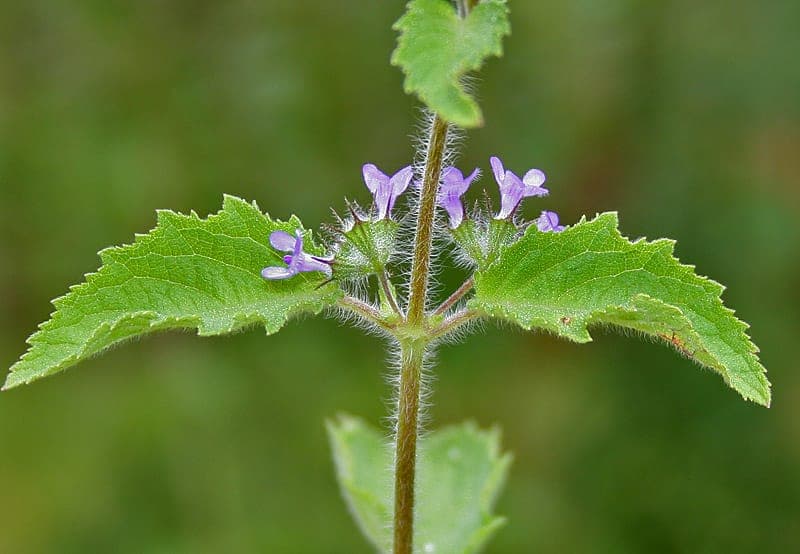
J.M.Garg / CC BY-SA 4.0, via Wikimedia Commons
Mesosphaerum suaveolens: complete guide
Mesosphaerum suaveolens
Want to see Mesosphaerum suaveolens: complete guide in your garden?
1 minute, no credit card
Overview
Mesosphaerum suaveolens, commonly known as mintweed or wild spikenard, is an aromatic plant from the Lamiaceae family originating in Central and South America. This versatile herb spread across tropical and subtropical regions over centuries and remains valued by gardeners who appreciate fragrant, useful plants. The species adapts well to diverse growing conditions and appeals to those seeking low-maintenance, pollinator-friendly options.
Appearance and Bloom
Mintweed grows as a compact shrub reaching 60 to 90 centimeters tall, displaying grayish-green, hairy leaves that emit a strong fragrance when touched. The leaves are elliptical with finely toothed edges. The plant produces small pink to purple flowers arranged in dense spikes from late spring through autumn. These nectar-rich flowers attract bees, butterflies, and other beneficial pollinators, making it ideal for ecological gardens.
Ideal Location
Mintweed thrives in full sun to partial shade, requiring at least six hours of direct sunlight daily. In hot climates, afternoon shade protects leaves from scorching. The plant tolerates shade remarkably well and even performs decently in partially shaded corners. Ensure good air circulation to prevent fungal issues, particularly in humid environments.
Soil Requirements
Mesosphaerum suaveolens is relatively undemanding regarding soil. It grows well in moderately fertile, well-draining soil with a pH between 6.0 and 7.5. The plant tolerates both acidic and neutral soils. Amend planting holes with organic matter like compost, but avoid waterlogging. For containers, use standard potting soil mixed with extra perlite or sand for optimal drainage.
Free design
Want to see Mesosphaerum suaveolens: complete guide in your garden? Make a free design now.
Watering
Keep soil moderately moist during the growing season, especially during dry spells. Mintweed has moderate water needs and tolerates brief drought once established. Water at the plant base in morning to prevent leaf damage. Reduce watering in winter as growth slows. Container plants require more frequent monitoring, as soil dries faster.
Pruning
Apply light pruning early in the growing season to encourage compact form. Remove dead or damaged branches as noticed. After flowering, cut the plant back by about one-third to promote bushiness and more flowers. Avoid heavy pruning, which weakens the plant.
Maintenance Calendar
Spring: Prune old growth; apply balanced fertilizer. Summer: Water regularly; collect seeds from ripening seed pods. Autumn: Reduce feeding; tolerate declining foliage. Winter: Minimal care; protect from hard frost in temperate zones.
Winter Hardiness
Mesosphaerum suaveolens is not winter hardy in temperate climates. In cooler zones, grow as annual or container plant moved indoors. In warmer zones (9b to 11), overwinter outdoors with minimal protection. For uncertain climates, keep under glass or in a warm frame.
Companion Plants
Mintweed pairs well with other aromatic herbs like oregano, thyme, and lavender. It looks striking beside silver-leaved plants for foliage contrast. In containers, combine with reliable seasonal flowers for color impact. Pollinator-conscious gardeners appreciate its value as a nectar source.
Closing Thoughts
Mesosphaerum suaveolens offers gardeners a delightful blend of decorative appeal, fragrance, and ecological benefit. Whether in herb gardens, Mediterranean-inspired plantings, or container arrangements, this versatile plant brings sensory richness to your garden design.
Want to see Mesosphaerum suaveolens: complete guide in your garden? Make a free design now.
Upload a photo, pick a style, and get a photorealistic design with plant list in under a minute.
No credit card required


Similar plants
Apple mint (Mentha x villosa): complete guide
Mentha x villosa
Meet apple mint (Mentha x villosa): a fruity-scented kitchen herb with woolly leaves, perfect for tea and mojitos.
Salvia peyronii: complete guide
Salvia peyronii
Discover Salvia peyronii, a rare Lebanese mountain sage. Growing tips, hardiness, and companion planting for a Mediterranean gravel garden.
Bigleaf mint (Mentha x rotundifolia): complete guide
Mentha x rotundifolia
Discover bigleaf mint: cultivation, care tips, and garden uses. Learn how to grow this aromatic herb with soft, hairy leaves.