
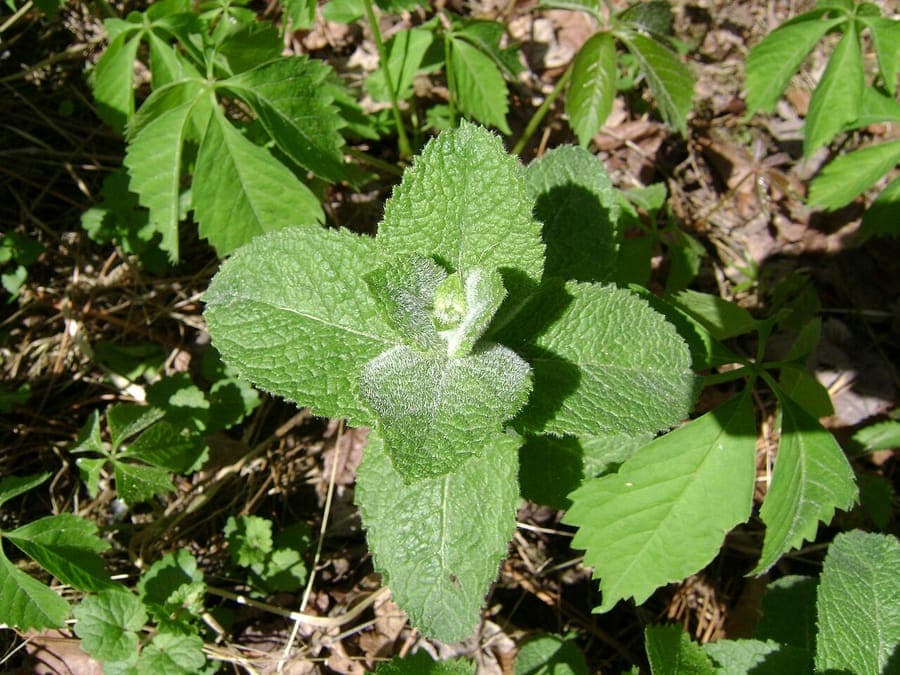
Broly0 / CC0, via Wikimedia Commons
Apple mint: complete guide
Mentha suaveolens
Want to see Apple mint: complete guide in your garden?
1 minute, no credit card
Overview
Apple mint, or Mentha suaveolens, is one of the most versatile and easygoing herbs you can grow. Unlike its sharper relatives like peppermint, apple mint has a soft, sweet scent reminiscent of ripe apples and a mild flavour that works well in drinks, salads, and desserts. It grows as a herbaceous forb, forming clumps that spread vigorously via underground rhizomes. That means it's fantastic if you want lots of mint, but it can take over a bed if you're not careful.
Native to southern Europe, apple mint adapts well to temperate climates and thrives in USDA zones 5 to 9. From July to September, it produces clusters of small white to pale purple flowers that attract bees, hoverflies, and butterflies. These blooms make it an excellent choice for pollinator gardens. If you're planning a kitchen garden layout, you can design a custom plan on gardenworld.app that incorporates apple mint with other culinary herbs like basil and oregano.
Appearance & bloom cycle
The leaves of apple mint are rounded, softly serrated, and covered in fine white hairs that give them a fuzzy, downy texture. They're bright green and can reach up to 5 cm in width. The upright stems grow 60–90 cm tall and are square in cross-section, typical of plants in the Lamiaceae family. In midsummer, dense, rounded flower heads appear at the stem tips. The flowers range from white to soft lavender and emit a delicate, sweet fragrance, especially in the evening.
Flowering begins in July and continues through September. If you're harvesting leaves for tea or cooking, it's best to pinch off flower buds early. This keeps the plant focused on leaf production rather than seed setting. Allowing some flowers to bloom, though, supports local pollinators and adds visual charm to your garden.
Ideal location
Apple mint prefers full sun to light shade, ideally receiving 6–8 hours of sunlight daily (light level 8/10). In hotter regions, afternoon shade helps prevent scorching and keeps the soil from drying out too quickly. It performs well in garden beds, but due to its aggressive spreading habit, it's often best grown in containers to prevent it from overtaking neighbouring plants.
Planting it in a pot-even if placed in the ground-helps contain its roots. A 30 cm wide container with drainage holes works well. You can also use gardenworld.app to design a raised bed or herb spiral that keeps apple mint contained while pairing it with thyme, sage, or parsley.
Free design
Want to see Apple mint: complete guide in your garden? Make a free design now.
Soil requirements
Apple mint isn't fussy about soil type but grows best in rich, moist, well-draining soil with a pH between 6.5 and 7.0. A blend of garden soil, compost, and a bit of sand ensures good texture and fertility. Avoid heavy clay soils that retain water, as they can cause root rot. For container growing, use a standard potting mix with a layer of gravel at the bottom for drainage.
Watering
Keep the soil consistently moist but never waterlogged. Water when the top 1–2 cm of soil feels dry-typically 2–3 times per week during the growing season. In hot, dry spells, daily watering may be necessary, especially for potted plants. Rainwater is preferred, as apple mint can be sensitive to high levels of chlorine or lime in tap water.
Pruning
Regular harvesting and pruning encourage bushy, healthy growth. Cut stems back by one-third in early June and again in late August. Always leave at least 10–15 cm of stem above ground to ensure regrowth. Remove any yellowing or damaged leaves to prevent fungal issues. Never cut more than half the plant at once.
Maintenance calendar
- Jan: Check root crowns for signs of life
- Feb: Prepare pots or beds for spring planting
- Mar: Divide or transplant in early spring
- Apr: Begin light feeding with compost tea
- May: Monitor for runners and pests
- Jun: First pruning, watch for aphids
- Jul: Flowers appear, continue harvesting
- Aug: Second pruning, check moisture levels
- Sep: Let a few blooms remain for pollinators
- Oct: Final harvest or dry leaves for storage
- Nov: Cut back if needed in milder zones
- Dec: Dormant period-no action required
Winter hardiness
Apple mint is hardy in USDA zones 5–9. In colder zones, mulch the base with straw or leaves to protect the rhizomes. In containers, move pots to a sheltered spot or insulate with bubble wrap to prevent root freeze. The top growth dies back in winter, but new shoots emerge in spring.
Companion plants
Apple mint grows well alongside other herbs like thyme, oregano, and chives. Avoid planting near vegetables like cabbage or cucumbers, as mint can inhibit their growth. In mixed borders, pair it with lavender, yarrow, or echinacea. It also works in containers with lemon balm or parsley.
Closing
Apple mint is a reliable, aromatic herb that rewards attentive care with lush growth and a long harvest season. Whether you grow it in a pot on your patio or tuck it into a sunny corner of your herb garden, it's a joy to grow and use. Pick up a plant at your local garden centre or start from cuttings. And remember, planning ahead pays off-try gardenworld.app to map out your ideal herb layout and keep your mint exactly where you want it.
Want to see Apple mint: complete guide in your garden? Make a free design now.
Upload a photo, pick a style, and get a photorealistic design with plant list in under a minute.
No credit card required


Similar plants
Apple mint (Mentha x villosa): complete guide
Mentha x villosa
Meet apple mint (Mentha x villosa): a fruity-scented kitchen herb with woolly leaves, perfect for tea and mojitos.
Salvia peyronii: complete guide
Salvia peyronii
Discover Salvia peyronii, a rare Lebanese mountain sage. Growing tips, hardiness, and companion planting for a Mediterranean gravel garden.
Bigleaf mint (Mentha x rotundifolia): complete guide
Mentha x rotundifolia
Discover bigleaf mint: cultivation, care tips, and garden uses. Learn how to grow this aromatic herb with soft, hairy leaves.