
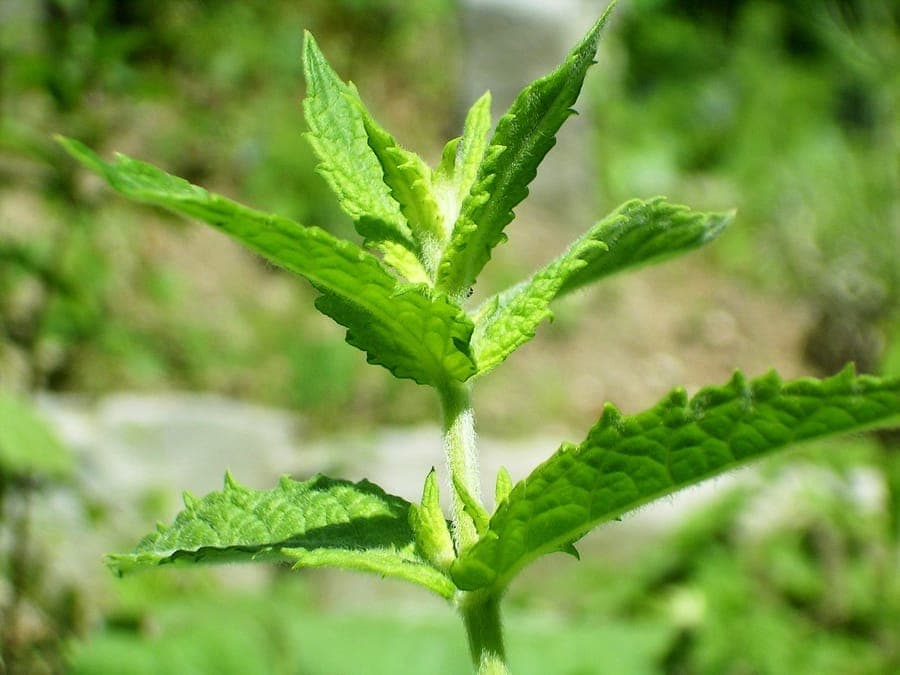
Simon Eugster --Simon 13:07, 2 July 2006 (UTC) / CC BY-SA 3.0, via Wikimedia Commons
Spearmint: complete guide
Mentha spicata
Want to see Spearmint: complete guide in your garden?
1 minute, no credit card
Overview
Spearmint (Mentha spicata) is a beloved herb that thrives in gardens across temperate climates. A member of the Lamiaceae family, it spreads rapidly via underground rhizomes, making it both a blessing and a challenge. Native to parts of Europe and Asia, including Afghanistan and Bulgaria, it's now widely cultivated for its fragrant, slightly sweet leaves. The plant grows as a herbaceous perennial, forming dense mats that suppress weeds and release a refreshing aroma when brushed against. While excellent for culinary use - think mint tea, tabbouleh, or juleps - it can quickly dominate a bed if unchecked. On gardenworld.app, you can create a custom planting layout that contains spearmint's spread using barriers or containers.
Appearance & bloom cycle
Spearmint typically reaches 30 to 100 cm in height, with square, upright stems and bright green, lanceolate leaves 4–9 cm long. The leaves are toothed, smooth, and arranged oppositely along the stem. From mid-July to early September, it sends up slender flowering spikes topped with small, tubular purple flowers. These blooms last about three weeks and are highly attractive to bees, hoverflies, and other pollinators. After flowering, cutting back the stems encourages fresh leaf growth and prevents the plant from going to seed.
Ideal location
Spearmint thrives in full sun to partial shade, scoring a 7 on the light scale. Aim for at least 6 hours of direct sunlight daily for the strongest essential oil production. In hotter climates, afternoon shade helps prevent leaf scorch. A south- or east-facing spot works best in most temperate zones. If grown in containers on patios or balconies, it's easier to manage its aggressive spread. Use deep pots (at least 30 cm) with drainage holes. Gardeners in USDA zones 5–11 will find spearmint reliably hardy. On gardenworld.app, you can design a container herb garden featuring spearmint, basil, and chives for easy kitchen access.
Soil requirements
This mint prefers moist, well-drained soil rich in organic matter. A pH between 6.5 and 7.0 is ideal. Avoid heavy clay or waterlogged soils, which promote root rot. Amend compacted soil with compost and coarse sand to improve structure. While spearmint tolerates a range of conditions, it performs best in loose, fertile loam. When planting in borders, install a root barrier at least 50 cm deep to prevent unwanted spread into lawns or adjacent beds.
Free design
Want to see Spearmint: complete guide in your garden? Make a free design now.
Watering
Keep the soil consistently moist, especially during the growing season (May–September). In dry spells, water 2–3 times per week; container plants may need daily watering in summer. Use rainwater when possible - spearmint is sensitive to high levels of chlorine and lime in tap water. Avoid overhead watering in humid conditions to reduce fungal risks like mint rust.
Pruning
Regular harvesting and pruning promote bushy growth. Pinch off stem tips just above a leaf node starting in late spring. This encourages branching and delays flowering. Cut back hard after flowering in late summer to stimulate a second flush of tender leaves. Use pruned stems fresh or dry them for later use. Never remove more than one-third of the plant at once to avoid stress.
Maintenance calendar
- Jan: Monitor for pests in overwintering plants
- Feb: Prepare containers and beds for spring planting
- Mar: Start seeds indoors or divide established clumps
- Apr: Transplant outdoors after last frost (late April in zone 6)
- May: Begin regular harvesting; watch for slugs
- Jun: Water consistently; apply light organic feed
- Jul: Flowers appear; attract pollinators
- Aug: Continue harvesting; prune back leggy growth
- Sep: Final harvest; cut back after bloom
- Oct: Clear dead foliage; mulch lightly
- Nov: Reduce watering; protect containers
- Dec: Dormant period; minimal care needed
Winter hardiness
Spearmint is hardy in USDA zones 5–11. The top growth dies back in winter, but rhizomes survive underground. In zone 5, a light mulch of straw or leaves helps insulate roots during hard freezes. Container-grown plants are more vulnerable - move them to a sheltered spot or unheated garage. Avoid fertilizing in late autumn to prevent tender new growth.
Companion plants
Spearmint deters aphids, cabbage moths, and ants, making it a useful companion for brassicas, tomatoes, and strawberries. However, keep it away from herbs like chamomile and caraway, which prefer drier soil. Avoid planting near parsley or oregano due to differing moisture needs. For best results, grow spearmint in its own container and place it near companion crops. It pairs well with lemon balm and chervil in mixed herb planters.
Closing
Spearmint is a must-have for any edible garden, offering flavor, fragrance, and ecological benefits. With proper containment and care, it delivers harvests for years. Buy healthy plants from garden centres like those at local nurseries or trusted chains. You'll find robust stock at most spring sales. Whether you're making mojitos or mulching beds, spearmint earns its place. Use gardenworld.app to plan a functional, beautiful garden that balances productivity with control.
Want to see Spearmint: complete guide in your garden? Make a free design now.
Upload a photo, pick a style, and get a photorealistic design with plant list in under a minute.
No credit card required


Similar plants
Apple mint (Mentha x villosa): complete guide
Mentha x villosa
Meet apple mint (Mentha x villosa): a fruity-scented kitchen herb with woolly leaves, perfect for tea and mojitos.
Salvia peyronii: complete guide
Salvia peyronii
Discover Salvia peyronii, a rare Lebanese mountain sage. Growing tips, hardiness, and companion planting for a Mediterranean gravel garden.
Bigleaf mint (Mentha x rotundifolia): complete guide
Mentha x rotundifolia
Discover bigleaf mint: cultivation, care tips, and garden uses. Learn how to grow this aromatic herb with soft, hairy leaves.