
SB Johnny / CC BY-SA 3.0, via Wikimedia Commons
Corsican mint: complete guide
Mentha requienii
Want to see Corsican mint: complete guide in your garden?
1 minute, no credit card
Overview
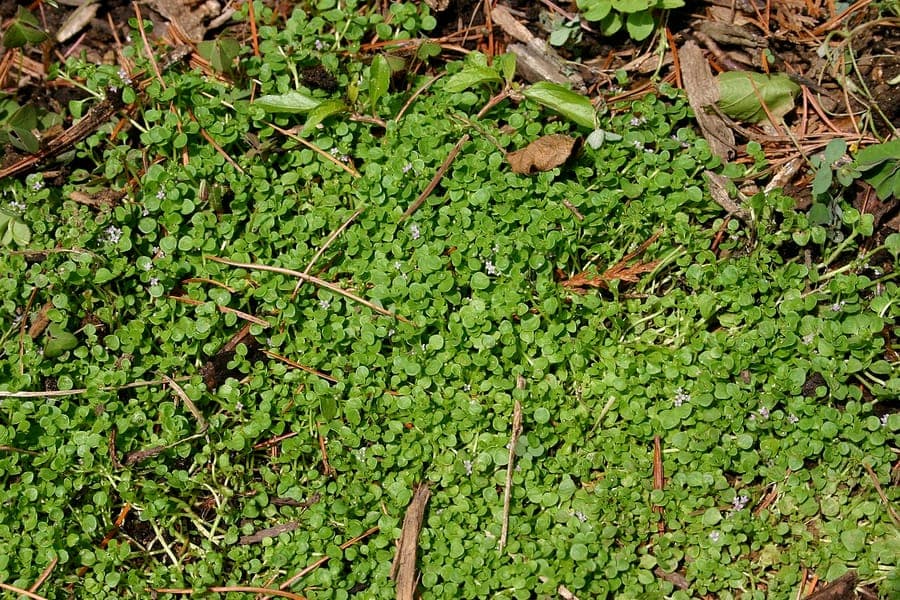
Mentha requienii, commonly known as Corsican mint, is one of the tiniest members of the mint family, perfect for gardeners who want a soft, fragrant carpet in tight spaces. Native to Corsica, Sardinia, and parts of southern Italy, this low-growing perennial thrives in cool, moist crevices between rocks and in shaded woodland areas. In cultivation, it's prized for its intense minty aroma when brushed against, making it ideal for planting between stepping stones, along pathways, or in rock gardens. It only reaches 2–3 cm in height, forming a dense mat that spreads slowly but steadily.
Unlike more aggressive mints, Corsican mint isn't invasive, though it does appreciate some containment in very damp or rich soils. On gardenworld.app, you can design a garden layout where this mint weaves through stone paths, enhancing both scent and texture underfoot. It's a favorite for cottage gardens, Japanese-inspired spaces, or any design that values subtle sensory appeal.
Appearance & bloom cycle
The plant features tiny, round to oval leaves, about 3–8 mm across, with a deep green hue and a glossy finish. When crushed or stepped on, the foliage releases a sweet, intense mint fragrance - more delicate than peppermint but unmistakably refreshing. From late July to early August, it occasionally produces small, pale lilac flowers on short spikes, though flowering is rare in cooler climates and not the main attraction.
Growth begins in mid-April in USDA zones 7–9, with full coverage typically achieved by early summer. The plant remains evergreen in mild winters, though it may die back slightly in colder areas. Its creeping habit comes from slender rhizomes that spread horizontally just below the surface, allowing it to fill in gaps over time.
Ideal location
Corsican mint thrives in light to partial shade, scoring a 7 on the light scale (1=full shade, 10=full sun). It performs best with morning sun and afternoon shade, or under the dappled canopy of deciduous trees like birch or hazel. Full sun, especially in hot climates, can scorch the delicate leaves and dry out the plant too quickly.
Ideal spots include between pavers, along the edges of a pond, or beneath shrubs with open branching. Avoid dry, windy areas. If you're designing a shaded pathway, gardenworld.app offers visual tools to map out where Corsican mint fits best with other low-growing companions.
Soil requirements
This mint prefers moist, well-draining soil with a pH between 5.0 and 5.5 - slightly acidic. The soil should be rich in organic matter; a mix of compost, leaf mold, and loam works well. Heavy clay soils should be amended with sand or perlite to prevent waterlogging, which can lead to root rot.
In containers, use a blend of potting mix, perlite, and a handful of pine needles to maintain acidity. Ensure pots have drainage holes. In garden beds, loosen the soil to 15 cm depth and incorporate organic compost before planting.
Free design
Want to see Corsican mint: complete guide in your garden? Make a free design now.
Watering
Consistent moisture is key. Corsican mint hates drying out. During dry spells, water weekly - twice weekly in hot summers. Use rainwater when possible, as tap water can raise pH over time. Water at soil level to prevent fungal issues on leaves.
Between pavers, hand-watering with a narrow spout or using a drip system helps deliver moisture without runoff. Mulching with pine needles helps retain moisture and maintains acidity.
Pruning
Pruning isn't usually necessary, but light trimming in early spring helps remove any winter-damaged foliage and encourages bushier growth. Use small scissors or snips for precision. If the plant spreads beyond its intended area, trim the edges with a sharp knife or trowel.
Avoid heavy cutting; the plant recovers well from light pruning but may struggle if over-cut.
Maintenance calendar
- January: Dormant. No action needed.
- February: Check for dead material. Remove if necessary.
- March: Loosen soil gently. Add a thin layer of compost.
- April: New growth emerges. Begin regular watering.
- May: Monitor moisture. Mulch with pine needles.
- June: Keep consistently moist. No feeding required.
- July: Occasional flowering. No pruning.
- August: Continue watering during dry spells.
- September: Maintain moisture. Avoid fertilizing.
- October: Clear any fallen leaves.
- November: Prepare for winter. Stop feeding.
- December: Dormant. Protect container plants from hard freezes.
Winter hardiness
Hardy in USDA zones 7–9, Corsican mint survives most UK and Pacific Northwest winters. In colder areas (zone 6 and below), it may die back but often returns in spring if mulched. In containers, move pots to a sheltered spot or wrap with horticultural fleece.
Avoid wet, frozen soil - the biggest threat. A light mulch of straw or pine boughs helps without smothering.
Companion plants
Pair Corsican mint with other moisture-loving, shade-tolerant plants like Ajuga, Epimedium, or small ferns such as Dryopteris erythrosora. It also works well with low thymes or sedums in rock gardens, provided moisture levels stay high.
Avoid planting near aggressive mints like Mentha spicata, which can overwhelm it. Under shrubs like Daphne or Pieris, it thrives in the cool, humid microclimate.
Closing
Corsican mint isn't flashy, but its quiet charm wins over gardeners who value texture, scent, and understated elegance. With the right conditions - moist, acidic soil and dappled light - it forms a living carpet that rewards bare feet and curious noses. Buy it from garden centres like those found at OBI or Hornbach in Germany, or local nurseries in spring. Plant in April or early autumn, and give it time to settle. Once established, it asks for little but returns much. For layout ideas, browse gardenworld.app to see how this mint integrates into cohesive, sensory-rich garden designs.
Want to see Corsican mint: complete guide in your garden? Make a free design now.
Upload a photo, pick a style, and get a photorealistic design with plant list in under a minute.
No credit card required


Similar plants
Apple mint (Mentha x villosa): complete guide
Mentha x villosa
Meet apple mint (Mentha x villosa): a fruity-scented kitchen herb with woolly leaves, perfect for tea and mojitos.
Salvia peyronii: complete guide
Salvia peyronii
Discover Salvia peyronii, a rare Lebanese mountain sage. Growing tips, hardiness, and companion planting for a Mediterranean gravel garden.
Bigleaf mint (Mentha x rotundifolia): complete guide
Mentha x rotundifolia
Discover bigleaf mint: cultivation, care tips, and garden uses. Learn how to grow this aromatic herb with soft, hairy leaves.