
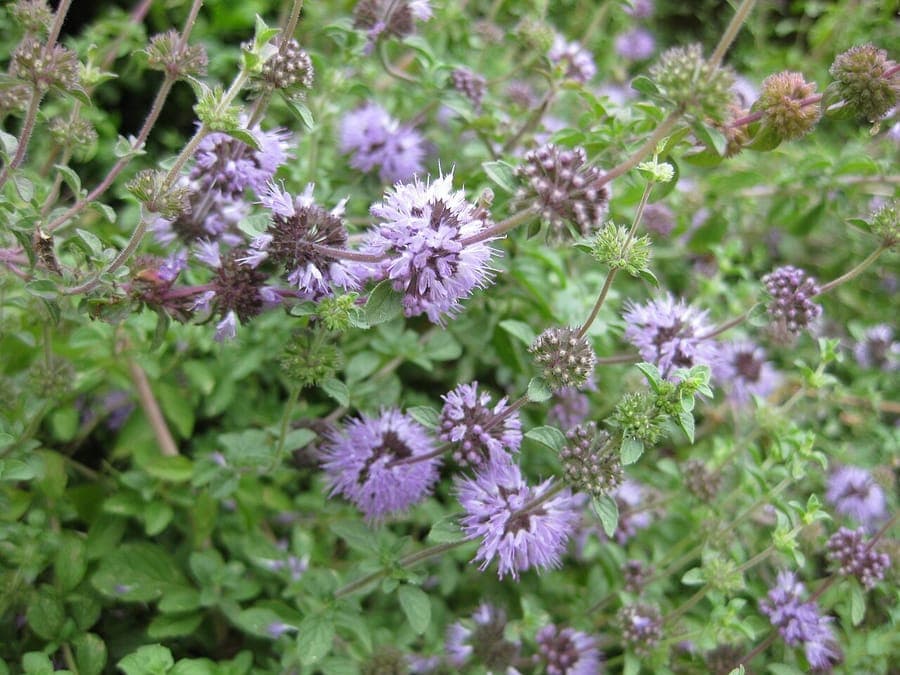
Raffi Kojian / CC BY-SA 3.0, via Wikimedia Commons
Pennyroyal: complete guide
Mentha pulegium
Want to see Pennyroyal: complete guide in your garden?
1 minute, no credit card
Overview
Pennyroyal (Mentha pulegium) is a compact, aromatic herb belonging to the Lamiaceae family, native to parts of Europe and North Africa. It's a creeping perennial that forms dense mats of foliage, making it ideal for ground cover in herb gardens or sunny borders. While less common than peppermint or spearmint, Pennyroyal brings a sharp, pungent mint scent and historical use as a natural insect deterrent. It's not widely used in cooking today due to its strong compounds, but it's a charming, low-maintenance plant for gardeners who value fragrance and ecological function. On gardenworld.app you can design a layout that integrates Pennyroyal into a pollinator-friendly garden scheme.
Appearance & bloom cycle
Pennyroyal typically grows 10–15 cm tall, with square, spreading stems and small, oval, dark green leaves that release a potent mint aroma when crushed. From July to September, tiny lavender-purple flowers appear in tight whorls near the stem tips. These blooms are highly attractive to bees, hoverflies, and other beneficial insects, adding ecological value to your garden. The flowering period lasts about six weeks, and deadheading can extend it slightly. The plant spreads slowly via underground runners, so it's less invasive than other mints-though still best planted with some containment in mind.
Ideal location
Pennyroyal thrives in full sun to light shade, rating around 8/10 for light preference. Aim for a spot that gets at least 6 hours of direct sunlight daily. It performs well in herb gardens, rockeries, or between stepping stones where foot traffic releases its scent. In containers, use a 20–25 cm pot with drainage holes to prevent root rot. Avoid deep shade, as this leads to leggy growth and fewer flowers. For gardeners in cooler climates, a south-facing wall provides extra warmth. Use gardenworld.app to assess sunlight patterns in your yard and find the perfect microclimate for Pennyroyal.
Soil requirements
This herb prefers well-drained, loamy to sandy soil with a neutral to slightly alkaline pH of 7.0–7.5. Heavy clay soils should be amended with grit or perlite to improve drainage. While Pennyroyal tolerates average fertility, it doesn't like rich, water-retentive soils. A light top dressing of compost in early spring is sufficient. Raised beds or sloped areas are ideal for preventing waterlogging.
Watering
Water Pennyroyal moderately-keep the soil slightly moist but never soggy. In summer, water deeply every 7–10 days, depending on rainfall and container use. Potted plants may need watering twice a week during heatwaves. Always water at the base to prevent fungal issues. Once established, the plant shows decent drought tolerance, making it suitable for low-water gardens.
Free design
Want to see Pennyroyal: complete guide in your garden? Make a free design now.
Pruning
Light pruning encourages bushiness and prevents woodiness. After flowering in late summer, trim the plant back by one-third to stimulate fresh growth. Pinch tips throughout the growing season (May–August) to maintain a compact shape. Cuttings can be dried for later use or composted. Avoid heavy pruning in autumn, as this may encourage vulnerable new growth before winter.
Maintenance calendar
- January: Dormant; no action needed
- February: Clear debris, check for crowning issues
- March: Apply light compost, divide clumps if overcrowded
- April: Plant new specimens, monitor for slugs
- May: Begin tip pruning, inspect for aphids
- June: Ensure consistent moisture in dry spells
- July: Flowers appear; reduce fertiliser
- August: Deadhead spent blooms, continue light trims
- September: Cut back after flowering
- October: Remove diseased foliage, prepare for dormancy
- November: Mulch roots lightly with straw or leaf mould
- December: Protect container plants from frost
Winter hardiness
Pennyroyal is hardy in USDA zones 6–9 (-23°C to -1°C). In these zones, it dies back in winter but regrows from the roots in spring. In colder areas, mulching helps insulate the crown. Potted plants should be moved to a sheltered spot or wrapped in hessian to prevent root freeze. Avoid wet winter soils, which are the main cause of winter kill.
Companion plants
Pair Pennyroyal with other sun-loving herbs like thyme, oregano, and lavender. It complements drought-tolerant perennials such as sedum, echinacea, and yarrow. Avoid planting near aggressive mints like Mentha × piperita, which can overtake it. Its scent may naturally deter flea beetles and mosquitoes, making it a useful border plant near seating areas. For a cohesive design, grow it alongside ornamental grasses or low-growing salvias.
Closing
Pennyroyal is a resilient, aromatic herb that adds texture, scent, and wildlife value to gardens. While not a culinary staple, its role in natural pest management and pollinator support makes it a smart choice for eco-conscious gardeners. With minimal care and the right conditions, it thrives for years. You can find healthy Pennyroyal plants at garden centres across the UK and US, including online retailers and local nurseries. For layout inspiration, check gardenworld.app to see how Pennyroyal fits into a structured herb garden or informal cottage border.
Want to see Pennyroyal: complete guide in your garden? Make a free design now.
Upload a photo, pick a style, and get a photorealistic design with plant list in under a minute.
No credit card required


Similar plants
Apple mint (Mentha x villosa): complete guide
Mentha x villosa
Meet apple mint (Mentha x villosa): a fruity-scented kitchen herb with woolly leaves, perfect for tea and mojitos.
Salvia peyronii: complete guide
Salvia peyronii
Discover Salvia peyronii, a rare Lebanese mountain sage. Growing tips, hardiness, and companion planting for a Mediterranean gravel garden.
Bigleaf mint (Mentha x rotundifolia): complete guide
Mentha x rotundifolia
Discover bigleaf mint: cultivation, care tips, and garden uses. Learn how to grow this aromatic herb with soft, hairy leaves.