
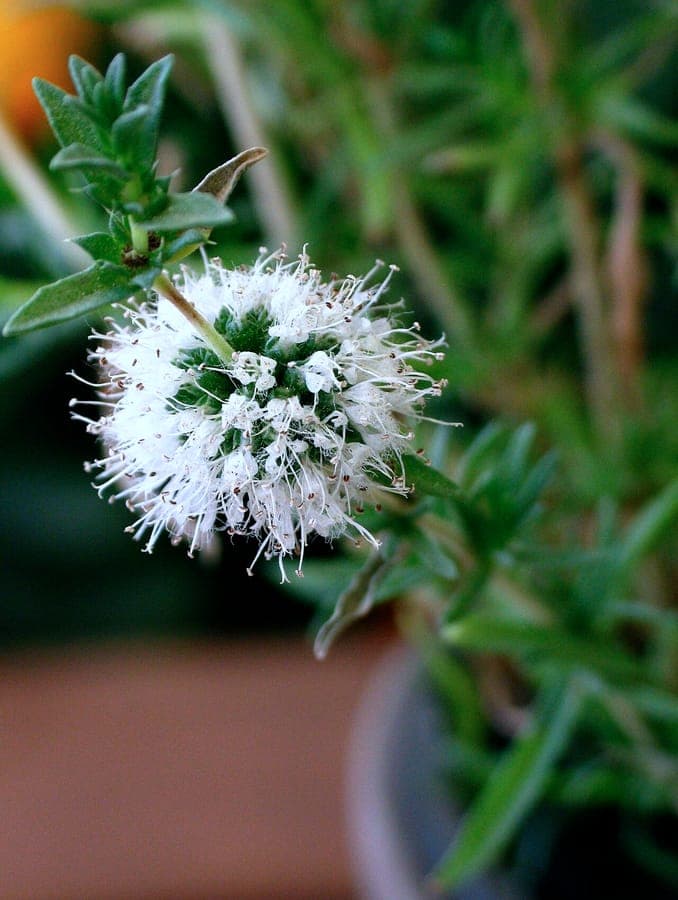
Daniel Feliciano / CC BY-SA 4.0, via Wikimedia Commons
Hart's pennyroyal: complete guide
Mentha cervina
Want to see Hart's pennyroyal: complete guide in your garden?
1 minute, no credit card
Overview
Mentha cervina, commonly known as Hart's pennyroyal, is a fragrant, low-growing herb in the Lamiaceae family. Unlike common mint, it doesn't spread aggressively, making it a more manageable choice for gardeners who want mint's scent without the chaos. Native to southern Europe and North Africa-specifically Spain, Portugal, southern France, Morocco, and Algeria-it thrives in hot, dry conditions on well-drained, alkaline soils.
In the UK and northern Europe, it's considered borderline hardy but can survive mild winters in sheltered spots. It's rated for USDA hardiness zones 8 to 10, meaning it tolerates down to -5 °C. In colder zones, grow it in containers you can bring under cover during winter.
On gardenworld.app, you can design a drought-tolerant planting plan that features Hart's pennyroyal as a structural herb with year-round interest.
Appearance & bloom cycle
Hart's pennyroyal grows 20–40 cm tall and spreads slowly by creeping stems. The narrow, lance-shaped leaves are 2–4 cm long, dark green, and emit a sharp, camphor-like scent when touched-stronger and more medicinal than typical mint. The foliage stays dense and compact in full sun.
From July to October, it produces dense, oval-shaped spikes of small purple flowers, each about 4–5 mm across. The bloom period is impressively long, providing late-season nectar for hoverflies, bees, and small butterflies. Unlike many mints, it doesn't self-seed excessively, which makes it a reliable garden resident.
Ideal location
This plant demands full sun-rate it an 8 out of 10 on the light scale. That means at least 6 hours of direct sunlight daily. In partial shade, it becomes leggy, flowers poorly, and is more prone to fungal issues.
Best locations include rock gardens, dry borders, gravel beds, or containers on sunny patios. Its drought tolerance makes it ideal for xeriscaping. If you're unsure whether your garden gets enough light, gardenworld.app offers a sun-mapping tool to help you place Mentha cervina exactly where it'll thrive.
Soil requirements
The key to success with Hart's pennyroyal is alkaline soil. It prefers a pH between 7.5 and 8.0. Avoid acidic or peaty soils-this plant won't survive in them. If your soil is too acidic, amend it with garden lime or crushed oyster shell.
Drainage is equally important. Use sandy or gravelly soil mixes. Heavy clay retains too much moisture and leads to root rot. If planting in containers, use a mix of 2 parts loam, 1 part sand, and 1 part perlite for optimal drainage.
Free design
Want to see Hart's pennyroyal: complete guide in your garden? Make a free design now.
Watering
Once established, Hart's pennyroyal is highly drought tolerant. Water deeply but infrequently-about every 7 to 10 days during hot, dry spells. Always check the top 2–3 cm of soil before watering; if it's dry, it's time.
Avoid overhead watering to prevent leaf spot and mildew. Water at the base in the morning so foliage dries quickly. In containers, check more often-pot-grown plants dry out faster, especially on sunny patios.
Pruning
No heavy pruning needed, but light trimming after flowering (from October onward) keeps the plant tidy and encourages bushy growth. Cut stems back to about 5 cm above ground level.
You can also pinch out stem tips during summer for light harvesting. The leaves work well in herbal teas or as a natural insect deterrent-just rub them between your fingers and place sprigs near seating areas.
Maintenance calendar
- Jan: Check for frost damage; protect container plants if needed
- Feb: Clear debris; no active care required
- Mar: Loosen soil around the base; watch for early shoots
- Apr: Monitor soil moisture; avoid overwatering
- May: Begin light growth; watch for slugs on new shoots
- Jun: Prepare for bloom; ensure full sun exposure
- Jul: Flowering begins; harvest leaves sparingly
- Aug: Peak bloom; check for heat stress
- Sep: Flowers fade; consider light trimming
- Oct: Cut back after flowering; prepare for dormancy
- Nov: Leave undisturbed; no pruning
- Dec: Dormant; protect from wet, cold conditions
Winter hardiness
Mentha cervina is hardy to -5 °C (USDA zone 8). In milder regions (south of the UK, coastal areas), it survives outdoors with minimal protection-just a dry mulch of gravel or leaf litter. In colder zones or heavy clay soils, it's safer to grow in pots and move to a cold frame or unheated greenhouse.
Avoid wet winter soils-this is the main cause of winter kill. If your garden stays soggy, consider raised beds or containers for better control.
Companion plants
Pair Hart's pennyroyal with other Mediterranean herbs: thyme, lavender, rosemary, and oregano. They share the same sun and soil needs. Sedums, catmint (Nepeta), and yarrow also make excellent companions-low water, high pollinator appeal.
Avoid planting near aggressive mints (like Mentha × piperita), which can overwhelm and hybridize. Keep it in its own space or use root barriers.
Closing
Hart's pennyroyal is a quiet achiever-unsung but effective. It's fragrant, long-flowering, and tough as nails when placed correctly. It won't dominate your garden, but it will add structure, scent, and late-season colour.
You'll find it at garden centres across the UK, especially those specialising in herbs or Mediterranean plants. Look for it in summer, or order online. When planning your layout, use gardenworld.app to visualise how Mentha cervina fits with other drought-tolerant species in your space. It's a smart addition to any sun-baked border or container scheme.
Want to see Hart's pennyroyal: complete guide in your garden? Make a free design now.
Upload a photo, pick a style, and get a photorealistic design with plant list in under a minute.
No credit card required


Similar plants
Apple mint (Mentha x villosa): complete guide
Mentha x villosa
Meet apple mint (Mentha x villosa): a fruity-scented kitchen herb with woolly leaves, perfect for tea and mojitos.
Salvia peyronii: complete guide
Salvia peyronii
Discover Salvia peyronii, a rare Lebanese mountain sage. Growing tips, hardiness, and companion planting for a Mediterranean gravel garden.
Bigleaf mint (Mentha x rotundifolia): complete guide
Mentha x rotundifolia
Discover bigleaf mint: cultivation, care tips, and garden uses. Learn how to grow this aromatic herb with soft, hairy leaves.