
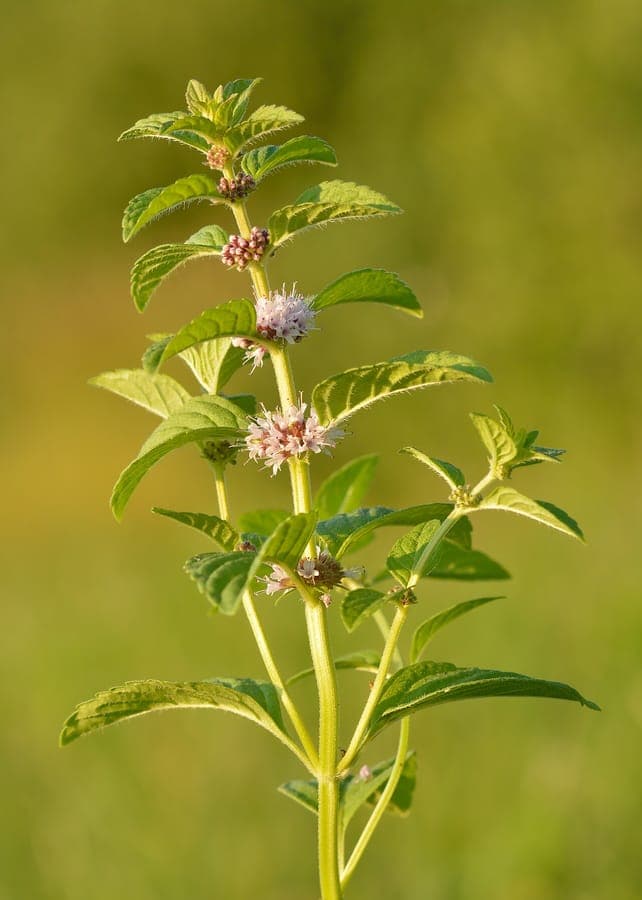
Ivar Leidus / CC BY-SA 3.0, via Wikimedia Commons
European corn mint: complete guide
Mentha arvensis
Want to see European corn mint: complete guide in your garden?
1 minute, no credit card
Overview
Mentha arvensis, commonly known as European corn mint, is a hardy perennial herb that thrives in moist, open habitats across temperate Europe and parts of Asia. As a member of the Lamiaceae family, it shares the classic square stems and aromatic foliage typical of mints. This species spreads aggressively through rhizomes, forming dense patches that can dominate a garden bed if left unchecked. It's a valuable plant for pollinators, herbal teas, and informal garden designs.
On gardenworld.app, you can design a custom planting scheme that keeps European corn mint contained while maximizing its benefits in borders or herb spirals.
Appearance & bloom cycle
European corn mint grows 30–70 cm tall with upright, slightly hairy stems and opposite, lance-shaped leaves. The leaves are mid-green, coarsely toothed, and highly aromatic when crushed. From July to September, small lilac-white flowers appear in terminal whorls, attracting bees, hoverflies, and butterflies. The bloom period lasts up to eight weeks in favorable conditions.
The plant spreads primarily via underground runners, creating new shoots several feet from the parent plant. While it can self-seed, rhizomatous spread is the main method of expansion. Flowering peaks in mid-August in USDA zones 5–9.
Ideal location
With a light requirement of 8/10, European corn mint performs best in full sun to partial shade. It grows vigorously in moist, open areas-ideal for damp borders, herb gardens, or near ponds. In drier climates, provide afternoon shade to reduce stress. Avoid hot, dry slopes unless irrigated regularly.
To control spread, plant in buried containers (minimum 30 cm diameter) or use root barriers. This is especially important in mixed beds where it could outcompete slower-growing plants. Consider pairing it with other moisture-loving species in a wildlife-friendly planting plan.
Check gardenworld.app for layout tips on integrating European corn mint into raised beds or container gardens without risking invasion.
Soil requirements
It prefers moist, well-drained soils rich in organic matter, with a pH between 5.0 and 7.0. Loamy or silty soils work best. While it tolerates clay if not waterlogged, avoid pure sand without amendment. Add compost or leaf mold to improve water retention and fertility.
In poor soils, growth will be sparser and less aromatic. European corn mint naturally occurs in disturbed, nutrient-rich soils such as field margins and ditches-mimic these conditions for best results.
Watering
Keep soil consistently moist, especially during dry spells. Water deeply 2–3 times per week in summer if rainfall is below 2.5 cm. Mulch with compost or straw to conserve moisture and suppress weeds. Avoid overhead watering in humid climates to reduce fungal risks.
Potted plants dry out faster-check daily in hot weather. Use rainwater when possible, as tap water with high lime content can alter soil pH over time.
Free design
Want to see European corn mint: complete guide in your garden? Make a free design now.
Pruning
Pinch back tips in late spring (May–June) to encourage bushier growth and delay flowering. Cut stems to 15 cm above ground after flowering (late September) to tidy the plant and prevent self-seeding. Regular harvesting of leaves also acts as pruning and boosts essential oil production.
Remove flower heads before seeds mature if you want to limit spread. Frequent cutting keeps the plant productive and prevents it from becoming leggy.
Maintenance calendar
- January: Monitor for early rhizome spread; remove unwanted shoots.
- February: No action needed in most zones.
- March: Clear old foliage; prepare soil for new growth.
- April: Divide clumps or plant new specimens.
- May: Begin tip pruning; watch for slugs.
- June: Maintain moisture; apply light mulch.
- July: Flowers appear; peak pollinator activity.
- August: Harvest leaves for drying or tea.
- September: Cut back after bloom; collect seeds if desired.
- October: Remove diseased material; leave some stems for overwintering insects.
- November: Dormancy begins; reduce watering.
- December: No maintenance required.
Winter hardiness
European corn mint is winter hardy in USDA zones 5–9 (-23°C to -4°C). In zone 5, a light mulch of leaves or straw helps protect crowns during freeze-thaw cycles. Top growth dies back in fall, but rhizomes survive underground. Potted plants should be moved to a sheltered spot or wrapped to prevent root ball freezing.
In milder zones (7–9), some foliage may persist through winter.
Companion plants
Pair with moisture-loving companions like Joe-Pye weed (Eutrochium), Meadowsweet (Filipendula), or Bee balm (Monarda). In herb gardens, it grows well with Tarragon, Chives, and Parsley. Avoid planting near drought-tolerant herbs like Lavender or Thyme.
Its scent may deter some pests, but slugs and spider mites can be issues in humid conditions. The flowers support beneficial insects, making it a smart choice for integrated pest management.
Closing
European corn mint is a vigorous, aromatic herb that rewards careful placement and regular management. It's excellent for naturalizing in damp areas, attracting pollinators, or harvesting for home use. When grown in containers or with physical barriers, it becomes a manageable and productive garden asset.
Available at garden centres across the UK and North America. Look for healthy, disease-free stock in spring. On gardenworld.app, explore planting combinations that balance its spreading habit with structural plants for a balanced, low-maintenance design.
Want to see European corn mint: complete guide in your garden? Make a free design now.
Upload a photo, pick a style, and get a photorealistic design with plant list in under a minute.
No credit card required


Similar plants
Apple mint (Mentha x villosa): complete guide
Mentha x villosa
Meet apple mint (Mentha x villosa): a fruity-scented kitchen herb with woolly leaves, perfect for tea and mojitos.
Salvia peyronii: complete guide
Salvia peyronii
Discover Salvia peyronii, a rare Lebanese mountain sage. Growing tips, hardiness, and companion planting for a Mediterranean gravel garden.
Bigleaf mint (Mentha x rotundifolia): complete guide
Mentha x rotundifolia
Discover bigleaf mint: cultivation, care tips, and garden uses. Learn how to grow this aromatic herb with soft, hairy leaves.