
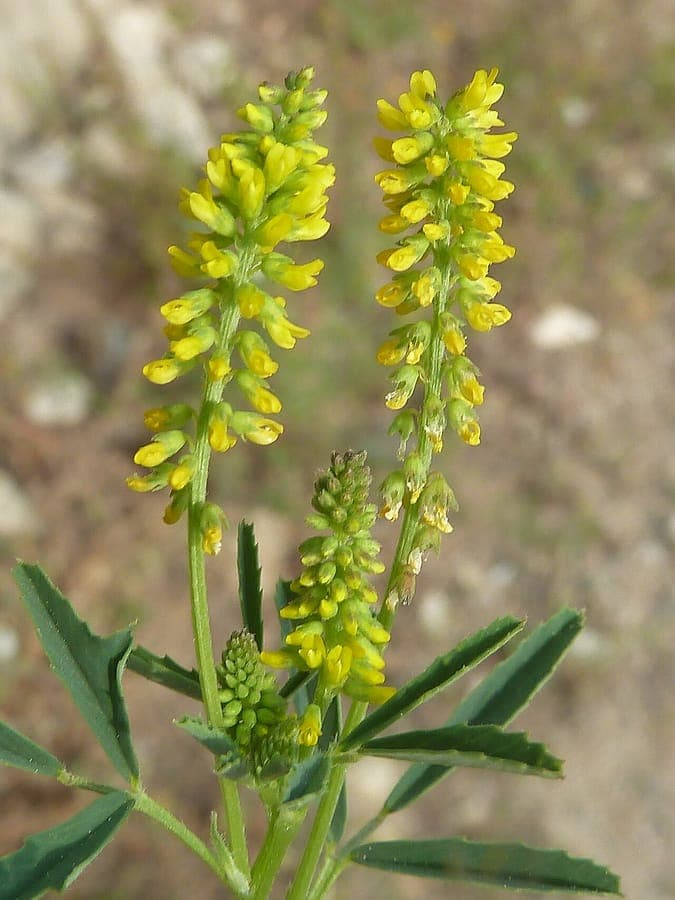
Philmarin / CC BY-SA 4.0, via Wikimedia Commons
Furrowed Melilot: complete guide
Melilotus sulcatus
Want to see Furrowed Melilot: complete guide in your garden?
1 minute, no credit card
Overview
Melilotus sulcatus, commonly known as furrowed melilot or Mediterranean sweetclover, is a beautiful member of the Fabaceae family. This plant is native to Mediterranean regions, thriving in diverse habitats across Morocco, Spain, France, and Greek islands like Crete. Furrowed melilot is an annual or biennial plant distinguished by its beautifully fragrant flowers in yellow and cream tones.
This plant holds special value in naturalistic gardens and meadows because it fixes nitrogen in soil through root nodules. This makes furrowed melilot an excellent rotational crop and an attractive addition to various garden styles. The slender plant structure and delicate flowers attract many insects, contributing significantly to your garden's biodiversity.
Appearance and Bloom
Furrowed melilot reaches heights of approximately 30 to 60 centimeters with an upright growth habit. The leaves are trifoliate, a characteristic of legumes, displaying fine, soft texture. The plant bears long, dense flower spikes with tiny yellow or cream-colored flowers arranged along the stem.
The blooming period extends from May through September, making furrowed melilot a long-flowering addition to your garden design. After flowering, characteristic grooved fruits develop, revealing where the species name "sulcatus" comes from. These fruits contain small seeds that release a strong fragrance, particularly when dried.
Ideal Location
Furrowed melilot thrives in warm, sunny locations receiving at least six hours of direct sunlight daily. The plant is an absolute sun-lover and will struggle in shaded conditions. Choose a location with good air circulation to help prevent disease.
This Mediterranean plant suits south and west-facing garden elements perfectly. It can be used in borders, rock gardens, dry landscapes, or along pathways. Its compact growth habit also makes it suitable for balconies and terraces in large containers.
Soil
Furrowed melilot is undemanding regarding soil composition, making it remarkably flexible. It grows best in well-draining, moderately fertile soil. The plant even tolerates poor soils, making it ideal for transforming neglected areas. Avoid heavy clay soils where water pools, as this leads to root rot.
The soil pH should be neutral to slightly acidic. Add compost-enriched soil when planting, but don't overdo fertilizer application. Excess nutrition results in leafy growth at the expense of flowers. For container growing, use quality potting mix with added sand for drainage.
Free design
Want to see Furrowed Melilot: complete guide in your garden? Make a free design now.
Watering
Once established, furrowed melilot is reasonably drought tolerant. During dry periods and immediately after planting, water regularly about once weekly. If rainfall is forecast, reduce artificial watering accordingly.
Watering should be careful - ideally at the roots, not over foliage. This prevents fungi and diseases. Allow soil to dry slightly between waterings, but don't let it completely desiccate. Container plants need more frequent watering than garden specimens.
During winter, the plant requires minimal watering, especially in dry winters. A completely dry plant can survive even hard frost periods.
Pruning
Furrowed melilot requires minimal maintenance pruning. During the growing season, lightly pinch growth tips to stimulate branching. This encourages a more compact, flower-rich plant.
Remove spent flowers and seed heads to maintain neat appearance and extend the flowering period. In autumn, when the plant prepares for seed production, leave some nutrient-rich flower clusters for natural dispersal.
Maintenance Calendar
March: Sow directly in soil or containers after frost danger passes. May: Position plants in their final locations and increase watering frequency. June through September: Water regularly and remove spent flowers. October: Leave seed heads or collect them. November: Plant dies naturally; clear the soil.
Winter Hardiness
Melilotus sulcatus is typically an annual to biennial that functions as an annual in temperate climates. In mild Mediterranean winters, it may overwinter, but in harsh conditions, it dies back. This is not problematic, as it readily regenerates from seed.
In northern regions, grow as an annual: sow in spring and enjoy summer blooms. In southern Europe, it may overwinter under frost-free conditions.
Companion Plants
Furrowed melilot grows harmoniously alongside other drought-tolerant and Mediterranean plants. Combine with lavender, sage, roses, and daisies. Ornamental grasses like festuca add structure. Low groundcovers around melilot prevent weeds.
From a vegetable garden perspective, furrowed melilot is exceptionally valuable as a green manure crop. Plow under after blooming to incorporate nitrogen into the soil.
Closing
Melilotus sulcatus deserves greater attention in modern garden design. This fragrant, pollinator-friendly legume brings Mediterranean charm and environmental benefits to your garden. Available through seed suppliers and increasingly as seed preparations. Don't hesitate to experiment - furrowed melilot thrives in almost every sunny corner. For more garden inspiration, find advice on gardenworld.app. Discover how this Mediterranean jewel can transform your garden via gardenworld.app.
Want to see Furrowed Melilot: complete guide in your garden? Make a free design now.
Upload a photo, pick a style, and get a photorealistic design with plant list in under a minute.
No credit card required


Similar plants
Tall Silky Lupine: complete guide
Lupinus elatus
Tall silky lupine is a fast-growing Californian perennial with silvery foliage and blue-purple flower spikes, ideal for a prairie-style garden.
Garfield Lupine: complete guide
Lupinus garfieldensis
The Garfield lupine is a rare, fast-growing American perennial for alkaline, dry grassland gardens, with striking blue flower spikes.
Lupinus elegans: complete guide
Lupinus elegans
Lupinus elegans, the elegant lupine, is a spectacular blooming plant from Mexico with blue flower spikes. Care, cultivation and garden use.