
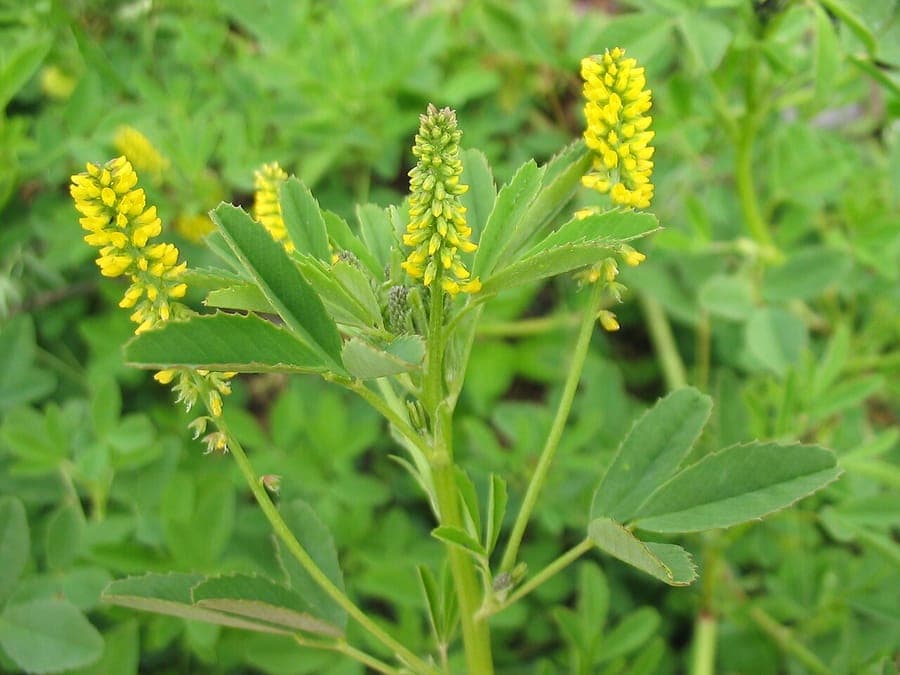
Ixitixel / CC BY-SA 3.0, via Wikimedia Commons
California lucerne: complete guide
Melilotus indicus
Want to see California lucerne: complete guide in your garden?
1 minute, no credit card
Overview
California lucerne (Melilotus indicus) is an elegant annual plant distinguished by compact growth, vibrant yellow flowers, and extraordinary adaptation to Mediterranean climates. Also known as Indian melilot or small melilot, this species originates from the Mediterranean region through Central Asia to the Indian subcontinent. California lucerne is ideal for gardeners seeking a quick-blooming plant requiring minimal maintenance that functions excellently in warm, dry locations. Because it is annual, it also offers flexibility: you can sow it in spring for summer blooms or in fall for spring flowering.
California lucerne distinguishes itself from its biennial namesakes primarily through much more compact dimensions, shorter bloom pattern, and extraordinary defense against extreme drought. While biennial melilotus species build massive rosette structures in year 1, California lucerne steps directly into bloom as a full grown plant.
Appearance and Bloom Cycle
This plant is probably the least impressive in size among all melilotus species, but this is precisely its strength. California lucerne reaches merely 30-60 cm in height, with far more compact growth than its larger cousins. The plant has a naturally bushy growth pattern with numerous side branches from a very young age. This makes it ideal for borders and small groupings.
The stems are fine, smooth, and green without prominent hairiness. They have a delicate, almost quivering appearance under normal growing conditions. In very hot, dry environments, stems can become lighter green or even slightly red-tinted.
The leaves consist of three green leaflets approximately 4-8 mm long with finely toothed margins. These are the smallest among all melilotus species, further contributing to the "small" appearance.
The flower spikes are compact: merely 2-4 cm long, but completely filled with small, shiny yellow flowers of approximately 2-3 mm. The bloom period runs from May through October in average European climates, but can be equally long if you live in temperate zones. In warm areas blooming can even extend longer.
Ideal Location
California lucerne thrives optimally in full sun: at least 6 hours direct sunlight daily. In marked contrast to its larger cousins, this plant can function well in partial shade (4-5 hours sun), though flower production decreases then. What is truly important for this species is protection from strong wind - the fine stems can be bent by strong gusts.
The plant grows excellently in warm, sheltered microclimates against south-facing walls or stone steps that radiate heat. This enhances bloom and can shift growth schedule earlier in the season.
Soil Requirements
California lucerne is probably the most salt-tolerant among melilotus genus, making it suitable for coastal gardens and gardens near salted roads. The plant grows on very diverse soils: pH 5.5 to 8.0 is completely acceptable. This species is also excellent for poor, dry soils, especially because it can fix nitrogen.
Remarkably, California lucerne grows even on sandy and rocky soils where nutrients are low. A baseline compost application of 2 cm is usually sufficient; much more can lead to excessive leaf growth and waste.
Drainage is less critical than with larger melilotus species because the plant requires less water total. Even moderately draining moisture-holding soils can tolerate, though perfect drainage is always preferable.
Free design
Want to see California lucerne: complete guide in your garden? Make a free design now.
Watering
Once small seedlings have emerged (2-3 weeks) California lucerne is remarkably drought-tolerant. The deep taproot system draws moisture from deeper layers where other plants cannot reach. Once established, the plant needs minimal supplemental water.
Young seedlings should be kept consistently moist but not waterlogged. Water two to three times weekly until true leaf pairs appear, then you can strongly reduce frequency.
In very hot, dry periods (no rain 3+ weeks) one deep watering per week can be beneficial. However, even without any supplemental watering this plant usually survives fine.
Pruning
California lucerne requires virtually no pruning. The plant has a naturally well-balanced form and does not become leggy. You can remove spent flower spikes to extend bloom period (usually by 1-2 weeks), but this is completely optional.
Remarkably: this plant usually does not break back strongly after removal of large sections, so avoid heavy pruning.
Maintenance Calendar
May: Sow seed directly or transplant seedlings. Space 20-25 cm apart. No fertilizer needed until true leaf pairs appear.
June-July: Monitor for insect damage (very rare). Water only in extremely dry periods. Plant will now be in full bloom.
August-September: Deadhead flowers minimally - do this only if you want further bloom. Expect seed setting to begin now.
October: Let seed dry in-situ for natural self-seeding next season. Plant will now die off in temperate climate.
November-May: Ground preparation for next sowing.
Winter Hardiness
California lucerne is an annual plant in temperate climates. This means it grows one season, blooms and sets seed, then dies. This is actually advantageous because you need not bother bringing it through winter.
However, in very mild winters (zones 9-10, where temperature rarely drops below 0°C), California lucerne can function as a winter-annual or even brief perennial. In the Netherlands (zone 8a/8b), plant will die as soon as the first true frost arrives.
This, however, makes the plant excellent for spring sowing (April-May) for summer bloom throughout Dutch territory.
Companion Plants
California lucerne is an excellent border plant or grouping plant for mixed plantings. Because it reaches merely 30-60 cm, place it in front areas or middle sections:
Combine with Limnanthes douglasii (yellow) or Ammi majus (white lace) for interesting color conversations. The compact form of California lucerne makes it ideal near better border contributors like Myosotis (forget-me-not) or Diascia.
In wildflower mixes including Centaurea cyanus, Papaver rhoeas, and Matricaria chamomilla, California lucerne offers discrete height without dominance.
Closing
California lucerne offers a unique proposition among melilotus species: quick growth, limited size, extreme drought-tolerance, and annual life making replanting straightforward. This is a plant for gardeners experimenting with Mediterranean aesthetics or quick flower transformation. For seeds consult specialist nurseries; seed is available in many catalogs. For container plants, many garden centers stock small melilotus groups in spring.
Though small, California lucerne is not insignificant. Its utility in dry gardens, coastal gardens, and green manure roles makes it valuable. With minimal care it blooms from May until first frost. Visit gardenworld.app for integration of this compact medicinal plant in drought-tolerant garden designs. Gardenworld.app helps you position yellow accents and bee feeding strategically without scale conflict.
Want to see California lucerne: complete guide in your garden? Make a free design now.
Upload a photo, pick a style, and get a photorealistic design with plant list in under a minute.
No credit card required


Similar plants
Yellow sweetclover: complete guide
Melilotus officinalis
Yellow sweetclover is a biennial with fragrant yellow flower spikes. Traditionally used for medicinal applications. Ideal for bee gardens and wildflower landscapes.
Hop trefoil: complete guide
Medicago lupulina
Hop trefoil (Medicago lupulina) is a legume valuable for ground cover and fodder. Learn about cultivation, maintenance and benefits.
Strawberry Clover (Trifolium fragiferum): complete guide
Trifolium fragiferum
Strawberry clover is a creeping foraging plant with red-purple flowers that form strawberry-like seed pods, ideal for extensive grasslands.