
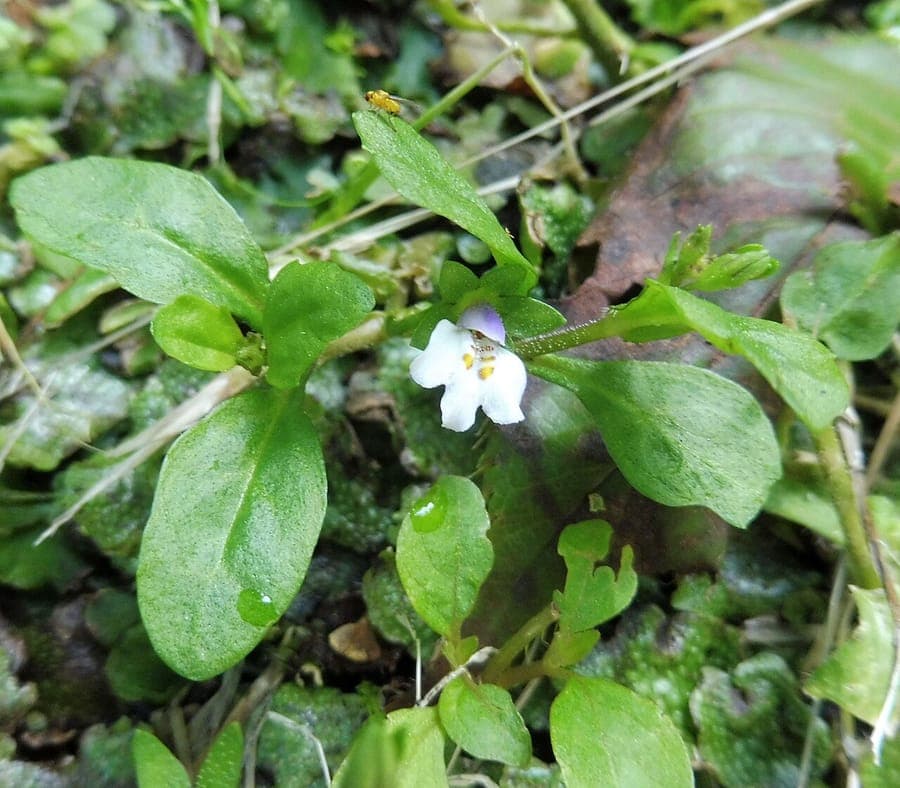
Mason Brock (Masebrock) / Public domain, via Wikimedia Commons
Japanese mazus: complete guide
Mazus pumilus
Want to see Japanese mazus: complete guide in your garden?
1 minute, no credit card
Overview
Japanese mazus (Mazus pumilus) is low-growing compact plant from Asia, especially Japan. This Mazaceae family member grows as beautiful groundcover or mat-forming plant, widely used in alpine and rock gardens.
This plant typically reaches only 10-20 cm height, making it ideal for small spaces, stone crevices, and borders. It features small purple or pink flowers appearing May through September. The plant is extremely hardy and perennial, reliably returning yearly.
Appearance and Bloom
Japanese mazus grows as low, cushion-like plant with fine, textured foliage. Leaves are light green forming dense mats. Flowers are small, approximately 0.5-1 cm, purple to pink with yellow markings in centers.
Blooming is extended, from late spring through early autumn depending on climate. After blooming, small seed capsules form providing wildlife food. The plant spreads, forming dense mats.
Ideal Location
Japanese mazus thrives in full sun to partial shade with minimum 3-4 hours direct daily sunlight. In very warm climates, afternoon shade is beneficial. The plant grows well on slopes, in rocks, and crevices.
It's highly adaptable, growing in paving crevices, on roofs, and very poor sites. It also thrives in container gardens and as trailing plant.
Soil
Japanese mazus is undemanding regarding soil. It thrives on very poor, dry to moderately moist ground. Good drainage is important - water stagnation is poorly tolerated.
Add sand and gravel to heavy soil for improved drainage. The plant grows better on poor soil than rich. Minimal feeding is beneficial.
Free design
Want to see Japanese mazus: complete guide in your garden? Make a free design now.
Watering
Once established, Japanese mazus is fairly drought-tolerant. Regular watering during growth aids development, but excessive moisture is harmful. Let soil dry between waterings.
Young plants need slightly more water. In very dry periods, supplemental water extends blooming. Water excess invites rot.
Pruning
Japanese mazus needs no pruning. Remove dead foliage and stems in late spring to refresh plant. Pinch tips back in early spring to encourage compact growth.
The plant can be renewed by sowing seed after blooming.
Maintenance Calendar
March-April: Sow seeds or plant divisions. May-June: Flowering begins. June-September: Full bloom. October-November: Plant begins resting. December-February: Dormancy and anticipating new growing season.
Winter Hardiness
Japanese mazus is extremely cold-hardy to -20 degrees Celsius, suitable for all Netherlands, Belgium, and Germany regions. It dies only in very wet winters or water stagnation.
In very wet areas plant on raised beds or containers for better drainage. The plant normally returns yearly.
Companion Plants
Japanese mazus grows well as underplanting for other alpine plants. Combine with sedums and saxifrages. It also serves as groundcover beneath shrubs.
Avoid wet groundcovers or plants requiring abundant moisture.
Closing Remarks
Japanese mazus is versatile, cold-hardy groundcover for small and alpine gardens. With extended blooming and compact growth, it's excellent sustainable gardening choice. Start today with seeds or divisions and enjoy years of beauty. For seeds and young plants, visit Intratuin or Gamma. Inspire yourself via gardenworld.app for rock garden and alpine garden ideas.
Want to see Japanese mazus: complete guide in your garden? Make a free design now.
Upload a photo, pick a style, and get a photorealistic design with plant list in under a minute.
No credit card required


Similar plants
Acer pycnanthum: complete guide
Acer pycnanthum
Acer pycnanthum, the Japanese swamp maple, is a fast-growing tree with early red flowers and brilliant autumn color, ideal for damp garden settings.
Freeman maple: complete guide
Acer × freemanii
Everything about the Freeman maple (Acer x freemanii): a fast-growing shade tree with spectacular autumn colour for large gardens.
Silver vine: complete guide
Actinidia polygama
Discover silver vine (Actinidia polygama): a hardy climbing plant with silvery foliage, loved by gardeners and cats alike.