
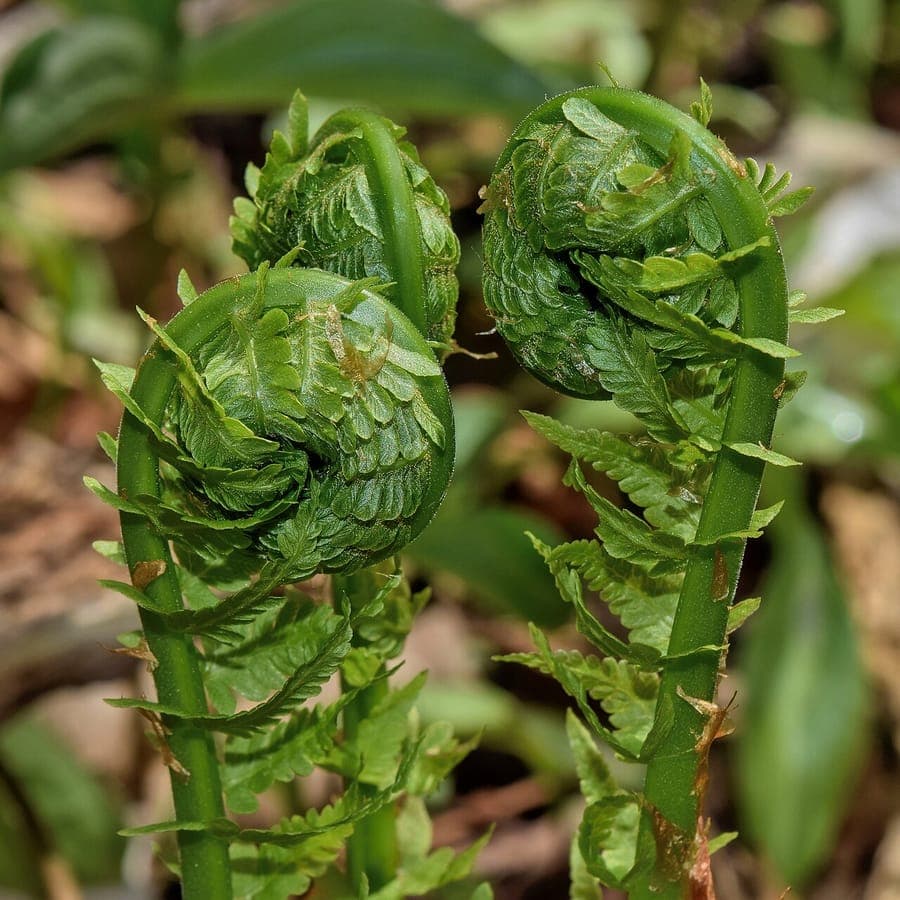
The Cosmonaut / CC BY-SA 2.5 ca, via Wikimedia Commons
Ostrich Fern: complete guide
Matteuccia struthiopteris
Want to see Ostrich Fern: complete guide in your garden?
1 minute, no credit card
Overview
The ostrich fern (Matteuccia struthiopteris), belonging to the Onocleaceae family, is a remarkable shade-loving fern prized for its striking bi-seasonal foliage display. This vase-shaped plant creates an elegant focal point in woodland gardens and shaded borders. Its delicate, feathery fronds and unique growth habit make it an essential choice for fern enthusiasts and shade gardeners.
Appearance and growth period
Ostrich fern grows as a compact specimen reaching 60-90 centimeters in height. In spring, distinctive tightly-coiled fiddleheads emerge, gradually unfurling into graceful, arching fronds that form a characteristic vase shape. These sterile fronds are bright green and delicate, providing airy texture. By summer, shorter fertile fronds with spore-bearing structures develop in the crown, offering a striking brown-green contrast. This seasonal dimorphism creates visual interest year-round.
Ideal location
Ostrich fern thrives in dappled shade, making it perfect for woodland gardens, north-facing borders, and areas beneath large deciduous trees. Provide 50-75% shade; intense midday sun damages fronds. The fern appreciates humid air and performs exceptionally well near water features. Its natural habitat is riparian zones; replicate this with moist microclimates where air circulation prevents stagnant humidity.
Soil requirements
Enrich soil with 30-40% organic matter such as peat, composted bark, or leaf mould. Maintain slightly acidic pH (5.5-7.0). The fern demands consistently moist but not waterlogged soil; proper drainage prevents root rot. Mix in coarse sand if your soil retains excessive water. Well-draining, humus-rich substrate ensures optimal growth.
Free design
Want to see Ostrich Fern: complete guide in your garden? Make a free design now.
Watering
Maintain consistently moist soil throughout the growing season (April-October). Provide deep, regular watering during dry spells. The fern requires less water in winter as fronds senescence. Misting foliage during dry periods benefits the plant, particularly in continental climates. Mulching with 5 centimeters of leaf litter conserves moisture.
Pruning
No pruning is necessary beyond removing dead or damaged fronds before spring emergence. Aged fronds can be cut back to ground level in early spring to encourage vigorous new growth. Tidy up winter detritus as new fiddleheads unfurl.
Maintenance calendar
April: Remove winter debris, check soil moisture. May-June: Monitor moisture levels, establish regular watering. July-August: Deep water during dry periods. September-October: Gradually reduce watering as plant senesces. November-March: Minimal intervention; plant lies dormant.
Winter hardiness
Ostrich fern is hardy to USDA zone 3 (-35degC), surviving unprotected outdoors throughout northern Europe. Fronds may completely disappear in harsh winters, but rhizomes remain viable and regenerate in spring. A mulch layer of 5 centimeters leaf litter in October provides rhizome protection.
Companion planting
Combine ostrich fern with shade-tolerant companions like Astilbe, Heuchera, Polystichum (Christmas fern), and Dryopteris species. Group three to five specimens for dramatic woodland effect. Pair with shade-loving perennials and hardy geraniums for textural contrast.
Closing
The ostrich fern transforms shaded, moist corners into elegant displays. With minimal care, it establishes into a substantial clump providing year-round interest. Available at major garden centers. Discover more design inspiration on gardenworld.app.
Want to see Ostrich Fern: complete guide in your garden? Make a free design now.
Upload a photo, pick a style, and get a photorealistic design with plant list in under a minute.
No credit card required


Similar plants
Acer pycnanthum: complete guide
Acer pycnanthum
Acer pycnanthum, the Japanese swamp maple, is a fast-growing tree with early red flowers and brilliant autumn color, ideal for damp garden settings.
Freeman maple: complete guide
Acer × freemanii
Everything about the Freeman maple (Acer x freemanii): a fast-growing shade tree with spectacular autumn colour for large gardens.
Silver vine: complete guide
Actinidia polygama
Discover silver vine (Actinidia polygama): a hardy climbing plant with silvery foliage, loved by gardeners and cats alike.