
Sugeesh at Malayalam Wikipedia / CC BY-SA 3.0, via Wikimedia Commons
Sapodilla: complete guide
Manilkara zapota
Want to see Sapodilla: complete guide in your garden?
1 minute, no credit card
Overview
Sapodilla (Manilkara zapota) is a tropical fruit tree from Central America and Mexico. This tree is known for its sweet, brown flesh and is widely cultivated in warm climates worldwide. The tree grows in full sun and is very productive.
Appearance and growth
Sapodilla grows into a medium-sized tree 20-50 feet tall with dense foliage. The tree has a round, composite crown and dark grayish-brown bark. The tree can live 50 years or longer.
The leaves are glossy green, oblong, and approximately 2-6 inches long. They grow alternately along the twigs. The leaves give a tropical appearance.
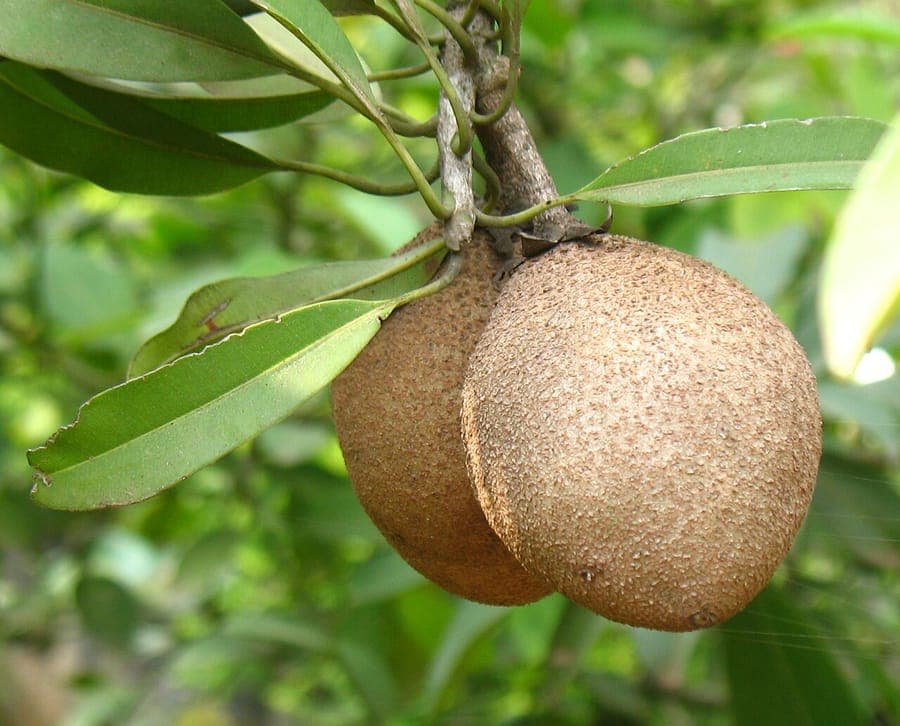
The flowers are small, yellowish flowers that are inconspicuous and smell like honey. They appear in spring. After pollination, brown, oval fruits develop approximately 2-4 inches large with rough brownish skin.
The flesh inside is sweet, brown, and tastes like pineapple mixed with brown sugar. Each fruit contains 1-5 large dark brown seeds.
Ideal location
Sapodilla needs sun - at least 6-8 hours of direct sunlight daily. More sun equals sweeter and more productive fruit. Place the tree in a sheltered spot where it is not exposed to strong winds.
The tree does not grow well in cold climates. A minimum temperature of 50 degrees Fahrenheit is needed; ideally 59-77 degrees Fahrenheit.
Soil
Sapodilla makes reasonable soil demands. A nutrient-rich, well-draining soil is best. The tree tolerates less ideal soils relatively well, however.
Ensure good drainage to prevent root rot. The pH can be between 5.5 and 7.5. Add compost and organic matter when planting.
The tree has deep roots, so heavy soil is less problematic than for shallow-rooting plants.
Watering
During the first year after planting, you must water regularly. The tree especially needs water when setting young fruit. In dry seasons, water until the soil is moist 6-8 inches deep.
Once established (after 2-3 years), the tree is drought-tolerant. In tropical climates with rainy season, extra water is usually not needed.
Avoid waterlogging; this can lead to fungal issues.
Free design
Want to see Sapodilla: complete guide in your garden? Make a free design now.
Fertilizing
Sapodilla responds well to regular feeding. Give a balanced fertilizer monthly during the growing season (spring and summer). An NPK ratio of approximately 10-10-10 works well.
Also, a supply of micronutrients such as zinc, magnesium, and iron can help. Mulching with organic matter helps retain nutrients.
Pruning
Sapodilla grows naturally in a neat form. Pruning is mainly needed to remove dead wood and keep the crown open for air circulation.
Remove crossing branches and branches growing inward. Pruning can be done year-round, but best is during the dormant period after harvest.
The tree tolerates pruning well and automatically reshapes itself into a nice form.
Maintenance calendar
January-February: Harvest period. Pick fruits when ripe.
March-April: Prune dead wood. Start fertilizing.
May-June: Growth period. Water regularly.
July-August: Full bloom and fruit set. Fertilize regularly.
September-October: Fruit development. Water during drought.
November-December: Harvest preparation. Less water.
Pests and diseases
Sapodilla is relatively resistant to pests and diseases. However, excess moisture can lead to fungal issues. Ensure good air circulation in the crown.
Sometimes insects can occur, but treatment is rarely needed. Keep the area around the tree clean.
Harvest
Sapodillas are ripe when they turn yellowish-brown and feel soft. They can be picked from the tree when ripe, or continue to ripen shortly after picking. The fruits keep for a few weeks if stored cool and dry.
Companion plants
Sapodilla grows well with other tropical fruit trees such as mango, avocado, or papaya. They share the same preference for sun and warmth.
Underneath you can place tropical ground covers.
Closing
Sapodilla is a fascinating tropical fruit tree that produces sweet, nutritious fruit. With suitable temperature and care, this tree grows for many years and yields annual harvests. For more plant ideas and inspiration for your front yard, visit gardenworld.app and have a personalized design made. Discover how gardenworld.app realizes your garden dreams.
Want to see Sapodilla: complete guide in your garden? Make a free design now.
Upload a photo, pick a style, and get a photorealistic design with plant list in under a minute.
No credit card required


Similar plants
Bulletwood: complete guide
Manilkara bidentata
Bulletwood (Manilkara bidentata) is a majestic tropical tree from South America, prized for its extraordinarily dense timber and milky latex.
Mimusops elengi: complete gids
Mimusops elengi
Leer alles over mimusops elengi, een tropische boom met geurige bloemen en voedzame vruchten. Perfecte boom voor warme klimaten.
Chrysophyllum cainito: complete guide
Chrysophyllum cainito
Learn all about Chrysophyllum cainito (star apple). Growing requirements, fruit care, maintenance and pests for tropical fruit trees.