
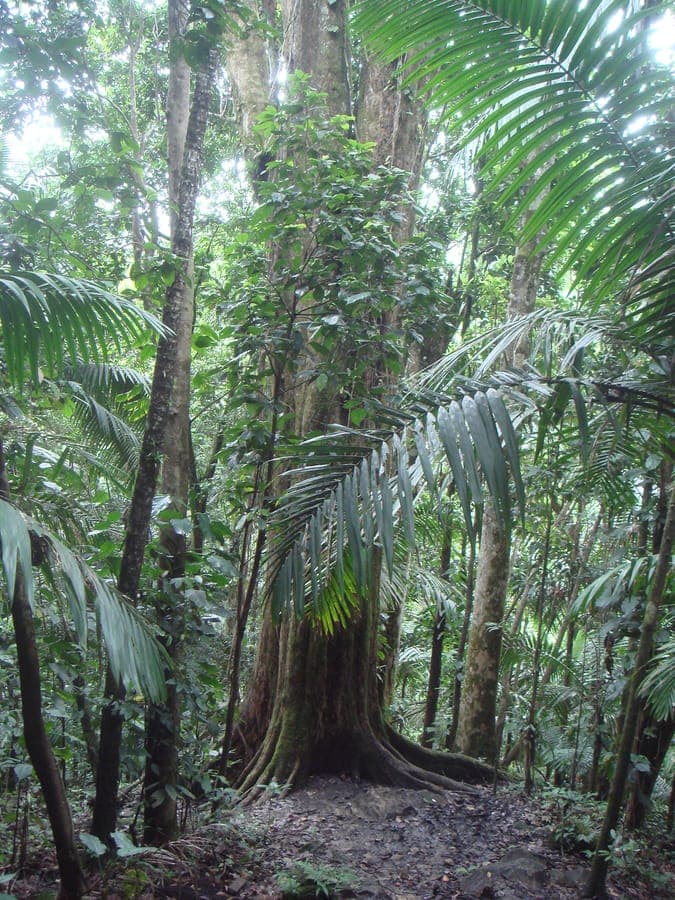
Xemenendura / CC BY-SA 3.0, via Wikimedia Commons
Bulletwood: complete guide
Manilkara bidentata
Want to see Bulletwood: complete guide in your garden?
1 minute, no credit card
Overview
Bulletwood (Manilkara bidentata) is a towering tropical tree of the Sapotaceae family, native to the tropical forests of northern South America and the Caribbean. Its range spans Venezuela, Colombia, Guyana, Suriname, Brazil, Trinidad-Tobago, Puerto Rico, and the Leeward and Windward Islands. The common name 'bulletwood' reflects the extraordinary density and hardness of its timber, which rivals iron in resistance to splitting. Historically, the species was equally famous for its white latex - called balata - which was harvested on a large scale for drive belts, golf balls, and submarine telegraph cables before synthetic materials replaced it. At gardenworld.app you can explore a wider range of unusual trees suited to warm-climate and greenhouse planting.
Appearance and bloom cycle
Bulletwood is a magnificent evergreen tree that can reach 30 to 45 metres in height in its natural forest environment, with trunk diameters exceeding one metre. Under garden or greenhouse conditions, it remains considerably more modest in size while retaining its impressive character. The bark is dark grey to near-black, deeply furrowed, and flakes off in irregular plates. Leaves are oblong, 8 to 15 cm long, glossy dark green on the upper surface and covered with golden-brown hairs beneath. They are distinctively notched at the tip - hence the species name 'bidentata', meaning two-toothed. Small white flowers appear in clusters in the leaf axils and are not particularly conspicuous but are pleasantly fragrant. They develop into round to oval black-skinned fruits that, when ripe, contain a sweet and slightly tart edible pulp which is eaten fresh in tropical regions.
Ideal location
In its homeland, bulletwood grows in moist lowland and montane tropical forests, typically in areas with annual rainfall between 1,500 and 3,000 mm. Outside the tropics, successful outdoor cultivation requires subtropical to tropical conditions. In Europe and similar temperate climates, bulletwood is suited only to heated greenhouses, botanical gardens, or container growing with winter protection indoors. Young plants tolerate light shade as they would under a forest canopy, but mature specimens do best in bright, indirect or full light. The tree has no frost tolerance whatsoever and must be protected from all freezing temperatures.
Soil
Bulletwood favours a deep, well-drained, acidic to slightly acidic soil with a pH between 4.6 and 5.8. In its natural habitat it grows on clay-loam or sandy-loam tropical soils rich in organic matter. A substrate that retains adequate moisture without becoming waterlogged is ideal. For container growing, mix garden soil, mature compost, and perlite or coarse grit in a ratio of 2:1:1. Ensure generous drainage holes in the base of the pot. Lime-rich or alkaline soils cause yellowing of the leaves and should be avoided at all times.
Watering
Bulletwood is adapted to high rainfall and should never be allowed to dry out completely. Young plants require regular watering to keep the substrate consistently and lightly moist. Established trees in open ground in tropical climates need no supplemental watering during wet seasons, but irrigation is essential during dry periods. For container specimens, maintain evenly moist compost at all times while avoiding standing water. Use rainwater or soft water where possible, as the tree prefers mildly acidic conditions. During hot summer months, deep watering twice a week may be necessary to maintain moisture levels. Reduce watering slightly in winter when growth slows naturally.
Free design
Want to see Bulletwood: complete guide in your garden? Make a free design now.
Pruning
Bulletwood is rarely pruned beyond basic maintenance. Remove dead, damaged, or crossing branches as needed to keep the structure clear and airy. For container or greenhouse specimens, a light trim of overlong shoots after winter can help maintain a manageable shape and encourage denser branching lower down the plant. Always use clean, sharp tools and be aware that cuts will release a sticky white latex that permanently stains clothing. Allow cuts to seal naturally. Large pruning wounds increase the risk of fungal infection in the humid conditions that tropical species prefer, so keep interventions targeted and minimal.
Maintenance calendar
In spring, from March to May, assess any cold damage from winter and remove dead wood promptly. In April or May, apply a specialist fertiliser for acid-loving plants to support the new flush of growth. From June to August the tree is in its most active phase and container plants should be checked weekly for water and fed monthly with a balanced liquid feed. In September and October, growth begins to slow as temperatures drop in temperate climates and watering frequency can be reduced. In November and December, greenhouse specimens should be maintained at a minimum of 10 to 15 degrees Celsius. Young trees benefit from repotting into a larger container each spring to allow continued root development and strong vegetative growth.
Winter hardiness
Bulletwood is a strictly tropical species with no frost hardiness whatsoever. In USDA zone 11 and warmer it can remain outdoors year-round without any protection. In zone 10, protection is needed during cool nights. In temperate climates it is grown exclusively as a greenhouse or houseplant. The minimum safe overwintering temperature is 10 degrees Celsius, though 15 degrees or warmer ensures healthy growth and prevents leaf drop. Below these temperatures, leaf drop occurs and root damage can follow rapidly. In northern Europe, outdoor placement is possible only during summer months, with the container moved inside at the first sign of approaching night frost. For inspiration on maintaining tropical specimens through temperate winters, visit gardenworld.app.
Cold protection in practice
Even in summer, when the tree stands outdoors, it is advisable to position the container in a warm, sheltered spot away from wind. As soon as night temperatures threaten to fall below 10 degrees Celsius the plant must move indoors immediately. Young specimens are even more sensitive than mature ones. A heated greenhouse or conservatory maintained at 15 to 20 degrees Celsius is the ideal winter environment. Avoid draughts and sudden temperature fluctuations, both of which can trigger significant leaf fall.
Companion plants
In tropical garden settings, bulletwood associates naturally with other moisture-loving, canopy species. Companion trees suited to similar conditions include cacao (Theobroma cacao), breadfruit (Artocarpus altilis), and related Sapotaceae such as sapodilla (Manilkara zapota). Under glass, pair it with large ornamental Ficus species, tropical palms, or broad-leaved gingers (Hedychium). As understorey plants, ferns, Calathea species, and shade-tolerant bromeliads complement its canopy beautifully. In its native forest, bulletwood attracts a rich fauna - birds and bats consume the ripe fruits and disperse the seeds, while the dense crown provides nesting sites for many species.
Closing thoughts
Bulletwood is one of the most remarkable tropical trees in the world - valued for its unparalleled timber density, its historic latex, and its ornamental stature. For temperate-climate gardeners, it represents a rewarding and unusual greenhouse or container specimen that brings genuine tropical character to a collection. With the right acidic substrate, consistent moisture, and frost-free winter conditions, bulletwood is an achievable and fascinating project. As a living piece of horticultural history, connecting the era of telegraph cables to the present day, it is a genuinely irreplaceable addition to any serious collection of tropical plants.
Want to see Bulletwood: complete guide in your garden? Make a free design now.
Upload a photo, pick a style, and get a photorealistic design with plant list in under a minute.
10,000+ gardens designed already
No credit card required


Similar plants
Sapodilla: complete guide
Manilkara zapota
Sapodilla is a tropical fruit tree with sweet, brown flesh and large green leaves. Ideal for warmer climates and gardens with plenty of space and sunshine.
Mimusops elengi: complete gids
Mimusops elengi
Leer alles over mimusops elengi, een tropische boom met geurige bloemen en voedzame vruchten. Perfecte boom voor warme klimaten.
Chrysophyllum cainito: complete guide
Chrysophyllum cainito
Learn all about Chrysophyllum cainito (star apple). Growing requirements, fruit care, maintenance and pests for tropical fruit trees.