
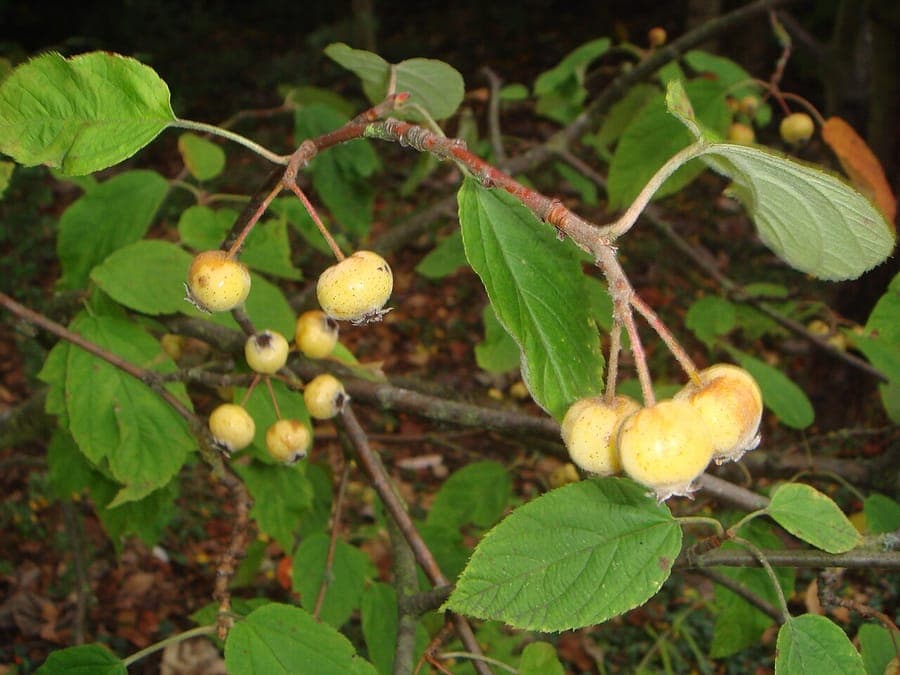
Xemenendura / CC BY-SA 4.0, via Wikimedia Commons
Malus yunnanensis: complete guide
Malus yunnanensis
Want to see Malus yunnanensis: complete guide in your garden?
1 minute, no credit card
Overview
Malus yunnanensis, also known as Yunnan crabapple or Yunnan apple, is a beautiful ornamental tree native to the mountainous regions from Tibet to Central China and Myanmar. This medium-sized tree belongs to the Rosaceae family, the same group containing apple trees, pears, and cherry trees. Malus yunnanensis is a versatile tree offering both ornamental and food value.
This tree is particularly well-suited to cool climates and provides early spring bloom and colorful autumn fruit display. It's an excellent choice for gardens wishing to support bird activity.
Appearance & Bloom
Malus yunnanensis grows into a medium-sized tree, typically 6-10 meters tall, with a broad, rounded crown. The tree features a multi-stemmed growth pattern, which is important for ornamental value. The leaves are elongated, green, and develop beautiful autumn colorations.
The bloom is truly spectacular. In spring, flowers appear in abundance - small, white to pink flowers presenting themselves in clusters. The bloom lasts several weeks and attracts bees and other insects.
After flowering, numerous small apples develop, typically about 1-2 cm in diameter. These apples are red to orange-yellow and persist long in the tree, providing extended ornamental value and bird food. The combination of early spring bloom and long autumn fruit display makes this a four-season plant.
Ideal Location
Malus yunnanensis does best in full sun to partial shade. A minimum of 4-6 hours of direct sunlight daily is needed for optimal bloom and fruiting. In very hot climates, some afternoon shade can be beneficial.
The tree is relatively flexible with placement but grows best in open, unshaded positions. Avoid proximity to large trees that absorb all light.
The tree is wind-tolerant and can even thrive in quite windy environments, making it ideal for open gardens and stormy regions.
Soil
Malus yunnanensis grows in virtually all soil types, from acidic to neutral. Ideal is pH between 5.0 and 7.5. The tree is reasonably tolerant of different soil textures, though it thrives best in well-draining, nutrient-rich earth.
Ensure good drainage. Waterlogged conditions can lead to root bacteria and fungal issues. If you have heavy clay soil, add organic matter to improve drainage.
The tree is fairly nutrient-flexible. Add organic matter before planting, but supplemental feeding is usually unnecessary.
Free design
Want to see Malus yunnanensis: complete guide in your garden? Make a free design now.
Watering
Watering is critical during the first year after planting. Water regularly, especially during dry periods, to encourage strong root development.
Once established, Malus yunnanensis is reasonably drought tolerant. Normal rainfall is usually sufficient. During extended dry periods, provide supplemental water, particularly when the tree is in full bloom.
Avoid waterlogging. This can cause problematic root rot.
Pruning
Malus yunnanensis requires minimal pruning after establishment. Allow the tree to retain its natural multi-stem structure. This provides ornamental value.
Remove dead, diseased, or crossing branches. This is best done during dormancy (late fall through early spring).
Avoid aggressive pruning. This can stress the tree and lead to disease spread.
Maintenance Calendar
Spring: Check for pests and diseases. Begin feeding as new growth starts. Summer: Water regularly during dry periods. Monitor for insects. Fall: Admire the colorful fruit and foliage coloring. Minimal watering needed. Winter: Dormant period. Minimal care. Pruning can be done in late winter.
Winter Hardiness
Malus yunnanensis is extremely frost hardy. This tree can tolerate temperatures down to -20 degrees Celsius, making it suitable for cold climates. This is exactly what you want in temperate to cold regions.
The tree is also very wind tolerant, making it ideal for exposed locations.
Companion Plants
Malus yunnanensis combines charmingly with other spring-blooming trees and shrubs. It pairs well with magnolias, cherry trees, and fruit trees. The apples attract birds, so it combines well with other bird food plants.
The tree can also be used as a specimen where its bloom and fruit display really stand out.
Conclusion
Malus yunnanensis is an excellent choice for gardeners in temperate to cold climates seeking a tree with four-season interest. The combination of spectacular spring bloom, colorful fruit, and bird activity makes this a valuable addition. Start with a young tree and enjoy decades of beauty. Gardenworld.app can help with your complete garden plan!
Want to see Malus yunnanensis: complete guide in your garden? Make a free design now.
Upload a photo, pick a style, and get a photorealistic design with plant list in under a minute.
No credit card required


Similar plants
Siberian crab apple: complete guide
Malus x robusta
Complete guide to the Siberian crab apple (Malus x robusta): location, soil, pruning, winter hardiness and the best companion plants for your garden.
Chinese flowering crabapple (Malus x spectabilis): complete guide
Malus x spectabilis
Meet the Chinese flowering crabapple (Malus x spectabilis): a classic spring bloomer with carmine buds and pink blossom.
Potentilla crassinervia: complete guide
Potentilla crassinervia
Potentilla crassinervia, the Corsican cinquefoil, grows wild on Corsica and Sardinia's peaks. Discover how to grow this hardy alpine rock garden gem.