
H. Zell / CC BY-SA 3.0, via Wikimedia Commons
European crab apple: complete guide
Malus sylvestris
Want to see European crab apple: complete guide in your garden?
1 minute, no credit card
Overview
Malus sylvestris, the European crab apple, is one of the few truly native fruit trees in Europe. It's the wild ancestor of most domestic apple varieties and thrives across temperate regions, including the UK and large parts of northern Europe. Standing between 6 and 10 meters tall, this slow-growing tree develops a broad, irregular crown and rugged bark. It's not grown for commercial fruit, but its ecological value is huge-bees, birds, and mammals all benefit from its presence. Whether you're restoring a hedgerow or designing a wildlife-friendly garden, the crab apple deserves serious consideration. On gardenworld.app, you can design a planting layout that integrates crab apple with other native trees for maximum biodiversity.
Appearance & bloom cycle
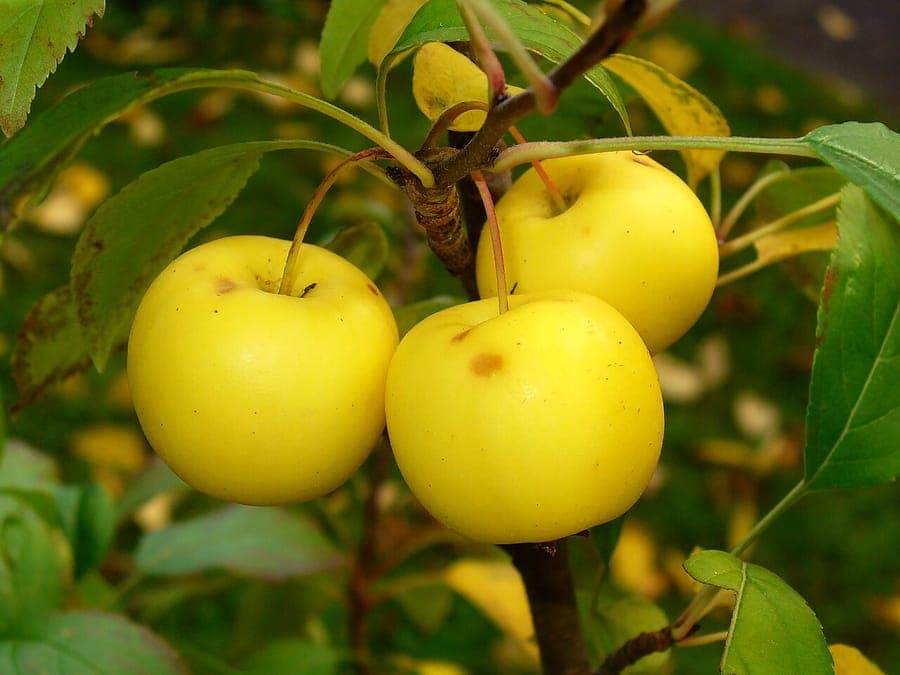
In early spring, usually from late April to early May, the crab apple bursts into bloom with clusters of white to pale pink flowers, each about 3–4 cm across. The blossoms have a delicate fragrance and attract early pollinators. Leaves emerge shortly after, a fresh green that darkens through summer. In autumn, they turn golden yellow or bronze, adding seasonal interest. The fruit-small, sour apples around 2–3 cm in diameter-ripen in September and often persist into winter, providing food for birds like thrushes and blackbirds. These crab apples can be harvested to make jelly, though they're far too tart to eat raw.
Ideal location
Crab apple trees prefer a light level of 5 on a 10-point scale, meaning they do well in partial shade to light sun. While they can tolerate full sun, they thrive best at woodland edges or in gardens with dappled shade. Avoid planting in exposed, windy spots-this can damage blossoms and young fruit. Allow at least 4 meters of clearance around the tree for mature growth. In urban gardens, ensure there's no interference with overhead lines or nearby structures. Use gardenworld.app to simulate sunlight patterns and check spacing before planting.
Soil requirements
Malus sylvestris is adaptable but performs best in well-drained, loamy soil. It tolerates sandy or clay soils as long as they don't stay waterlogged. The ideal pH is between 5.0 and 7.5-slightly acidic to neutral. Heavy clay soils can be improved with organic matter like compost or leaf mold. Avoid water-retentive spots; prolonged wetness leads to root rot. A mulch of compost or wood chips in spring helps retain moisture and suppress weeds without suffocating the roots.
Free design
Want to see European crab apple: complete guide in your garden? Make a free design now.
Watering
During the first year, water young trees weekly during dry spells-about 10–15 liters per session. After establishment, crab apples are largely drought-tolerant, though they benefit from occasional deep watering in prolonged dry summers. Avoid overhead watering to reduce fungal risks. Drip irrigation or a soaker hose works best, delivering water directly to the root zone.
Pruning
Pruning is minimal. Only remove dead, crossing, or diseased branches, ideally in late winter (January–February) when the tree is dormant. Avoid heavy pruning, as it can stimulate excessive growth and reduce flowering. Use clean, sharp tools to prevent disease spread. Unlike cultivated apples, crab apples don't need formative pruning-let their natural, twisted shape develop.
Maintenance calendar
- January: Inspect for damage, prune if needed
- February: Final pruning window
- March: No action required
- April: Blossoms appear, watch for late frosts
- May: Petals fall, fruit begins to set
- June: Monitor for pests like aphids
- July: Water young trees in drought
- August: No major tasks
- September: Fruit ripens, can be harvested
- October: Leaves start to fall
- November: Leave fallen leaves as mulch or compost
- December: Dormant period-ideal for planning next year's garden
Winter hardiness
Malus sylvestris is fully hardy in USDA zones 5–8, enduring temperatures as low as -23°C. It requires no winter protection, even in harsh climates. The persistent fruit adds winter interest and supports wildlife. Young saplings may benefit from tree guards to prevent rodent damage, but mature trees are self-sufficient.
Companion plants
Pair crab apple with other native species like hawthorn (Crataegus monogyna), dogwood (Cornus sanguinea), and elder (Sambucus nigra). Beneath the canopy, plant spring ephemerals such as bluebells (Hyacinthoides non-scripta), wood anemone (Anemone nemorosa), and primrose (Primula vulgaris). Avoid invasive groundcovers like ivy. On gardenworld.app, you can explore plant combinations that enhance both aesthetics and habitat value.
Closing
The European crab apple is a quiet achiever in the garden-unsung but invaluable. It supports pollinators, feeds birds, and brings seasonal beauty without demanding much in return. It's available at most UK garden centres, often sold as a standard tree with a 1.2m clear stem. Plant it where you can enjoy the spring bloom and autumn fruit, and let it grow into a lasting feature of your landscape. For gardeners focused on sustainability and ecology, Malus sylvestris is a no-brainer. Let gardenworld.app help you plan a garden where every plant, including the crab apple, has a purpose.
Want to see European crab apple: complete guide in your garden? Make a free design now.
Upload a photo, pick a style, and get a photorealistic design with plant list in under a minute.
10,000+ gardens designed already
No credit card required


Similar plants
Siberian crab apple: complete guide
Malus x robusta
Complete guide to the Siberian crab apple (Malus x robusta): location, soil, pruning, winter hardiness and the best companion plants for your garden.
Chinese flowering crabapple (Malus x spectabilis): complete guide
Malus x spectabilis
Meet the Chinese flowering crabapple (Malus x spectabilis): a classic spring bloomer with carmine buds and pink blossom.
Potentilla crassinervia: complete guide
Potentilla crassinervia
Potentilla crassinervia, the Corsican cinquefoil, grows wild on Corsica and Sardinia's peaks. Discover how to grow this hardy alpine rock garden gem.