
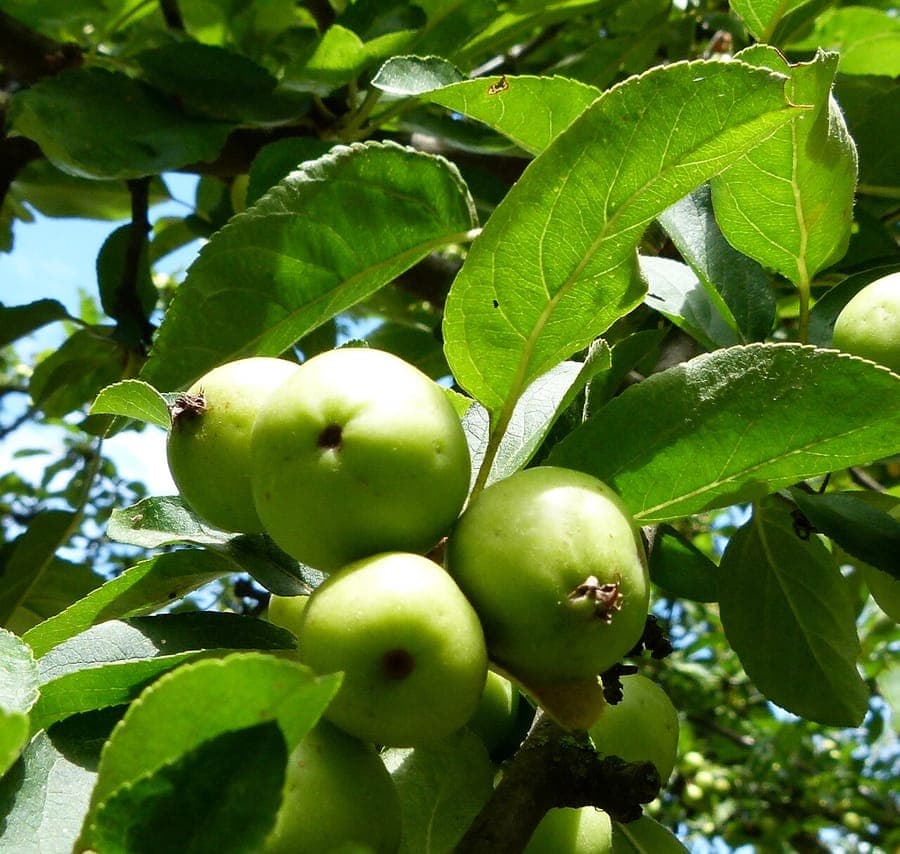
Dinkum / CC0, via Wikimedia Commons
Siebold's crab apple: complete guide
Malus sieboldii
Want to see Siebold's crab apple: complete guide in your garden?
1 minute, no credit card
Overview
Siebold's crab apple (Malus sieboldii) is a compact, ornamental apple tree native to Japan. This Rosaceae family member is renowned for stunning spring flowers and decorative tiny apples. Autumn brings countless small, bright red or yellow apple fruits persisting through winter.
This tree is more than fruit production - it's a valuable ornamental specimen. It attracts birds and provides four-season visual interest: pink spring blooms, green summer foliage, golden autumn color, and red winter fruits.
Appearance and Bloom
Malus sieboldii grows as compact shrub to small tree, typically 4-6 meters tall. It features fine, alternately-arranged, oblong green leaves. Flowers are small, approximately 1-1.5 cm, pink or white, appearing in clusters during spring.
Following blooms, countless tiny apple fruits form, roughly 1-2 cm diameter. These are bright red to yellow, persisting through winter on branches, attracting birds and providing wildlife food.
Ideal Location
Siebold's crab apple thrives in full sun to partial shade, requiring minimum 4-6 hours direct daily sunlight. A sheltered position protects against severe winds. The tree is extremely cold-hardy, suited for USDA zones 4-8 (Northern Europe and temperate climates).
Plant in a prominent front-yard location for best flower and autumn color visibility. Avoid highly windy areas prone to branch damage.
Soil
Siebold's crab apple is undemanding regarding soil. It thrives in well-draining soil ranging from slightly acidic to slightly alkaline, pH 6.0-7.5. Add humus at planting, though the tree adapts to moderate soils.
Avoid heavy clay and waterlogging. Good drainage is critical. Mulching aids moisture regulation and nutrient addition.
Free design
Want to see Siebold's crab apple: complete guide in your garden? Make a free design now.
Watering
Water regularly during growing season, especially in dry periods. Young trees need more water than established specimens. Once established, the tree is fairly drought-tolerant.
During severe drought, water deeply but infrequently to encourage deep rooting. Excess moisture invites fungal disease.
Pruning
Siebold's crab apple needs minimal pruning. Remove only dead wood and extremely overgrown branches. The tree naturally forms an attractive, open crown.
Pruning immediately after flowering helps maintain shape, but usually minimal intervention suffices. Use sharp tools and disinfect between cuts.
Maintenance Calendar
March-April: Plant in spring. May-June: Flowers appear and apples set. July-August: Apples develop. September-October: Apples color. November-February: Rest and fruit decoration; prune in late winter.
Winter Hardiness
Siebold's crab apple is extremely cold-hardy to -25 degrees Celsius and much more cold-resistant than many related apples. It thrives in the Netherlands, Belgium, and Germany without protection. This is ideal for cold climates.
Companion Plants
Siebold's crab apple pairs well with other Japanese or Asian ornamental plants. Underplant with heavenly bamboo, snowberry, or winter jasmine. Avoid strong root competitors.
Small apples provide bird food; protect young trees with netting if birds cause excessive damage.
Closing Remarks
Siebold's crab apple is frost-hardy, ornamental addition to any temperate front yard. With four-season beauty and bird food provision, it's a sustainable choice. Plant today and enjoy this unique Japanese specimen for decades. For young trees and growth support, visit a local tree nursery or Intratuin. Inspire yourself via gardenworld.app for more ornamental garden ideas.
Want to see Siebold's crab apple: complete guide in your garden? Make a free design now.
Upload a photo, pick a style, and get a photorealistic design with plant list in under a minute.
No credit card required


Similar plants
Siberian crab apple: complete guide
Malus x robusta
Complete guide to the Siberian crab apple (Malus x robusta): location, soil, pruning, winter hardiness and the best companion plants for your garden.
Chinese flowering crabapple (Malus x spectabilis): complete guide
Malus x spectabilis
Meet the Chinese flowering crabapple (Malus x spectabilis): a classic spring bloomer with carmine buds and pink blossom.
Potentilla crassinervia: complete guide
Potentilla crassinervia
Potentilla crassinervia, the Corsican cinquefoil, grows wild on Corsica and Sardinia's peaks. Discover how to grow this hardy alpine rock garden gem.