
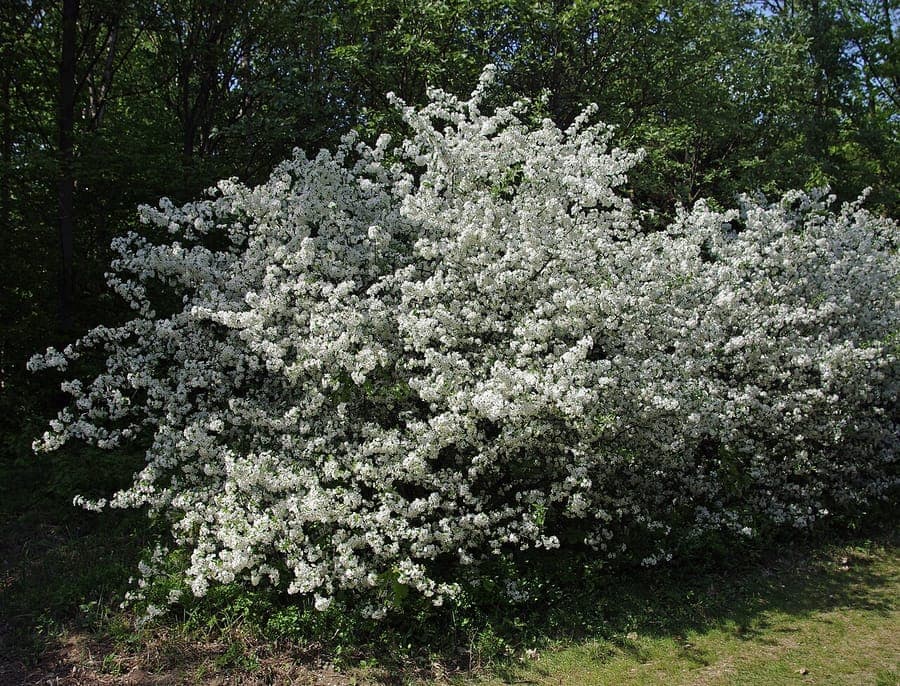
Chrumps / CC BY-SA 4.0, via Wikimedia Commons
Sargent's crab apple: complete guide
Malus sargentii
Want to see Sargent's crab apple: complete guide in your garden?
1 minute, no credit card
Overview
Sargent's crab apple (Malus sargentii) is a stunning ornamental plant from the Malus genus. This compact tree originates from Asian apple varieties and is increasingly used in modern garden design due to its elegant form and hardiness. In temperate climates worldwide, this tree is becoming more popular in private gardens and public spaces.
Appearance and bloom
The Sargent's crab apple grows into a small to medium-sized tree with a dense, rounded crown. The tree typically reaches a height of 16-26 feet. The bark is gray-brown and becomes smoother with age. In spring, countless small pink to white-pink flowers appear with a subtle, pleasant fragrance.
After flowering, small red apples form, typically only a few centimeters in diameter. These fruits hang on the tree for a long time, providing bird feed in autumn and early winter. The leaves are green with a fine texture.
Ideal location
Sargent's crab apple grows best in a location with plenty of sunlight. Ensure the tree receives at least 6 hours of direct sunlight daily for optimal flowering and fruit production. Partial shade is also acceptable, though this may reduce the number of flowers.
Choose a location where the tree has sufficient space to grow. Avoid cramped spaces between other large trees or shrubs. An open spot in your front or back yard works best.
Soil
This apple tree doesn't demand extremely high soil quality. However, well-draining soil is crucial to prevent root rot. Wet, muddy soil can cause problems.
Fertile, humus-rich soils are better suited. When planting, always add compost or well-rotted manure to improve soil structure. A pH between 6.0 and 7.5 is ideal.
Avoid heavy clay soils without amendments. Improve these by adding sand and organic matter to enhance drainage.
Free design
Want to see Sargent's crab apple: complete guide in your garden? Make a free design now.
Watering
During the first growing season after planting, the tree needs regular water. Water the tree at least once a week if there is no rain. Ensure water penetrates well into the soil.
Once established (after 2-3 years), Sargent's crab apple is fairly drought-tolerant. You can still water during dry periods, especially in the first part of the growing season.
Avoid waterlogging. Ensure good drainage around the root zone.
Pruning
Sargent's crab apple naturally grows into a neat form. Annual pruning is not necessary, but you can shape the tree by removing dead wood and crossing branches.
The best time to prune is during winter months when the tree is dormant. Remove all dead branches and focus on maintaining an open, airy crown structure.
Clean all pruning wounds with sharp tools to minimize disease risk.
Maintenance calendar
February-March: Prune and shape. Remove dead and diseased branches.
April-May: Fertilize with balanced fertilizer. Flowering prepares.
June-July: Water regularly during dry periods. Monitor for diseases and pests.
August-September: Harvest fruits if desired. Apply fertilizer for next season.
October-November: Prepare for winter. Apply mulch around the tree.
December-January: Rest period. Minimal maintenance needed.
Winter hardiness
Sargent's crab apple is very winter hardy and tolerates temperatures below -4 degrees Fahrenheit without issue. This makes it ideal for temperate climates.
Once established, young trees should be protected against severe frost in their first year by applying mulch around the stem.
Companion plants
Sargent's crab apple pairs well with spring-blooming shrubs like magnolia, forsythia, or spiraea. The red fruits provide beautiful contrast with green conifers.
As underplanting, you can place low ground covers like hellebore or ivy.
Closing
Sargent's crab apple is a fantastic addition to any front yard. With minimal maintenance, this tree provides years of beautiful flowers and bird food. For more plant recommendations for your front yard, visit gardenworld.app where you can have a personalized design created. Discover how gardenworld.app can help you realize your dream landscape.
Want to see Sargent's crab apple: complete guide in your garden? Make a free design now.
Upload a photo, pick a style, and get a photorealistic design with plant list in under a minute.
No credit card required


Similar plants
Siberian crab apple: complete guide
Malus x robusta
Complete guide to the Siberian crab apple (Malus x robusta): location, soil, pruning, winter hardiness and the best companion plants for your garden.
Chinese flowering crabapple (Malus x spectabilis): complete guide
Malus x spectabilis
Meet the Chinese flowering crabapple (Malus x spectabilis): a classic spring bloomer with carmine buds and pink blossom.
Potentilla crassinervia: complete guide
Potentilla crassinervia
Potentilla crassinervia, the Corsican cinquefoil, grows wild on Corsica and Sardinia's peaks. Discover how to grow this hardy alpine rock garden gem.