
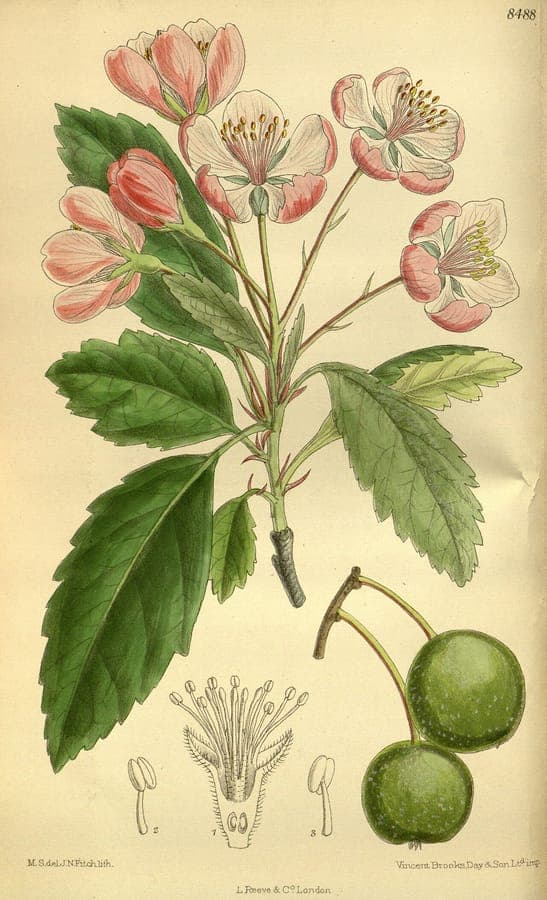
M.S. del, J.N.Fitch, lith. / Public domain, via Wikimedia Commons
Malus ioensis: complete guide
Malus ioensis
Want to see Malus ioensis: complete guide in your garden?
1 minute, no credit card
Overview
Malus ioensis, commonly known as Prairie crab apple or Iowa crab apple, is a beautiful native North American tree in the Rosaceae family, native to central and eastern North America. This small to medium-sized tree naturally inhabits regions from Arkansas to Minnesota and Wisconsin, particularly throughout the Midwest. Typically reaching 20 to 25 feet (6-8 meters) tall with a compact, rounded crown, the Prairie crab apple is a beloved landscape tree in regions with cold winters due to its exceptional hardiness. It is prized for its large, intensely fragrant pink or white flowers appearing in spring before or as foliage emerges.
Extremely cold-hardy and adaptable, this tree thrives in USDA zones 3-8, making it ideal for Midwestern and northern gardens. It tolerates diverse soil and moisture conditions, asking only for full sun and good drainage.
Appearance and Bloom
The Prairie crab apple develops into a graceful, compact tree with grey-brown bark and dense, spreading branches. Its oval to elliptical leaves are medium green with a slightly rough texture, giving the tree a substantial appearance. Fall foliage turns yellow to red-orange before dropping, extending seasonal interest.
Flowers are the tree's primary attraction, emerging in spring (May in northern zones). These large, fragrant flowers, measuring 1 to 1.5 inches (3-4 cm) in diameter, appear in profusion along the branches, creating spectacular floral displays. The fragrance is notably strong and sweet - far more pronounced than most crabapples, making this tree exceptionally valuable for cut flowers and fragrant borders. Following pollination, small apples develop, roughly 0.8 to 1.2 inches (2-3 cm) in diameter. These mature to yellow-green or light red by October-November and persist on the tree through winter, providing food for wildlife.
Ideal Location
The Prairie crab apple thrives in full sunlight. Plant in a location receiving at least 6 hours of direct sunlight daily. Good air circulation helps prevent fungal diseases. Select a location with protection from severe winds. This tree is well-suited to USDA zones 3-8, thriving in cold continental climates with distinct seasonal temperature variation.
Soil
Malus ioensis is highly adaptable to varied soil types. It thrives in sandy clay loams, pure clay, and even poor soils. A pH of 5.0 to 7.0 is acceptable. The tree tolerates both moderately dry and somewhat wet soils but prefers well-draining conditions. Waterlogging should be avoided. A 5 cm mulch layer around the base aids moisture retention and weed suppression.
Free design
Want to see Malus ioensis: complete guide in your garden? Make a free design now.
Watering
Once established, the Prairie crab apple tolerates dry periods reasonably well. Young trees, however, require regular water for the first two to three years until firmly rooted. Water deeply once weekly during the growing season, more frequently during drought. Established trees often need supplemental water only during pronounced dry spells. Consistent moisture during growing season optimizes flowering. Avoid waterlogging.
Pruning
The Prairie crab apple requires minimal pruning. Remove dead, diseased, or broken branches promptly. Young trees benefit from light shaping during their first few years to establish a strong, well-balanced crown, best done in late winter before growth resumes. Remove overcrowding or crossing branches to maintain an open crown. Avoid heavy pruning. The tree naturally develops an attractive form with minimal intervention.
Maintenance Calendar
April-May brings abundant, fragrant flowering - enjoy the spectacular spring show. May-June sees fruit development; ensure adequate water. July-September is the growing season. October-November brings fruit maturation and fall color. December-February: the fruit persists, feeding wildlife. This is an ideal time for any needed pruning in late winter.
Every two to three years, apply a 5 cm layer of shredded bark mulch around the trunk base. The tree responds well to moderate spring feeding with balanced fertilizer.
Winter Hardiness
Malus ioensis is extremely cold-hardy, tolerating temperatures as low as -30 degrees Fahrenheit (-34 degrees Celsius). The tree thrives in USDA zones 3-8, making it perfect for northern and Midwestern gardens. No special winter protection is required.
Companion Plants
The Prairie crab apple pairs beautifully with native understory trees and shrubs. Underplant with native groundcovers or low-growing native shrubs to create layered, natural-looking gardens. Combine with other native species for maximum wildlife value. Consider pairing with native viburnums, dogwoods, and serviceberries.
Closing
Malus ioensis is a beautiful, cold-hardy native tree offering spectacular fragrant flowers and winter fruit for wildlife. With full sunlight, well-draining soil, establishment watering, and minimal pruning, you'll enjoy decades of spring beauty and wildlife activity. This is an ideal tree for northern gardens and native plant landscapes. Source trees from native plant nurseries and bring Midwestern beauty and wildlife habitat to your cold-climate garden!
Want to see Malus ioensis: complete guide in your garden? Make a free design now.
Upload a photo, pick a style, and get a photorealistic design with plant list in under a minute.
No credit card required


Similar plants
Siberian crab apple: complete guide
Malus x robusta
Complete guide to the Siberian crab apple (Malus x robusta): location, soil, pruning, winter hardiness and the best companion plants for your garden.
Chinese flowering crabapple (Malus x spectabilis): complete guide
Malus x spectabilis
Meet the Chinese flowering crabapple (Malus x spectabilis): a classic spring bloomer with carmine buds and pink blossom.
Potentilla crassinervia: complete guide
Potentilla crassinervia
Potentilla crassinervia, the Corsican cinquefoil, grows wild on Corsica and Sardinia's peaks. Discover how to grow this hardy alpine rock garden gem.