
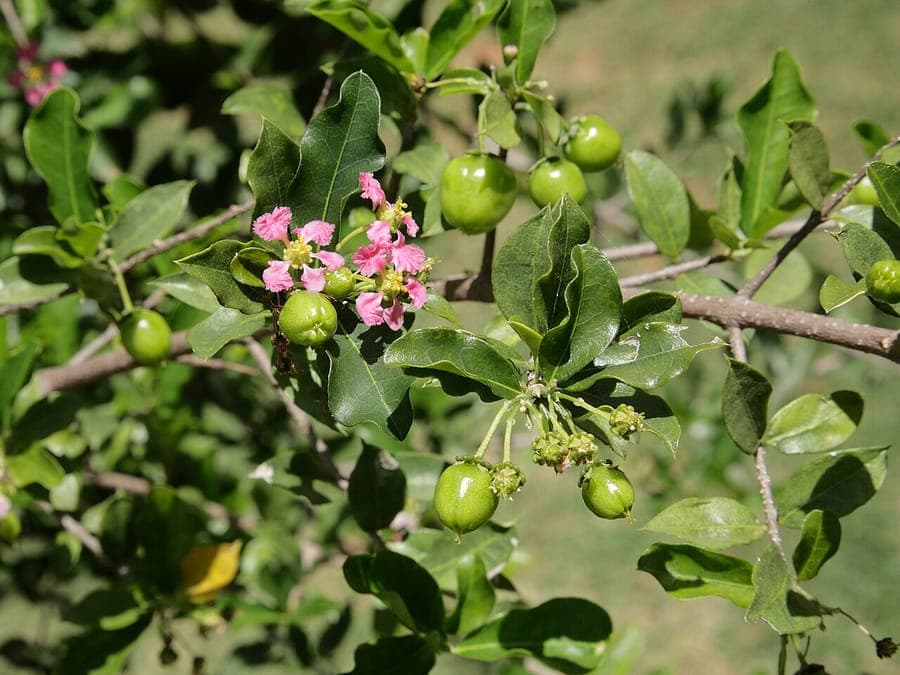
Eric Gaba (Sting - fr:Sting) / CC BY-SA 3.0, via Wikimedia Commons
Acerola cherry: complete guide
Malpighia emarginata
Want to see Acerola cherry: complete guide in your garden?
1 minute, no credit card
Overview
The acerola cherry (Malpighia emarginata) is a compact shrub-to-tree originating from Mexico and the Caribbean. This Malpighiaceae family member produces small, bright red berries approximately 1-2 cm in diameter. The fruits are renowned for exceptional vitamin C content, up to ten times higher than oranges.
This attractive tree combines ornamental appeal with practical benefits. Featuring pink or white blooms and glossy foliage, it adorns gardens in warm climates. In temperate zones, pot cultivation on patios is feasible.
Appearance and Bloom
The acerola cherry grows as a compact shrub to small tree, typically 2-6 meters tall. It bears opposite, oblong, glossy green leaves. Flowers are small yet striking, pink to white, appearing in clusters along branches.
Blooming is nearly continuous in warm climates, resulting in ongoing fruit production. Red berries ripen within weeks of pollination, offering sweetness with pleasant tartness.
Ideal Location
Acerola cherries thrive in full sun with minimum 6-8 hours direct daily sunlight. A sheltered spot protects against strong winds and severe sunscald. In tropical climates, afternoon shade aids extreme heat tolerance.
Outdoor cultivation suits USDA zones 9b-11 (Mediterranean climates). Elsewhere, grow in large containers movable indoors during winter. They favor positions near south-facing walls.
Soil
Prefer well-draining, acidic to neutral soil with pH 5.5-7.0. Mix garden soil, sand, and humus (1:1:1). For containers, use potting mix enriched with perlite or sand for drainage.
Acerola performs poorly on heavy clay. Add abundant organic material to improve structure. Mulching helps retain moisture during warm periods.
Free design
Want to see Acerola cherry: complete guide in your garden? Make a free design now.
Watering
Water regularly during growth and fruiting periods. Provide deep waterings but allow soil to dry slightly between. In dry spells, water potted plants up to twice daily.
Rainwater irrigation is preferred. Avoid waterlogging causing root rot. Excessive drought causes premature leaf and fruit drop.
Pruning
Pruning isn't required for shape, but remove damaged or dead wood. After harvest, lightly cut back to encourage branching. Remove low branches for easier harvesting and maintenance.
The plant responds well to light pruning, becoming more compact. Use sharp tools and disinfect between cuts.
Maintenance Calendar
March-April: Sow seeds or plant cuttings. May-June: Support growing plants with stakes. July-October: Regular watering and feeding. October-December: Harvest ripe berries. January-February: Rest period in temperate zones.
Winter Hardiness
Acerola is frost-sensitive, dying below 5 degrees Celsius. In the Netherlands, Belgium, and Germany, indoor overwintering or sheltered warm microclimates are necessary. Bring potted plants indoors for winter.
Mulch and burlap jackets help in borderline cases, but indoor overwintering is typically required.
Companion Plants
Acerola grows well with other tropical fruits like guava and passion fruit. Citrus in the same pot offers complementary flavors. Avoid strong root competitors.
Herbs like basil and oregano in the same container enable space-saving gardening.
Closing Remarks
The acerola cherry is an impressive fruiting specimen with supernatural vitamin C and ornamental value. Though tropical, it thrives in cooler climates via container cultivation. Start today with seed or cuttings and enjoy these unique fruits. For potted plants, seeds, and nutrients, visit Intratuin or Gamma. Inspire yourself via gardenworld.app for additional fruit garden ideas.
Want to see Acerola cherry: complete guide in your garden? Make a free design now.
Upload a photo, pick a style, and get a photorealistic design with plant list in under a minute.
No credit card required


Similar plants
Peanut butter fruit: complete guide
Bunchosia glandulifera
Full guide to Bunchosia glandulifera, the peanut butter fruit shrub: care, siting, fruiting, overwintering in pots, and tropical garden companions.
Banisteriopsis caapi: complete guide
Banisteriopsis caapi
Banisteriopsis caapi is a tropical ornamental climber from South America with attractive yellow flowers. Learn how to grow this exotic plant in warm climates.
Byrsonima crassifolia: complete guide
Byrsonima crassifolia
Discover the nance fruit: a tropical fruit tree with golden flowers and medicinal properties. Growing guide for warm climates.