
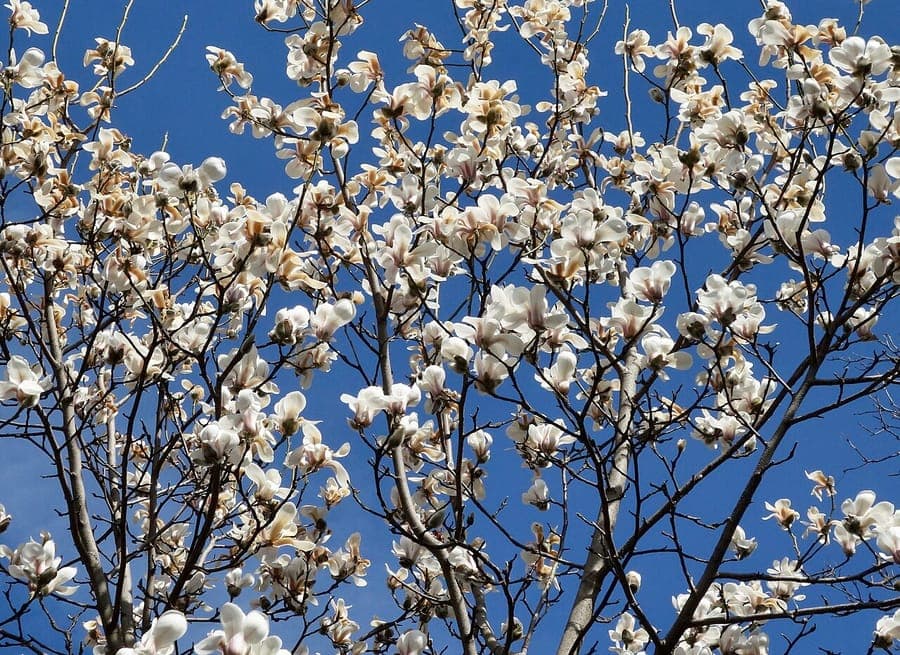
William (Ned) Friedman / CC BY-SA 4.0, via Wikimedia Commons
Sprenger's magnolia: complete guide
Magnolia sprengeri
Want to see Sprenger's magnolia: complete guide in your garden?
1 minute, no credit card
Overview
Sprenger's magnolia (Magnolia sprengeri) is a very rare and impressive tree originating from central and eastern China. This is one of the most beautiful and sought-after magnolias for serious garden collectors. The plant distinguishes itself through its very large, striking pink flowers and elegant growth habit.
In the wild, this tree has become extremely rare and is on the red list. In cultivation, it is even rarer than many other Asian magnolias. This makes it a truly exclusive plant for gardeners with a passion for rare specimens.
The plant is also sometimes called Yulania sprengeri according to some taxonomic classifications, though Magnolia sprengeri is the more accepted modern name.
Appearance and bloom
Sprenger's magnolia grows into a medium-sized tree, typically 8-15 meters tall in cultivation. The crown is open and elegant, with upright young branches that become more spreading later. The stem formation can sometimes be multi-stemmed.
The foliage is green obovate to obovate, 10-18 centimeters long, smooth, and glossy. The fall color is usually green to yellowish without much spectacle.
The flowers are undoubtedly the highlight. They are very large, 15-20 centimeters in diameter, with approximately 9-12 petals (tepals) in bright pink to magenta color, sometimes with deeper pink ribs. They have a distinct tulip shape, especially upon full opening. They appear very early in the season, often before leaves, creating a spectacular effect.
The flowers have a subtle fragrance. They last long and bloom for 2-4 weeks depending on weather.
Ideal location
Sprenger's magnolia prefers full sun with at least 6 hours of direct sunlight daily. Wind is harmful to the flowers, so shelter is important, especially in windy locations.
The plant prefers a moderately temperate location. They tolerate frost better than many subtropical plants, though very severe frost can damage flowers. USDA zones 6-8 are ideal.
Adequate space for growth is essential. Plant in a place where it can branch freely.
Free design
Want to see Sprenger's magnolia: complete guide in your garden? Make a free design now.
Soil
The plant prefers well-draining, slightly acidic soil (pH 6.0-6.8). Heavy clay soil requires some improvement with organic matter and perlite.
Rich, well-prepared soil promotes healthy growth. Mulch after planting with 5-10 centimeters of organic material, away from the stem.
When planting, use a mixture of original soil, compost, and perlite. Good drainage is essential; stagnant water leads to root problems.
Watering
After planting, water regularly until well established (first 1-2 years). Thereafter, adult trees can tolerate drought relatively well.
Young trees need more frequent watering, especially during growth. During very dry periods, water, but avoid waterlogged conditions.
Deep watering is better than frequent light watering. Avoid stagnant water.
Pruning
Minimal pruning is needed. The plant grows naturally in a beautiful form. Dead branches can be removed, and very low branches can be trimmed for clearance.
Pruning (if needed) after blooming, as next season's flowers are already set. Avoid aggressive pruning, as the plant can be sensitive.
Branch selection in youth helps build a strong form.
Maintenance calendar
Spring: Enjoy spectacular blooming, water young plants Summer: Occasional watering during drought, feed as needed Fall: Winter preparation, replenish mulch Winter: Protection in very cold regions, no maintenance for adult trees
Winter hardiness
Reasonably winter hardy, USDA zones 6-8. Severe frost can damage flower buds, so protection is desirable, especially for young trees. Adult trees are hardier.
In Europe, it's winter hardy in temperate zones. In very cold regions, protection is recommended.
Companion plants
Sprenger's magnolia works well with:
- Other magnolias (Magnolia stellata, M. liliflora)
- Prunus species (similar spring bloom)
- Camellias (acidic soil preference)
- Rhododendrons (interesting textures)
- Low understory (hellebores, ferns)
Closing
Sprenger's magnolia is an exclusive tree for serious plant collectors. With its spectacular pink spring flowers and elegant form, it's a true jewel in any garden. Though rare and sometimes difficult to obtain, it offers years of beautiful display.
Available through specialty tree nurseries and plant collections. Visit gardenworld.app for more inspiration.
Want to see Sprenger's magnolia: complete guide in your garden? Make a free design now.
Upload a photo, pick a style, and get a photorealistic design with plant list in under a minute.
No credit card required


Similar plants
Saucer magnolia: complete growing guide
Magnolia × soulangeana Soul.-Bod.
Saucer magnolia is a hybrid featuring spectacular pink-white flowers appearing before leaf emergence. Ideal as specimen plant. Winter-resistant to -15°C.
Magnolia delavayi: complete guide
Magnolia delavayi
Delavay magnolia is an imposing shrub from southern China with large glossy leaves and fragrant creamy-white flowers. Learn about cultivation, hardiness, and care for this rare species.
Sweet michelia: complete guide
Magnolia doltsopa
Discover the sweet michelia, a majestic tree from the Himalayas. Learn everything about this impressive specimen, blooming, and perfect growing conditions.