
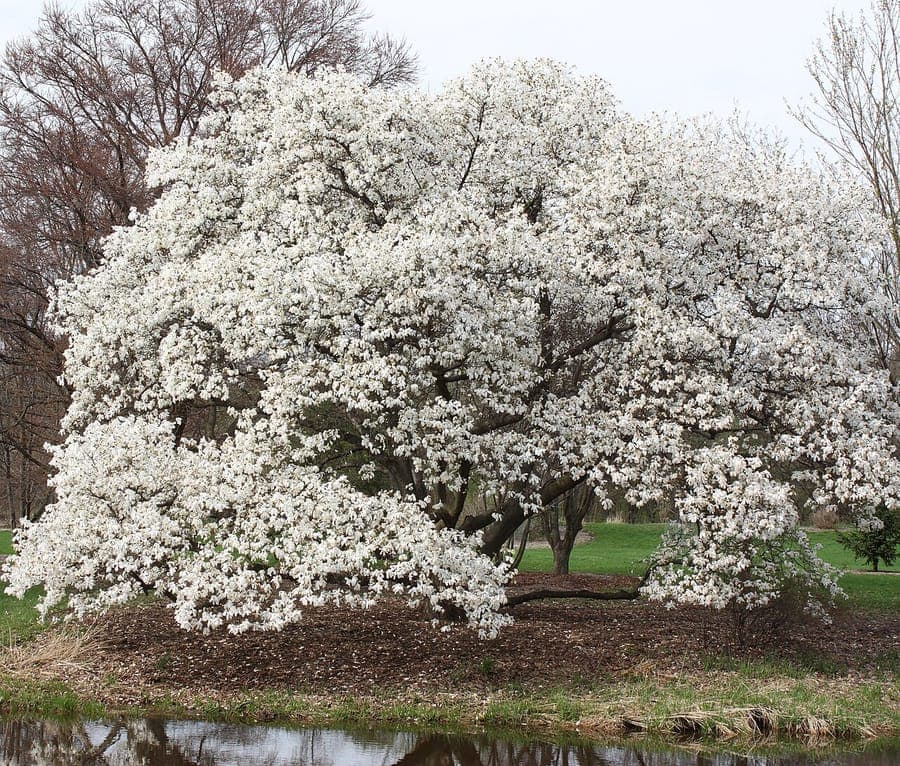
Bruce Marlin / CC BY-SA 3.0, via Wikimedia Commons
Kobus magnolia: complete guide
Magnolia kobus
Want to see Kobus magnolia: complete guide in your garden?
1 minute, no credit card
Overview
The Kobus magnolia (Magnolia kobus) is a standout among early-flowering trees, bringing a touch of elegance to gardens across temperate zones. Native to Japan and Korea, this slow-growing magnolia develops into a small tree or large shrub, typically reaching 6 to 8 meters in height with a spread of 4 to 5 meters over 15–20 years. It grows at about 20–30 cm per year, making it suitable for smaller gardens or as a specimen tree in mixed borders.
Hardy to USDA zone 5 (-20°C), the Kobus magnolia withstands most UK and US climates, though young trees benefit from winter protection during their first few years. One thing to watch: its early bloom time (February to April) makes flower buds vulnerable to late frosts. A sheltered site is non-negotiable if you want reliable flowering.
On gardenworld.app, you can design a custom garden layout that integrates the Kobus magnolia with complementary plants and hardscape elements.
Appearance & bloom cycle
This magnolia announces spring with fragrant, star-shaped white flowers, 10–15 cm across, appearing before the leaves. Each bloom has 9–12 narrow, strap-like tepals and emits a light, honeyed scent. After flowering, dark green, oval leaves emerge, turning pale yellow in autumn - though fall color isn't always showy. The bark is smooth and gray, adding winter interest.
Young plants may start as multi-stemmed shrubs but gradually develop a single trunk and upright, open crown. Once mature, it's a graceful focal point in any garden.
Ideal location
Plant in full sun to light shade. Full sun maximizes flowering, while dappled afternoon shade in hotter zones (7–8) prevents leaf scorch. Choose a sheltered spot - east- or south-facing walls work well, protecting buds from cold winds and late frost. Avoid exposed, windy sites or deep shade, both of which reduce bloom production and slow growth.
Allow at least 3 meters clearance from buildings or other trees to give it room to mature.
Soil requirements
Kobus magnolia thrives in fertile, moist but well-drained soil with a pH between 5.5 and 7.0. It prefers loam or clay-loam but will struggle in heavy clay that stays waterlogged or in sandy soils that dry out too fast. Improve planting holes with compost or well-rotted manure. On poor soils, a wide, shallow planting pit helps roots establish without rotting.
Use gardenworld.app to analyze your soil type and get planting recommendations tailored to your garden's conditions.
Free design
Want to see Kobus magnolia: complete guide in your garden? Make a free design now.
Watering
Water young trees deeply once a week during the first two growing seasons, especially in dry spells. Apply 10–15 liters per session to encourage deep rooting. Once established, the tree tolerates short dry periods but performs better with occasional watering in prolonged drought. Never let the roots sit in water - root rot is a real risk in poorly drained spots.
Pruning
Pruning isn't usually needed. The natural form is balanced and attractive. If necessary, prune lightly right after flowering (May–June) to remove crossing or damaged branches. Avoid pruning in fall or winter - you'll cut off next spring's buds. Always use clean, sharp tools to prevent disease.
Maintenance calendar
- January: Inspect trunk for rodent damage; wrap young trees with mesh if voles or rabbits are active.
- February–March: Flowers appear; protect from late frost with horticultural fleece if needed.
- April: Finish blooming. Light prune if needed. Apply mulch around the base.
- May: Add a layer of compost or slow-release organic fertilizer on light soils.
- June–August: Water during dry weeks. Keep the base weed-free and mulched.
- September–October: Let fallen leaves decompose under the tree - they act as natural mulch.
- November–December: No action required unless extreme cold is forecast. Top up mulch if needed.
Winter hardiness
Hardy to -20°C (USDA 5), the Kobus magnolia handles cold winters well. Young trees benefit from 5–10 cm of mulch over the root zone to insulate roots and retain moisture. Avoid piling mulch against the trunk to prevent rot. In areas with heavy snow, stake young trees to prevent bending.
Companion plants
Pair with early spring bulbs like crocus, winter aconite, or snowdrops for a layered display. Low evergreens like Daphne odora or Mahonia × media add scent and structure. For shade-tolerant ground cover, try Epimedium, barrenwort, or native ginger (Asarum). Avoid aggressive root competitors like bamboo or large conifers.
Closing
The Kobus magnolia is a reliable, low-maintenance tree that delivers high impact with minimal effort. Its early bloom, clean form, and adaptability make it a top choice for urban gardens, front yards, or woodland edges. Buy from reputable garden centres in the UK and US - look for healthy, well-branched specimens. With a little patience and the right spot, you'll enjoy decades of spring beauty. Remember: it may take 5–7 years for a young tree to flower heavily, but when it does, it's a sight worth waiting for.
Want to see Kobus magnolia: complete guide in your garden? Make a free design now.
Upload a photo, pick a style, and get a photorealistic design with plant list in under a minute.
No credit card required


Similar plants
Saucer magnolia: complete growing guide
Magnolia × soulangeana Soul.-Bod.
Saucer magnolia is a hybrid featuring spectacular pink-white flowers appearing before leaf emergence. Ideal as specimen plant. Winter-resistant to -15°C.
Magnolia delavayi: complete guide
Magnolia delavayi
Delavay magnolia is an imposing shrub from southern China with large glossy leaves and fragrant creamy-white flowers. Learn about cultivation, hardiness, and care for this rare species.
Sweet michelia: complete guide
Magnolia doltsopa
Discover the sweet michelia, a majestic tree from the Himalayas. Learn everything about this impressive specimen, blooming, and perfect growing conditions.