
Eric Hunt / CC BY 2.5, via Wikimedia Commons
Sweet michelia: complete guide
Magnolia doltsopa
Want to see Sweet michelia: complete guide in your garden?
1 minute, no credit card
Overview
The sweet michelia or temple magnolia (Magnolia doltsopa) is an impressive tree originating from the Himalayas, from Nepal to China (Yunnan). This majestic plant belongs to the ancient and noble Magnoliaceae family, which includes some of the most beautiful flowering trees.
This is a much rarer specimen in European gardens than many other magnolias, making it a special choice for gardeners wanting something distinctive. The plant grows in its natural habitat on slopes and in forests of mixed deciduous and coniferous trees at moderate elevations.
The name "Michelia" is still sometimes used, although this genus is now classified under Magnolia. Historically, the genus was distinguished for use characteristics, but genetic research has consolidated them.
Appearance and bloom
The sweet michelia grows into a medium to large tree, typically 10-20 meters tall in cultivation, though it can be larger in the wild. The trunk is straight and the crown gradually becomes broader and more open.
The foliage is strikingly large, oblong to obovate, smooth, glossy, and dark green. Leaves reach 15-25 centimeters in length. The fall color is usually green to yellowish-green, not spectacular.
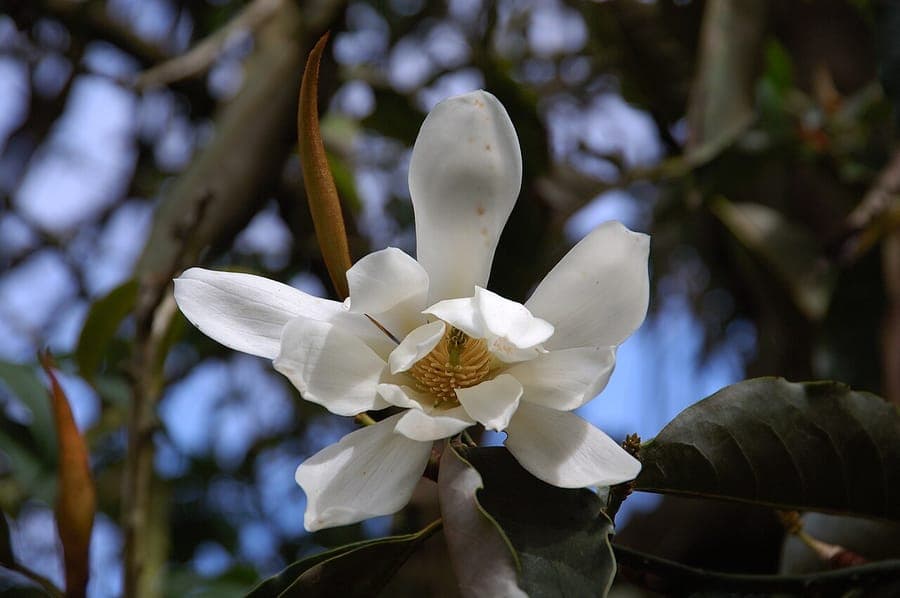
The flowers are the true embodiment of this tree. They are very large, 12-15 centimeters in diameter, and highly specialized: consisting of approximately 12-15 petals or tepals in white to pale pink, with a yellow base. They appear early in the season, even before leaves on older trees. The fragrance is very sweet and pleasant, explaining the common name.
The flowers are followed by interesting green seed capsules that later turn reddish-brown.
Ideal location
The sweet michelia prefers a sheltered spot with full sun to light shade. Afternoon shade protects against extreme heat. Wind can damage flowers, so protection is desirable.
The plant thrives better in temperate climates than in very warm ones. It needs protection from hard frost, though it is reasonably winter hardy in temperate zones (USDA 7-9).
Adequate space for growth is essential, as the tree can become quite large at maturity. Don't plant against houses, as this can cause moisture problems.
Free design
Want to see Sweet michelia: complete guide in your garden? Make a free design now.
Soil
The plant prefers well-draining, acidic to neutral soil (pH 5.5-7.0). Heavy clay soil requires amendment with organic material. Rich, well-prepared soil promotes healthy growth.
When planting, prepare a deep planting hole (twice the size of the root ball) and fill with a mixture of original soil and compost. Adding drainage material like grit or perlite helps in wet conditions.
Mulch after planting with 5-10 centimeters of organic material, away from the stem.
Watering
After planting, water regularly until the plant is well established (first 1-2 years). Thereafter, water only during dry periods, as the plant becomes reasonably drought-tolerant after establishment.
Adult trees need only occasional water in extreme drought. Young trees have higher moisture requirements.
During very dry periods, water deeply rather than frequent light watering to encourage deep root penetration. Avoid stagnant water.
Pruning
Minimal pruning is needed. The plant naturally has a beautiful form without much intervention. Dead branches can be removed and very low branches can be trimmed for clearance.
Pruning (if needed) is done after flowering, as the flower buds are already formed for the next season. This prevents removing next year's flowers.
Branch selection in youth (young tree) helps build a strong structure, but don't be too aggressive.
Maintenance calendar
Spring: Enjoy blooming, water young plants Summer: Occasional watering during drought, feed as needed Fall: Preparation for winter, replenish mulch Winter: Protection for young plants in cold regions, no maintenance for adult trees
Winter hardiness
Reasonably winter hardy, USDA zones 7-9. Young trees may need protection against wet frost and heavy snow. Adult trees are hardier.
In northern Europe, frost protection is desirable, especially for young specimens. Wind protection also helps, as hard frost can damage flower buds.
Companion plants
The sweet michelia works well with:
- Camellia (similar preference, fall blooming)
- Rhododendron (acidic soil preference, interesting structures)
- Laburnum (yellow contrast)
- Acers (interesting blue contrast)
- Understory with hellebores and ferns
Closing
The sweet michelia is an impressive tree for patient gardeners willing to wait for a true gem. With its giant, highly fragrant flowers and majestic form, it's a true highlight in any garden design. It requires relatively little maintenance once established and will provide generations of pleasure.
Available through specialty tree nurseries. Visit gardenworld.app for more inspiration.
Want to see Sweet michelia: complete guide in your garden? Make a free design now.
Upload a photo, pick a style, and get a photorealistic design with plant list in under a minute.
No credit card required


Similar plants
Saucer magnolia: complete growing guide
Magnolia × soulangeana Soul.-Bod.
Saucer magnolia is a hybrid featuring spectacular pink-white flowers appearing before leaf emergence. Ideal as specimen plant. Winter-resistant to -15°C.
Magnolia delavayi: complete guide
Magnolia delavayi
Delavay magnolia is an imposing shrub from southern China with large glossy leaves and fragrant creamy-white flowers. Learn about cultivation, hardiness, and care for this rare species.
Sprenger's magnolia: complete guide
Magnolia sprengeri
Discover Sprenger's magnolia, a very rare tree from Central China with spectacular spring blooming. Learn everything about this unique specimen.